Last Updated: October 23, 2026
Quick Summary
Professional gopher removal is worth it when infestations are established, spread across multiple areas, or damaging valuable landscaping and utilities, as specialists identify active tunnels, deploy proper equipment, and provide guarantees that protect your investment and prevent costly continued damage.
- DIY trapping works only for small, recent infestations in one area; most homeowners underestimate the difficulty and fail after catching one or two gophers.
- Professional removal takes 3-7 days for active treatment plus 2-4 weeks monitoring, compared to 2-4 weeks of daily DIY effort with uncertain results.
- A failed DIY attempt costs twice: you pay for traps and materials, then hire a professional anyway while gophers continue damaging roots and irrigation.
- Professional quotes include inspection, per-visit trapping, exclusion materials, and follow-up monitoring; compare total scope and warranty terms, not just the headline price.
- Commercial properties, HOAs, and properties with extensive damage require professional removal for compliance, documentation, and guaranteed results that DIY cannot provide.
Table of Contents
- Signs You Have a Gopher Infestation
- How Professionals Get Rid of Gophers
- DIY vs Professional Gopher Control
- Professional Gopher Removal Cost Factors
- How Long Does Gopher Removal Take
- When to Hire a Professional
- Is Professional Gopher Removal Worth the Investment
- Conclusion
- Frequently Asked Questions
Signs You Have a Gopher Infestation
Identifying a gopher problem early makes removal decisions easier.
Also look for wilted plants, dead grass patches, raised ridges, and chewed irrigation lines or damaged utilities.
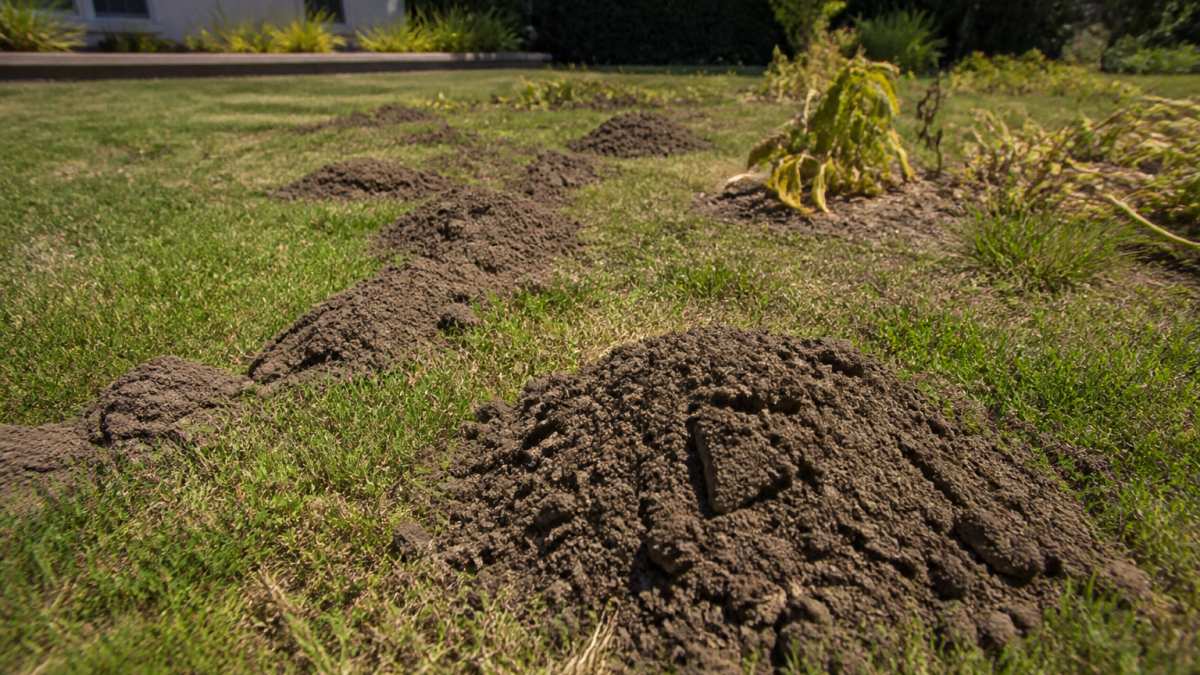
Severity depends on how long gophers have been present: a few scattered mounds suggest early infestation, while dozens indicate an established population.
How Professionals Get Rid of Gophers
Professional gopher removal relies on proven methods tailored to your infestation. Professionals begin with a thorough inspection to assess tunnel systems, identify active burrows, and determine population size.
Trapping and removal techniques
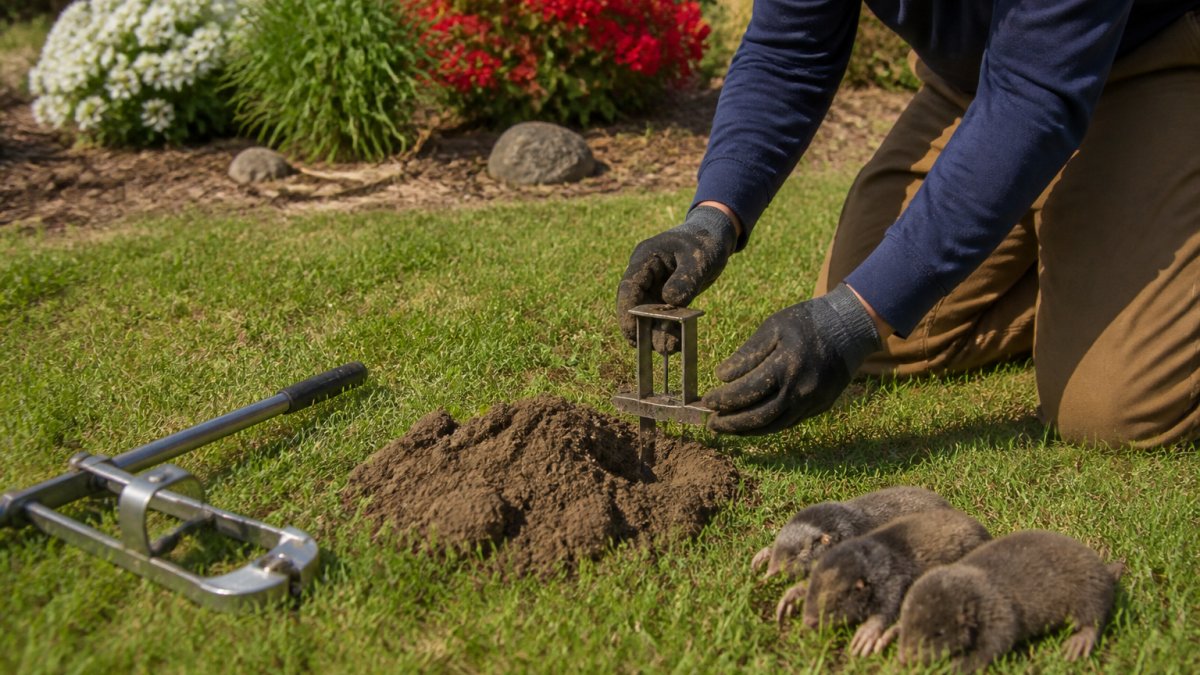
Trapping is the primary method professionals use. Specialized box and spring traps placed at active tunnel entrances achieve high success rates when positioned correctly; the key is identifying active tunnels via fresh mounds and soft soil.
Professionals monitor traps regularly, remove captured gophers per local wildlife regulations, and often combine trapping with exclusion. After removal, they seal burrow systems and recommend ongoing monitoring.
Humane and eco-friendly methods
At Ekoterra Gopher Pest and Wildlife Control, we prioritize methods that protect your family, pets, and the environment. Learn eco friendly gopher removal methods that protect your garden and family.
Eco-friendly removal focuses on humane trapping, physical barriers, and exclusion rather than poison. Discover detailed eco-friendly rodent control solutions that protect kids and pets while eliminating gophers safely.
Deterrents like castor oil products and vibration devices rarely eliminate established populations alone but complement trapping and exclusion.
DIY vs Professional Gopher Control
Most homeowners try DIY first, which is reasonable for a small, early problem. The useful question is when DIY works, what it costs, and when the effort stops being worth it.
What DIY removal actually involves
A realistic DIY attempt typically involves:
- Tunnel mapping. You locate active tunnels by probing the soil 12-18 inches from fresh mounds and finding the main runway, not the plugged lateral. This skill separates success from failure and takes practice.
- Trap setting. You set two traps per active tunnel, one facing each direction, tethered to a stake, at the correct depth and orientation. Misalignment lets gophers pass or plug the trap.
- Daily monitoring. You check traps at least once a day, re-open plugged tunnels, and reset or relocate traps that go cold.
A common pattern: a homeowner catches one or two gophers, sees the mounds stop, declares victory, then sees fresh activity two weeks later from a tunnel they never found.
Success rates: what the ranges really mean
DIY trapping success depends almost entirely on tunnel identification. Correctly set active runs yield good catch rates; traps in inactive or plugged tunnels catch nothing, so outcomes cluster at the extremes.
Professional success rates are higher for a structural reason: specialists map multiple tunnel systems, distinguish active from abandoned runs, place commercial-grade traps, and return on schedule until activity stops.
Time and effort, side by side
| Factor | Realistic DIY | Typical Professional Service |
|---|---|---|
| Upfront learning | Hours of research on trap placement and tunnel ID | None; included in inspection |
| Active work | 2-4 weeks of daily checking and resetting | Initial treatment in days, then scheduled monitoring |
| Equipment | Consumer traps, probe, shovel, gloves | Commercial traps, exclusion materials, monitoring tools |
| Ongoing damage during effort | Continues until the last active tunnel is found | Reduced quickly as active runs are trapped |
| Outcome certainty | Variable; depends on tunnel identification | Higher, and typically backed by a follow-up term |
The hidden cost of a failed DIY attempt
A failed DIY attempt is not free. You pay for traps and materials, spend weeks of active time, and gophers keep damaging roots, irrigation lines, and turf throughout. If you eventually hire a professional, the DIY cost is additive: you pay twice and lose a month of landscaping.
When DIY is a reasonable first move
DIY is a fair choice when all of the following are true:
- You have a small number of fresh mounds confined to one area.
- The activity is recent, not a long-established tunnel network.
- You have time to check traps daily for two to three weeks.
When the comparison tips toward professional service
Professional service becomes the better value when any of these apply:
- Mounds are spread across multiple areas or keep reappearing after DIY attempts.
- Gophers are damaging irrigation, utilities, or valuable plantings.
- You manage a commercial property, HOA common area, or turf facility where documentation and consistency matter.
DIY is legitimate for a small, recent, low-stakes problem. It stops being worth it when the infestation is established, the damage is expensive, or your time is better spent elsewhere.
Professional Gopher Removal Cost Factors
Price is why most people ask whether professional removal is worth it. Here is how a quote is assembled so you can compare it against DIY.
How a quote is assembled
Professional gopher removal pricing is usually built from four components: Learn what professional wildlife removal services cost to understand the full range of pricing across different property types and service levels.
- Inspection and assessment. A visit to map tunnel systems and confirm active runs. Some providers fold this into the service fee; others charge it separately.
- Per-visit or per-treatment charge. The active trapping and monitoring work, often priced per visit or per treatment cycle.
- Exclusion materials. Underground fencing or hardware cloth, priced by linear foot and by area protected.
Because providers bundle these differently, two quotes that look far apart can end up similar once you normalize what is included. Always ask which components are in the number.
Total-cost scenarios by property and severity
Use these as planning shapes, not as quotes. Actual pricing varies by market, provider, and property conditions.
| Scenario | Typical shape of the job | What drives the total |
|---|---|---|
| Small residential lot, early infestation | One inspection, a short trapping cycle, brief monitoring | Few active runs; low visit count |
| Standard residential lot, established tunnels | Inspection, multiple trapping visits, follow-up monitoring | Number of active tunnel systems; visit count |
| Property with valuable landscaping | Trapping plus exclusion around beds and structures | Linear feet of barrier; number of protected zones |
| Multi-acre or commercial property | Extended inspection, staged treatment, ongoing monitoring | Acreage; coordination across areas; documentation needs |
The key variable is not acreage alone. A small lot with several active tunnel systems can cost more than a larger lot with one contained problem, because cost tracks active runs and visits, not square footage.
One-time fee versus recurring DIY spend
A professional quote is a single number for a defined scope. DIY spend is smaller per trip but recurs across attempts, and if DIY fails, that spend is added to the service fee rather than replacing it. Add up what you have already spent before treating the professional fee as the expensive option.
What guarantees actually cover
This is where quotes differ most and the fine print matters more than the headline price. Ask before signing:
- What counts as success? Is it no new mounds for a set period, no activity on the property, or a defined number of follow-up visits?
- Does the warranty cover new gophers or only the original infestation? Reinvasion from neighboring properties is common, and many warranties exclude it or limit it.
- Are return visits free, discounted, or full price? A 30-90 day term with free return visits is worth more than a longer term with paid callbacks.
A guarantee is only as valuable as its definition of success and its treatment of reinvasion. A provider that clearly defines both offers more real protection than one with a longer but vaguer term.
Questions to ask before you compare quotes
- Which of the four cost components are included in this number?
- How many visits does this scope assume, and what happens if more are needed?
- What is the definition of success, and how long is the confirmation window?
How Long Does Gopher Removal Take
Initial inspection typically takes 1-2 hours for residential properties, during which professionals walk the property, identify active burrows, and estimate treatment scope.
Active removal usually takes 3-7 days for residential properties, depending on severity. Professionals place traps, monitor daily, and adjust placement based on results. Commercial properties or large estates may require 1-2 weeks.
After active removal, professionals recommend monitoring for 2-4 weeks to confirm all gophers are gone. Total resolution typically spans 2-4 weeks for most residential infestations.
When to Hire a Professional
Deciding between DIY and professional service depends on factors beyond cost.
Property damage and severity
Hire a professional if you see extensive gopher damage across multiple areas. Widespread mounds, dead patches covering significant lawn area, or damage to landscaping investments indicate established populations requiring expert intervention.
Properties with valuable landscaping, mature trees, or specialty gardens benefit from professional removal, since gophers cause irreversible damage to root systems.
Health code compliance and commercial properties
Commercial pest management for HOAs: Learn how HOAs manage commercial pest management effectively. Restaurant owners, hospitality operators, and food service managers cannot afford gopher problems during health inspections.
Golf courses, equestrian centers, and athletic facilities depend on turf quality. Gopher damage ruins playing surfaces and creates safety hazards. Professional removal protects these high-value properties.
Is Professional Gopher Removal Worth the Investment
Professional gopher removal delivers value beyond simple cost comparison. The decision hinges on your situation, property value, and tolerance for ongoing problems.
For homeowners with early infestations and time for DIY trapping, professional removal might feel expensive.
For commercial properties, health code compliance, and large residential areas, professional removal is essential. The cost of failed DIY attempts, lost revenue from pest-related closures, or regulatory violations far exceeds professional service fees.
At Ekoterra Gopher Pest and Wildlife Control, we deliver guaranteed results using eco-friendly methods that protect your family, pets, and environment. Ekoterra Gopher Pest and Wildlife Control offers eco-friendly pest control solutions for homes and businesses.
Conclusion
Gopher infestations damage lawns, gardens, and property structures, and they worsen quickly without intervention. While DIY trapping works for tiny, early-stage problems, most homeowners underestimate the difficulty and time required. Professional gopher removal eliminates the guesswork, delivers faster results, and includes guarantees protecting your investment. For commercial properties, HOAs, and properties with extensive damage, professional service is the only reliable path to a gopher-free property.
| Comparison Factor | DIY Removal | Professional Removal |
|---|---|---|
| Success Rate | Low | High (85-95% with guarantees) |
| Time Required | 2-4 weeks of active work | 3-7 days treatment + monitoring |
| Equipment Needed | Basic traps, shovels | Specialized traps, exclusion materials |
| Expertise Required | High (tunnel identification critical) | Professional training included |
| Guarantee Coverage | None | Typically 30-90 day follow-up |
| Cost | Lower upfront | Higher but includes results |
| Best For | Small, early infestations | Established populations, commercial properties |
Frequently Asked Questions
When should you hire a professional for gopher removal?
Hire a professional when DIY methods have failed, your property shows extensive tunnel systems or lawn damage, or you need guaranteed results for health code compliance. Commercial properties, historic structures, and large residential complexes benefit from professional gopher removal expertise. If active gophers are causing recurring damage or your infestation covers more than a quarter of your property, professional treatment typically delivers faster, more reliable results than DIY approaches.
How long does professional gopher removal take?
Professional gopher removal typically takes 1-3 weeks from initial property inspection to final treatment completion, depending on infestation severity and property size. Follow-up service visits may occur within 2-4 weeks to confirm effectiveness and address any recurring activity. The timeline varies based on the removal method used, tunnel system complexity, and whether your property requires specialized, eco-friendly techniques that prioritize environmental safety.
Is DIY gopher control effective compared to professional service?
DIY gopher control has lower success rates than professional treatment. DIY approaches require significant time investment, specialized equipment knowledge, and repeated attempts. Professional services use proven trapping techniques, property inspection protocols, and follow-up strategies that DIY methods rarely match. For recurring infestations or large properties, professional gopher removal delivers superior results and long-term cost savings despite higher upfront investment.
What factors affect professional gopher removal cost?
Professional gopher removal pricing depends on property size, infestation severity, tunnel system complexity, and the removal methods used. Eco-friendly or humane techniques may differ in cost from standard approaches. Service warranties, follow-up visits, and prevention strategies also influence total expense. For current pricing and a customized estimate based on your specific property conditions, contact your local professional gopher removal provider directly for an accurate quote.
