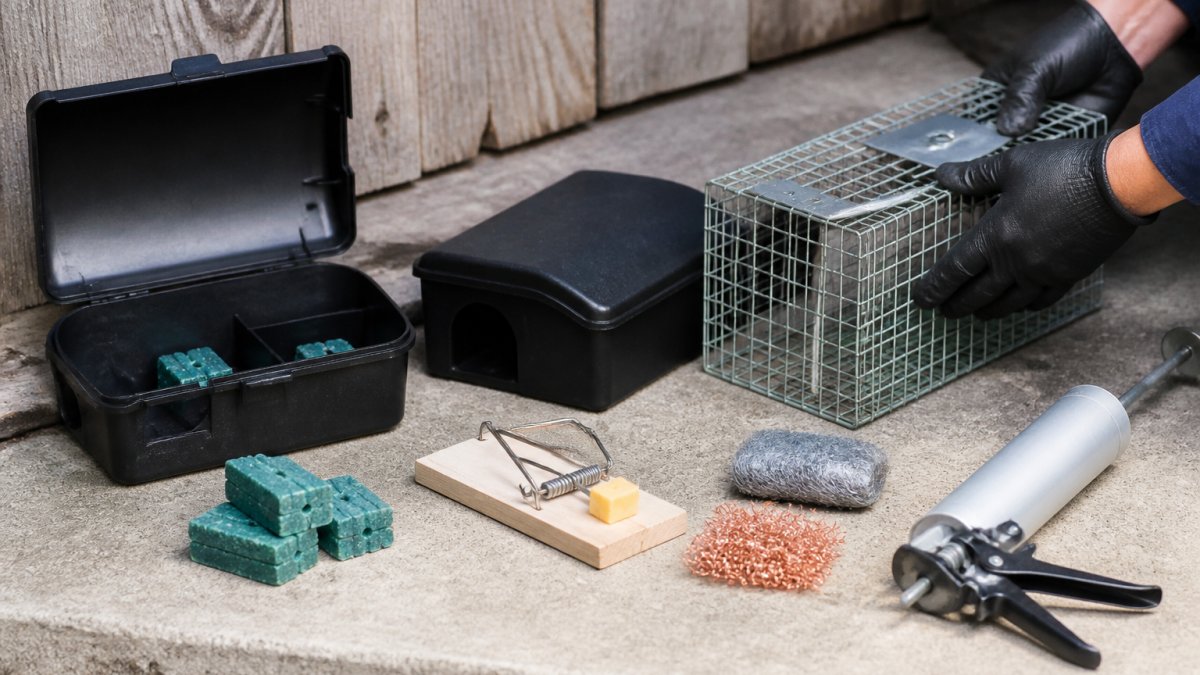
Table of Contents
- What Eco-Friendly Rodent Control Actually Means
- Rodent Risks to People, Pets, and Property
- Non-Toxic Rodent Control Methods Compared
- Humane Mouse Traps and Responsible Live-Trap Use
- Natural Rodent Repellents: What Works and What Doesn't
- Rodent-Proofing a Home: Inspection and Exclusion Checklist
- Measuring Results and When to Call a Professional
- Frequently Asked Questions
Last Updated: October 21, 2026
What Eco-Friendly Rodent Control Actually Means
Eco-friendly rodent control is the practice of removing mice and rats using methods that avoid poison and reduce harm to pets, children, and wildlife. It combines exclusion, sanitation, trapping, and repellents into one plan.
The core idea is simple. You block rodents out, remove what attracts them, and catch the ones already inside. No bait blocks. No secondary poisoning. No toxins in the walls where a dog or a toddler might later reach.
Why Poison-Free Control Wins on Safety and Results
Poison looks fast. It isn't. Rodents eat bait, wander off, and die inside walls or under appliances. Then you deal with the smell and the flies.
Worse, poisoned rodents get eaten by owls, hawks, and pets. That's called secondary poisoning, and it's one of the strongest reasons to skip bait entirely.
Poison-free control also fixes the actual problem. Traps and sealing address the rodents in front of you. Exclusion stops the next wave. That's why we build every plan around it.
Rodent Risks to People, Pets, and Property
Mice and rats cause more damage than most homeowners realize. They gnaw wiring, which raises fire risk. They shred insulation for nesting. They contaminate food and surfaces with droppings and urine.
Health matters too. Rodents can carry diseases and trigger asthma in children, according to the CDC guidance on rodent health risks. Their droppings and dander linger in dust long after the animal is gone.
Pets face their own dangers. A dog that eats a poisoned rodent can get sick. Cats that catch mice bring fleas and parasites indoors.
- Fire risk: chewed wiring behind walls
- Structural damage: gnawed beams, pipes, and insulation
- Contamination: droppings in pantries and on counters
- Health: disease transmission and asthma triggers
- Pet danger: secondary poisoning from bait
Non-Toxic Rodent Control Methods Compared
The best non-toxic rodent control combines several methods, not one. Traps catch what's inside. Exclusion keeps new rodents out. Sanitation removes food and shelter. Each method covers a gap the others miss, and none of them works well alone.
Most guides present these methods as interchangeable. They aren't. Each has a distinct job, a different speed, and a different failure mode. The table below compares them on the factors that actually decide whether a plan works: what the method does, how fast it works, what it costs in money and effort, and where it breaks down.
| Method | Primary job | Speed | Upfront cost | Ongoing effort | Main limitation |
|---|---|---|---|---|---|
| Snap traps | Kill rodents already inside | Fast (hours to days) | Low (a few dollars per trap) | Daily checking and resetting | Requires correct placement; must handle carcasses |
| Electronic traps | Kill indoors with less handling | Fast | Higher (tens of dollars per unit) | Battery checks, emptying | Higher cost per unit; not for outdoor use |
| Live traps | Capture and remove | Medium | Low to moderate | Twice-daily checks; release logistics | Stress on animal; relocation often fails |
| Bait stations (non-toxic) | Monitor activity | Slow | Low | Weekly inspection | Does not reduce the population |
| Repellents | Mild deterrence | Slow | Low | Frequent reapplication | Short-lived; rodents habituate |
| Exclusion | Stop entry permanently | Slow | Moderate to high | One-time repair plus annual checks | Requires finding every gap |
| Sanitation | Remove food and shelter | Slow | Low | Ongoing habits | Does not remove existing rodents |
Matching the Method to the Rodent
Mice and rats behave differently, and the method should follow the animal. House mice are curious, travel in short bursts, and squeeze through gaps as small as a quarter inch. They nest close to food and rarely range more than a few dozen feet, so snap traps set along familiar runways near nesting sites work well. Norway rats are cautious, follow edges and burrows, and need larger gaps (about half an inch). They often enter at ground level through foundation gaps, dryer vents, and garage doors, so exterior exclusion and outdoor trap placement matter more.
Snap Traps, Electronic Traps, and Bait Stations
Snap traps remain the workhorse. They're cheap, reusable, and kill quickly when placed right. Set them along walls, since rodents travel with their whiskers touching a surface.
Electronic traps deliver a fast, clean kill and let you skip handling the carcass. They cost more upfront but work well in kitchens and garages where you want a contained, hands-off unit.
Bait stations make sense for monitoring, not poisoning. A locked station with non-toxic blocks tells you where activity is happening and whether it is rising or falling. It does not reduce the population on its own.
Where Each Method Fails
Traps without exclusion clear the current rodents and invite the next wave. Exclusion without sanitation leaves attractants that pull rodents to the building. Sanitation without traps leaves animals already inside with nowhere to go but deeper in. Repellents without any of the above are a temporary smell, not a solution. The practical sequence is sanitation first, then exclusion, then trapping to clear what remains, with monitoring to confirm the plan is working.
Humane Mouse Traps and Responsible Live-Trap Use
Live traps catch rodents without killing them. But "humane" depends entirely on how you use them. A live trap left unchecked for a day is not humane.
Follow these rules:
- Check live traps every morning and evening.
- Provide food and water inside during short holds.
- Release rodents at least a few hundred feet from buildings, on your own property or with permission.
- Wear gloves and wash hands after handling.
- Never relocate rodents into someone else's land or a protected area.
Check your state's wildlife rules before relocating anything. Some species are protected, and moving them can be illegal.
Natural Rodent Repellents: What Works and What Doesn't
Natural rodent repellents help, but they're the weakest tool in the box. Peppermint, lavender, citronella, and lemongrass oils can make an area less inviting. They don't remove an infestation, and they rarely hold a determined rodent out for long.
The reason is mechanical. Essential oils are volatile: the compounds that give them their smell evaporate within days, and the deterrent effect fades with them. Rodents also habituate quickly. A smell that startles a mouse on day one becomes background noise by day five, especially in a space with steady airflow.
What the Evidence Supports
- Peppermint and lavender: mild, temporary deterrence; reapply every few days to maintain any effect.
- Citronella and lemongrass: short-lived; best used near entry points during active sealing work.
- Predator scent products: inconsistent results; effectiveness depends on freshness and formulation.
- Ultrasonic devices: the evidence is mixed at best, and rodents commonly habituate to them within weeks.
What to Avoid
Diatomaceous earth and boric acid are sometimes lumped in with "natural" remedies, but both carry real risks. Boric acid is toxic if swallowed and can harm pets and children. Diatomaceous earth can irritate lungs and eyes when airborne. Neither belongs around pets or kids without careful containment, and neither is a substitute for trapping and exclusion.
Safe Use Around Children and Pets
If you use essential-oil repellents, keep them out of reach, apply them to surfaces rather than as airborne sprays, and ventilate the area. Cats are especially sensitive to some oils, so check with a veterinarian before using concentrated products in a home with pets. Never place repellent-soaked cotton balls where a child or pet can reach them.
The Honest Bottom Line
Repellents are a supporting tool, not a solution. Use them as a mild deterrent in clean, sealed spaces, and don't rely on them to solve an active problem. If rodents are already inside, trapping and exclusion do the work; repellents only help keep a treated area less attractive afterward.
Rodent-Proofing a Home: Inspection and Exclusion Checklist
Rodent-proofing a home is the step most people skip, and it's the one that actually works. Sealing entry points and removing shelter stops the cycle. Traps only clear the rodents already inside.
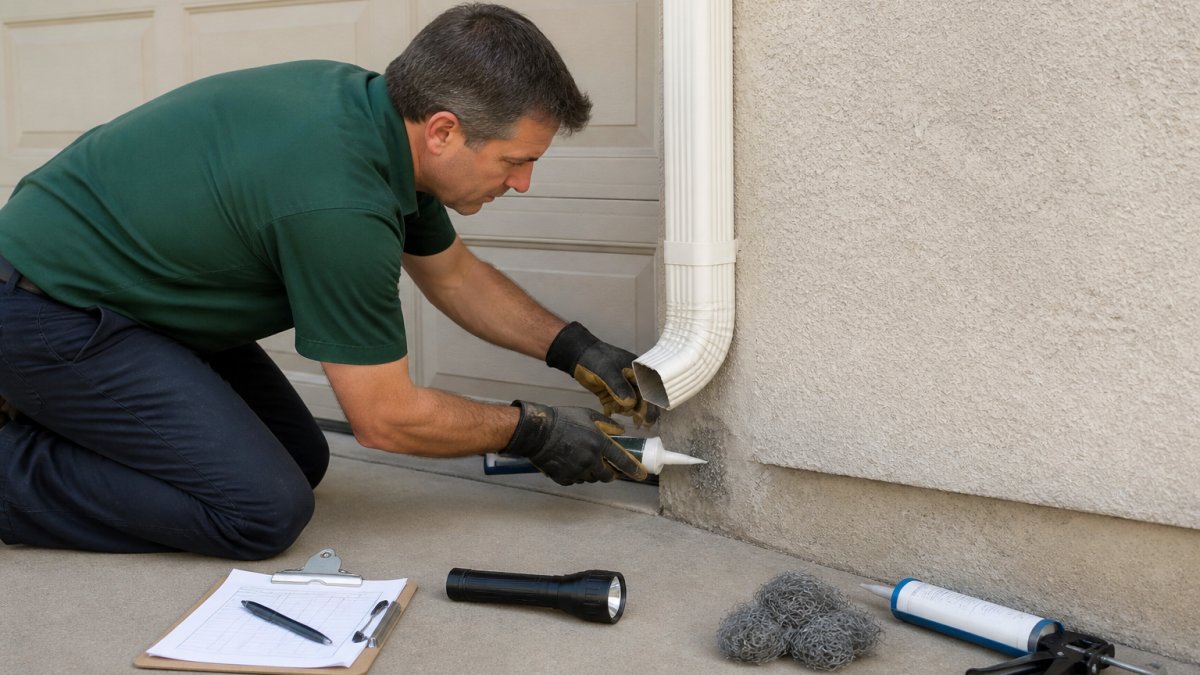
Walk your property with a flashlight and a notepad. Work through this checklist:
- Seal any gap wider than a quarter inch with steel wool and caulk
- Check where pipes and wires enter the walls
- Inspect foundation vents and crawl space openings
- Trim branches that touch the roof
- Store food in hard containers, not bags
- Move trash into sealed bins and empty them often
- Clear clutter and nesting spots in garages and sheds
- Fix leaky pipes and reduce standing water
Mice can squeeze through gaps the size of a pencil. That's the number to remember when you're sealing.
Measuring Results and When to Call a Professional
Track your results so you know if the plan is working. Count new droppings, gnaw marks, and trap catches each week. Activity should drop steadily over two to three weeks.
If it doesn't, something is still attracting rodents. Recheck food storage, trash, and entry points. A simple activity log helps:
| Week | Traps Set | Catches | New Droppings | Action |
|---|---|---|---|---|
| 1 | 8 | 3 | Yes | Seal gaps found |
| 2 | 8 | 1 | Fewer | Recheck attic |
| 3 | 6 | 0 | None | Monitor only |
Call a professional when you see heavy activity, damage in multiple rooms, or rodents returning after you seal up. Large or historic properties, restaurants, and HOAs often need a full inspection and a guaranteed plan.
That's where we come in. Ekoterra Gopher Pest and Wildlife Control delivers professional, eco-friendly pest and wildlife management solutions, ensuring guaranteed results for residential and commercial properties across Ventura, Los Angeles, and Santa Barbara Counties.
Frequently Asked Questions
Are there effective ways to control rodents without poison?
Yes. Poison-free rodent control combines three layers: exclusion (sealing gaps wider than a quarter inch with steel wool and caulk), trapping (snap traps, electronic traps, or humane live traps checked daily), and sanitation (sealed food storage and waste management). This integrated pest management approach removes the food, water, and shelter rodents need. It also avoids secondary poisoning risk to pets, children, and non-target wildlife like hawks and owls that eat poisoned rodents.
Are snap traps safer than rodent poison around pets and children?
Generally, yes. Snap traps confine the risk to a single small device you can place inside a locked bait station or behind furniture, while rodent bait stations spread poison that a pet or child could contact, and poisoned rodents can be caught by pets or predators. Set snap traps along walls where rodents travel, check them daily, and keep them out of reach. Electronic traps offer a similar contained approach with a kill chamber that keeps the carcass enclosed.
Do natural rodent repellents like peppermint oil actually work?
Plant-derived products such as peppermint, lavender, citronella, and lemongrass oils can make an area less inviting, but the effect fades within days and rodents often habituate. Treat natural repellents as a short-term deterrent for small spaces like sheds or vehicles, not a cure for an infestation. They work best paired with exclusion and trapping. Diatomaceous earth and boric acid are sometimes grouped with natural options, but both still require careful placement around children and pets.
How can you keep mice out of your home naturally?
Start with rodent-proofing a home: walk the exterior and seal every gap wider than a quarter inch, repair torn vent screens, and install door sweeps. Move firewood and debris away from the foundation, store pet food and birdseed in metal containers, and fix leaking pipes. These habitat modifications remove nesting sites and food sources without chemicals. Pair them with humane mouse traps or snap traps indoors and check daily. If activity continues after two to three weeks of sealing and trapping, call a professional.
Rodents come back when the plan has a gap. Sealing, sanitation, and trapping only work as one system, and most DIY attempts miss a step. If you want it done right the first time, Ekoterra Gopher Pest and Wildlife Control brings eco-friendly methods, guaranteed results, and a plan built around your property. Get started with Ekoterra and protect your home, your family, and the environment at the same time.