Table of Contents
- Why Eco Friendly Gopher Removal Methods Work
- Identifying Active Tunnels and Gopher Mounds
- Gopher Traps: Placement and Setup for Effective Removal
- Natural Gopher Repellents That Actually Work
- Gopher Prevention for Gardens and Raised Beds
- When to Call for Professional Gopher Control
- Seasonal Timing and Site-Specific Strategies
- Conclusion: Building a Long-Term Gopher Management Plan
- Frequently Asked Questions
Last Updated: October 9, 2026
Why Eco Friendly Gopher Removal Methods Work
Eco friendly gopher removal methods work because they target the animal's behavior and habitat instead of blanketing your yard with poison. A pocket gopher lives almost its entire life underground, digging tunnels and pushing up the fan-shaped mounds that wreck lawns and gardens. Poison-free control uses that biology against the animal.
The case for going poison-free is simple:
- Pets and kids can use the yard safely
- Owls, hawks, and snakes that eat rodents stay protected
- You solve the cause, not just today's mound
- Results last longer when paired with prevention
The EPA guidance on rodent control safety stresses that rodenticides pose real risks to children and non-target wildlife. That alone is reason enough to try exclusion and trapping first.
Identifying Active Tunnels and Gopher Mounds
An active tunnel is the key to every effective removal method. You can spot one by probing the soil around fresh mounds. A gopher mound is fan-shaped and plug-shaped, unlike a mole's round volcano.
Here's a quick comparison so you don't waste time on the wrong holes:
| Feature | Gopher Mound | Mole Mound |
|---|---|---|
| Shape | Fan or crescent | Round volcano |
| Plug | Visible soil plug | Open center |
| Tunnel depth | Deep main run | Shallow run |
| Fresh sign | Soft, dark soil | Cracked ridges |
To confirm activity, follow these steps:
- Find the freshest mound, ideally from the last day or two.
- Probe 6 to 12 inches from the plug with a metal rod.
- Feel for the drop when the rod breaks into the tunnel.
- Mark the spot and recheck in 24 hours.
If the plug is re-plugged overnight, that tunnel is active. That's your target for trapping or barrier work.
Gopher Traps: Placement and Setup for Effective Removal
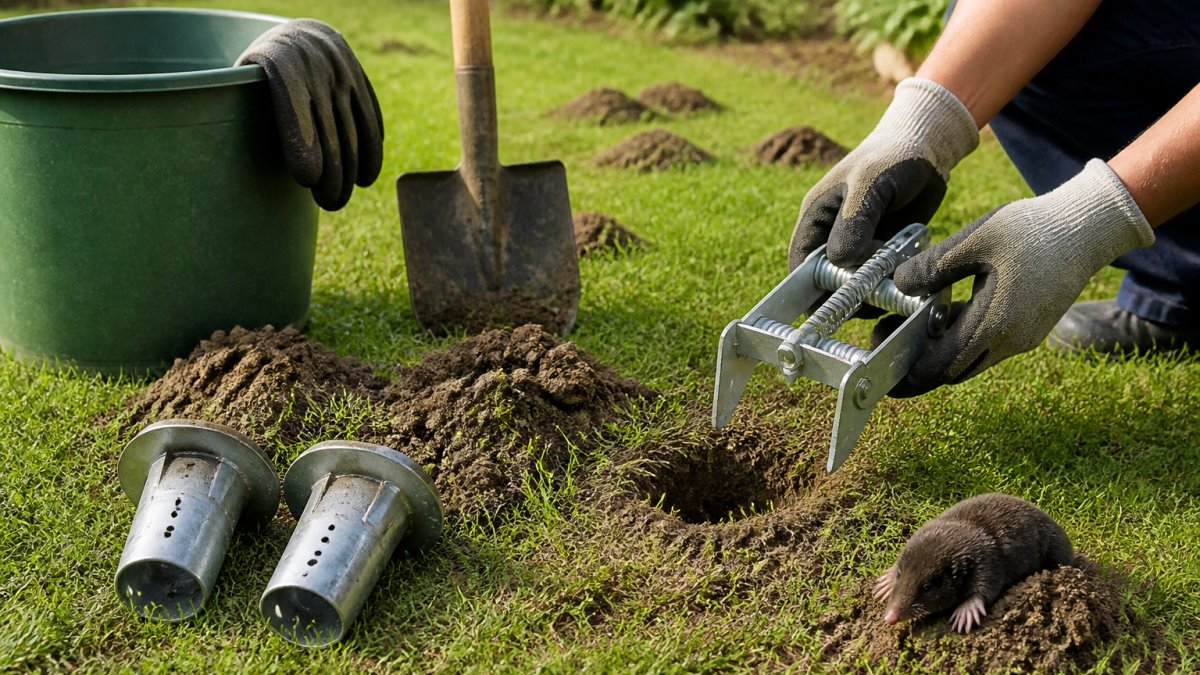
Trap placement decides whether you catch a gopher or just dig holes all weekend. Set traps inside an active tunnel, not on the mound. Gophers travel the main run, so that's where the trap belongs.
Get Rid Of Gophers and Voles from Your Garden for GOOD!
Jacques in the Garden
Follow this setup:
- Open the tunnel with a small trowel, just wide enough for the trap.
- Clear loose dirt from the floor of the run.
- Place two traps facing opposite directions.
- Anchor them with a wire stake so the animal can't drag them.
- Cover the opening with a board to block light.
- Check daily and reset as needed.
The University of California IPM gopher management guide notes that trapping is most effective in spring and fall when gophers are most active near the surface.
Natural Gopher Repellents That Actually Work
Natural gopher repellents are deterrents, not removals. That distinction matters because the eco-friendly label can create false confidence. A repellent may push a gopher to a new part of the yard, but it rarely eliminates the animal or the colony. Most practitioners find repellents work best as one layer in a system that also includes exclusion and, when necessary, trapping.
What the Evidence Actually Shows
Castor oil is the most studied natural repellent. Products labeled as castor oil granules, castor oil spray, or ricinoleic acid irritate a gopher's digestive tract when it eats treated roots or soil. The effect is temporary and depends on the gopher repeatedly encountering the treated material. Independent university extension guidance generally describes castor oil as having inconsistent results in field conditions, with effectiveness varying by soil type, moisture, and how thoroughly the product is applied.
Garlic, capsaicin pepper, predator urine, and vibrating or ultrasonic pegs have far less supporting evidence. Anecdotal reports are common, but controlled trials are scarce. Treat these as low-confidence options rather than reliable tools.
Realistic Expectations and Limitations
- Repellents fade within a few weeks and after heavy rain or irrigation.
- Gophers can habituate to a single scent, so rotating products may help briefly but is not a long-term fix.
- Repellents do not stop a gopher from digging under a barrier or into a new bed.
- Results are site-specific. Sandy, fast-draining soil moves product away from roots faster than clay.
Safety and Non-Target Wildlife
Even poison-free repellents carry risks. Castor oil products can be toxic to pets if ingested in concentrated form, and some commercial formulations include additional active ingredients that are not harmless. Garlic and capsaicin can irritate pets' eyes, noses, and digestive tracts. Before applying anything, read the label, keep pets and children away until the product has dried or been watered in, and avoid applying near storm drains or waterways where runoff can affect aquatic life.
Beneficial wildlife matters too. Owls, hawks, snakes, and foxes that eat rodents can be harmed indirectly if a repellent drives gophers into areas where they are more exposed to other hazards. The safest approach is to combine repellents with physical exclusion so animals are not pushed into unsafe zones.
How to Use Repellents Effectively
If you choose to try repellents, use them as a supplement, not a standalone solution:
- Apply castor oil spray along tunnel edges and around plant roots, following label rates.
- Use granules in dry, fast-draining soil where sprays break down quickly.
- Reapply after heavy rain or irrigation, typically every two to four weeks.
- Pair repellents with hardware cloth barriers around high-value beds.
- Monitor for fresh mounds to confirm whether the gopher has moved or returned.
Gopher Prevention for Gardens and Raised Beds
Gopher prevention for gardens starts with a physical barrier. Hardware cloth is the gold standard. Use half-inch mesh, not chicken wire, which gophers push right through.
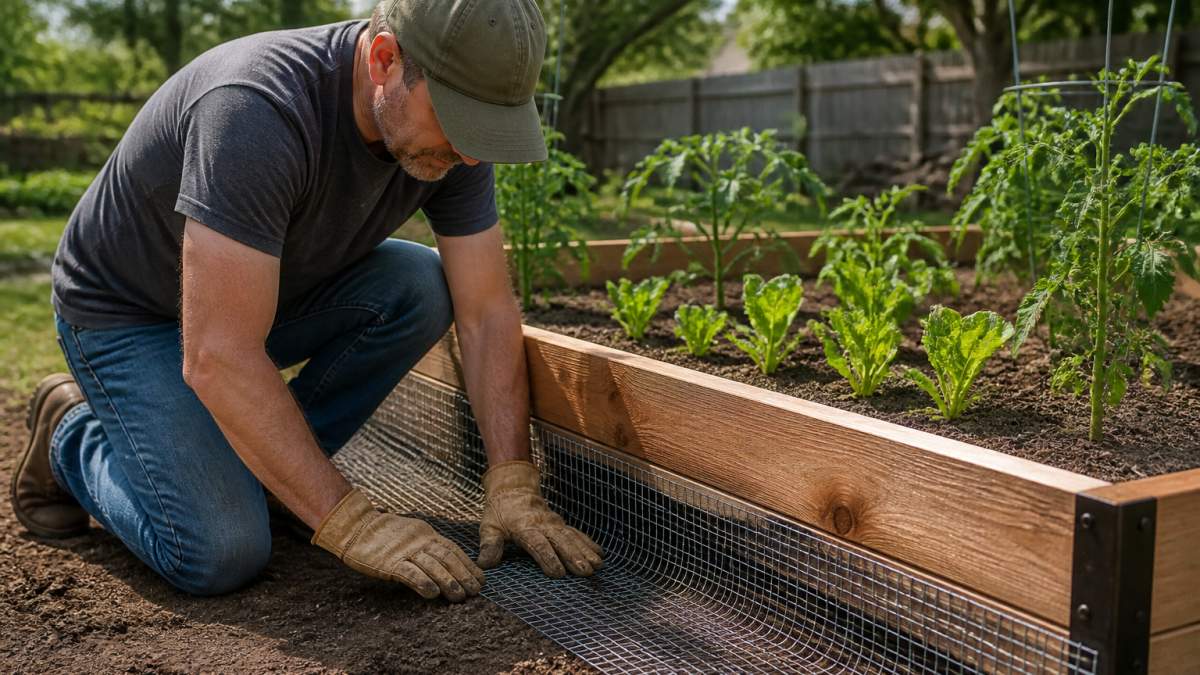
To protect a raised garden bed:
- Line the bottom of the bed with half-inch hardware cloth.
- Bend the mesh up the sides at least 12 inches.
- Overlap seams and tie them with wire.
- Bury the edges 6 to 12 inches deep.
- Add soil and plant as normal.
For in-ground gardens, bury wire mesh around the perimeter. Protect buried irrigation lines the same way, since gophers chew through plastic tubing to reach water.
When to Call for Professional Gopher Control
Professional gopher control makes sense when DIY methods stall out. If you've trapped for weeks and still see fresh mounds, the colony is bigger than your setup can handle.
Call a pro when:
- New mounds appear faster than you can treat them
- Tunnels run under a foundation, driveway, or historic structure
- You manage an HOA, restaurant, or large property
- You need guaranteed results for health or safety reasons
Ekoterra Gopher Pest and Wildlife Control handles properties across Ventura, Los Angeles, and Santa Barbara Counties. We use eco-friendly methods and back our work with guaranteed results.
Seasonal Timing and Site-Specific Strategies
Timing changes everything with gopher removal. Gophers breed year-round in mild climates, but activity spikes in spring and fall. That's when soil is workable and food is plentiful.
Season-by-season approach:
- Spring: Trap aggressively and install barriers before planting.
- Summer: Watch irrigation lines and reapply repellents.
- Fall: Trap again as gophers dig deeper runs for winter.
- Winter: Monitor mounds and keep barriers intact.
Site matters too. A sandy yard drains fast and tunnels collapse, so gophers rebuild often. Heavy clay holds tunnels longer. A golf course, equestrian center, or historic home needs a plan built around its own soil and structures.
Conclusion: Building a Long-Term Gopher Management Plan
Gophers don't leave because you want them to. They leave when the food, shelter, and easy travel routes are gone.
Build a plan that stacks methods: identify active tunnels, trap the main runs, block entry with hardware cloth, and use castor oil repellents as a backup. Then monitor monthly. That combination is what keeps a yard gopher-free instead of gopher-free-for-now.
If you'd rather hand the problem to a team that knows the terrain, Ekoterra Gopher Pest and Wildlife Control offers eco-friendly gopher removal, guaranteed results, and methods built to protect your family, pets, and the environment. Get started with Ekoterra.
Frequently Asked Questions
How can I remove gophers without using poison?
You can remove gophers without poison by using traps placed in active tunnels, installing physical barriers such as hardware cloth, and applying natural repellents. Trapping is the most direct method for immediate removal. For long-term gopher removal, combine trapping with exclusion and habitat modification. Focus on active tunnels, which you can identify by fresh mounds and plugged holes. If infestations are large or recurring, professional gopher control services can provide guaranteed results.
Do natural gopher repellents actually work?
Natural gopher repellents like castor oil granules, sprays, and garlic-based products can deter gophers, but their effectiveness varies. Castor oil creates an unpleasant taste and smell in the soil, encouraging gophers to feed elsewhere. However, repellents work best as part of a broader strategy that includes exclusion and trapping. They are not a standalone solution for heavy infestations. Reapply after rain or irrigation, and monitor for new activity to determine if the repellent is working.
What is the best gopher trap for eco friendly removal?
The best gopher trap depends on your comfort level and tunnel type. Cinch traps and box traps are popular for their effectiveness and humane design. Two-pronged pincher traps and choker loop traps are also common. For eco friendly gopher removal, choose traps that kill quickly and target only gophers, avoiding non-target wildlife. Always place traps in active tunnels and secure them to prevent dragging. Check traps daily and wear gloves to avoid human scent.
When should I call a professional for gopher control?
Call a professional for gopher control when DIY methods fail after several weeks, when infestations cover large areas, or when gophers threaten structures, irrigation lines, or valuable landscaping. Professionals have access to specialized equipment, understand local gopher behavior, and can implement integrated plans that combine trapping, exclusion, and monitoring. For properties with historic structures, HOAs, or commercial food service, professional gopher removal ensures compliance and protects your investment.