Table of Contents
- Understanding Pest Control Responsibilities in an HOA
- Developing an Effective HOA Pest Management Plan
- Pest Prevention for Common Areas
- Establishing a Strong HOA Pest Control Contract
- Selecting and Evaluating Pest Control Contractors
- Resident Communication and Incident Reporting
- Budgeting and Cost Management for Commercial Pest Control
- Frequently Asked Questions
Last Updated: October 11, 2026
Understanding Pest Control Responsibilities in an HOA
Pest control in a homeowners association isn't simply about hiring someone to spray chemicals when problems appear. The responsibility structure in commercial pest management for HOAs involves clear boundaries between what the association must manage and what individual unit owners handle. Understanding these distinctions prevents costly disputes, legal exposure, and gaps in protection.
Common Areas vs. Individual Units
The HOA typically bears responsibility for pest control in common areas: hallways, lobbies, shared laundry facilities, parking structures, landscaping, and building exteriors. Individual unit owners are responsible for their own interiors, though the line blurs when pests migrate between spaces.
Structural elements like foundation cracks, roof gaps, and exterior vents are the HOA's responsibility to maintain, as they affect the entire building's integrity. When these deteriorate, pests gain entry points that no amount of interior treatment can solve.
Legal Obligations and Liability
HOAs have a legal duty to maintain common areas in habitable condition. This includes reasonable pest prevention and control. Failing to address a known infestation in common areas exposes the association to liability claims from residents who suffer property damage, health issues, or diminished property values.
Documenting pest activity, treatment attempts, and contractor communications protects the HOA legally. When a resident claims the association neglected pest control, written records of inspections, reports, and remediation efforts become critical evidence.
Developing an Effective HOA Pest Management Plan
A commercial pest management for HOAs strategy should be proactive, not reactive. The difference between a plan that works and one that fails often comes down to whether the HOA treats pest control as an ongoing program or a series of emergency responses. Properties with formal pest management plans see fewer infestations, lower treatment costs, and faster resolution when problems do arise.
Integrated Pest Management Approach
Integrated pest management, or IPM, combines prevention, monitoring, and targeted treatment to minimize pesticide use while maximizing results. For HOAs, this means inspecting for conducive conditions first, standing water, food debris, harborage in landscaping, before deciding whether treatment is even necessary.
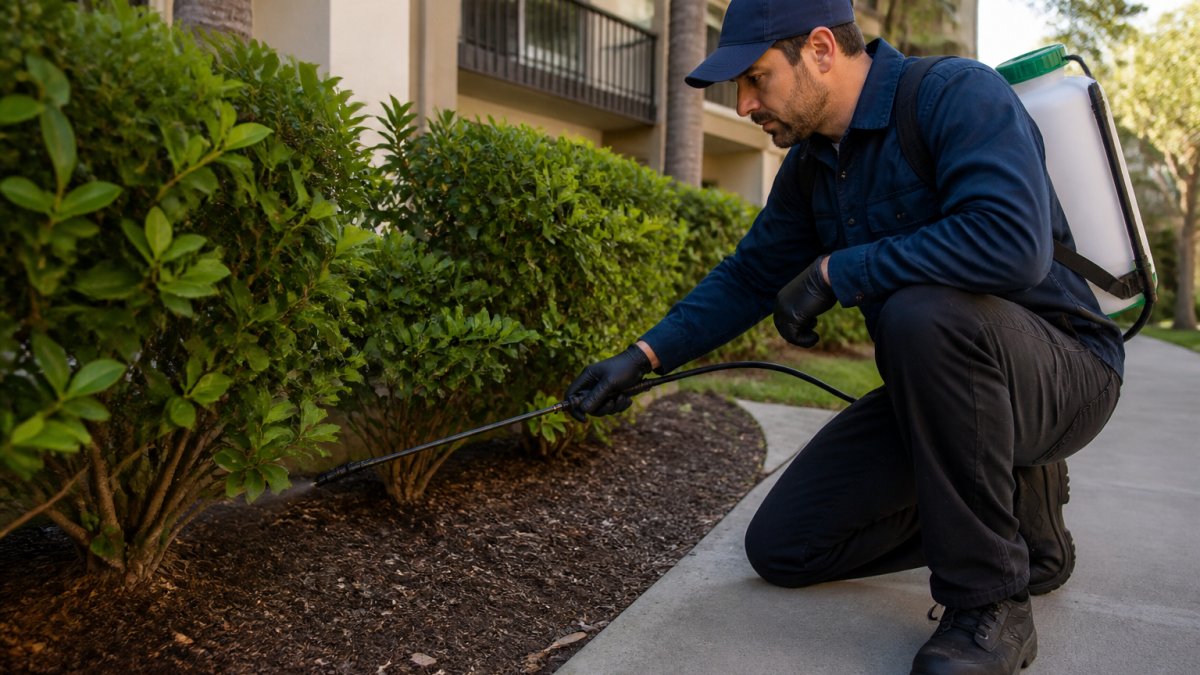
Sanitation audits identify food sources and water sources that sustain pest populations. Landscaping reviews reveal overgrown vegetation touching the building, mulch piled against foundations, and dense shrubs that harbor rodents and insects. Structural inspections find cracks, gaps, and deteriorated seals that serve as entry points.
Pest Inspection and Identification Protocols
Regular inspections catch problems early, when they're cheapest to solve. A quarterly inspection schedule for common areas, performed by the pest control contractor or a qualified staff member, establishes a baseline. Inspectors document pest activity, conducive conditions, and treatment effectiveness in a log that becomes part of the property's permanent record.
Proper pest identification matters because different pests require different approaches. A rodent problem in the walls demands exclusion and trapping; the same treatment fails against cockroaches, which need different baiting strategies. Misidentification leads to wasted money on ineffective treatments.
Pest Prevention for Common Areas
Prevention is always cheaper than elimination. Once a pest population establishes in a building, eradicating it costs far more than preventing entry in the first place. The HOA's maintenance team and pest control contractor should work together on prevention, not view it as separate from treatment.
Structural Exclusion and Maintenance
Sealing entry points is the foundation of pest prevention. Rodents squeeze through gaps as small as a dime; insects fit through even smaller openings. The building envelope, foundation, walls, roof, windows, doors, utility penetrations, must be inspected regularly and sealed where damage appears.
Maintenance staff should prioritize sealing work in areas where pests are most likely to enter: loading docks, trash areas, mechanical rooms, and basement spaces. These zones experience higher pest pressure because they often contain food, moisture, or harborage.
Sanitation and Habitat Elimination
Pests thrive where food and water are available. Trash management is critical: dumpsters should be located away from the building, lids kept closed, and spills cleaned immediately.
Interior common areas require attention as well. Kitchens, break rooms, and dining areas should be cleaned daily, with food stored in sealed containers. Moisture problems, leaky pipes, condensation, standing water, support cockroach and rodent populations. Addressing these issues removes the conditions that allow pests to survive indoors.
Establishing a Strong HOA Pest Control Contract
The contract between the HOA and its pest control contractor defines expectations, scope, and accountability. A weak contract leads to miscommunication, incomplete service, and disputes about who is responsible when problems persist.
Key Clauses and Service Scope
The contract must specify exactly what the contractor will do: which areas they service, how often they visit, what treatment methods they use, and what results they guarantee. Vague language like "pest control as needed" creates disputes.
Service response times matter, especially for active infestations. The contract should define how quickly the contractor responds to emergency reports, ideally within 24-48 hours for confirmed pest activity. Guarantees should be realistic: "Pest-free common areas within 30 days of treatment initiation" is reasonable; "guaranteed zero pests forever" is not.
Response Times and Guarantees
Liability and insurance clauses protect both parties. The contract should clarify whether the contractor's work covers only common areas or includes interior unit treatment at resident request. It should specify what happens if treatment fails, does the contractor re-treat at no charge, or does the HOA pay again?
Payment terms, pricing adjustments, and cancellation clauses should be explicit. Does the price change if the HOA requests additional services? What happens if the association terminates the contract early? Clear terms prevent surprises and allow both parties to plan budgets accurately.
Selecting and Evaluating Pest Control Contractors
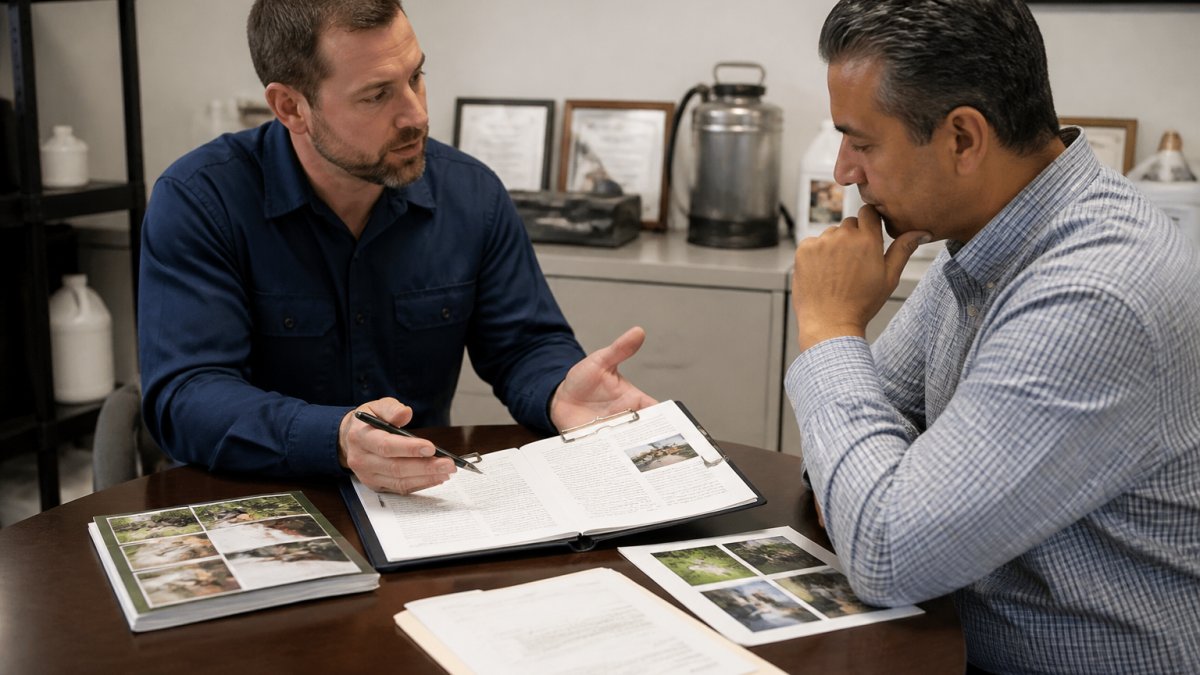
Choosing the right contractor is one of the HOA's most important decisions. A poor choice costs money, creates resident complaints, and leaves the association legally exposed. A good contractor becomes a trusted partner in maintaining the property.
Licensing, Certifications, and Eco-Friendly Credentials
All pest control operators must be licensed by the state. Verify the contractor's license with your state's regulatory agency and confirm it's current.
Certifications beyond basic licensing indicate deeper expertise. Some contractors pursue IPM certification, which demonstrates they follow integrated pest management principles. Others earn green certifications showing commitment to environmentally responsible practices.
Ask about the specific products the contractor uses. Many modern pest control providers offer eco-friendly alternatives to broad-spectrum pesticides. At Ekoterra Gopher Pest and Wildlife Control, we prioritize eco-friendly solutions that deliver guaranteed results.
Capacity and Experience with Multi-Unit Properties
A contractor experienced with single-family homes may struggle with the complexity of a 40-unit complex.
Request references from other HOAs or property managers they've served. Call those references and ask specific questions: Did the contractor respond promptly to problems? Did treatments work? Were residents satisfied? Did the contractor communicate clearly?
Compare proposals from at least three contractors. Price matters, but it shouldn't be the only factor. A cheap contractor who delivers poor results costs far more in the long run than a higher-priced contractor who solves problems permanently.
Resident Communication and Incident Reporting
Residents must know how to report pest activity and what to expect when they do.
Establish a reporting process: residents contact the property manager or HOA office with pest sightings, providing details about location, pest type, and when they saw it.
Provide residents with guidance on what they can do to prevent pests in their units: seal food in containers, take out trash regularly, report leaks immediately, and don't leave pet food out overnight.
Budgeting and Cost Management for Commercial Pest Control
Pest control is an ongoing expense, not a one-time cost.
A baseline budget for routine pest management typically covers monthly inspections, quarterly preventive treatments, and documentation.
Prevention investments pay dividends. Spending money on structural sealing, landscaping maintenance, and sanitation improvements reduces the pest population, which lowers treatment costs over time.
Track pest control spending alongside treatment outcomes. If costs are rising but pest activity isn't decreasing, the contractor or approach may be ineffective.
Effective commercial pest management for HOAs requires clear responsibility boundaries, proactive planning, and the right contractor partnership.
| Element | Purpose | Frequency |
|---|---|---|
| Pest inspections | Identify activity and conducive conditions early | Quarterly minimum |
| Structural sealing | Prevent pest entry through building envelope | Annual review, repair as needed |
| Sanitation audits | Remove food and water sources | Quarterly |
| Resident reporting | Document pest sightings and track trends | Ongoing |
| Contractor evaluation | Ensure service quality and contractor competence | Annual |
Frequently Asked Questions
Who is responsible for pest control in an HOA?
HOAs typically bear responsibility for pest control in common areas such as hallways, lobbies, landscaping, and shared facilities. Individual unit owners are usually responsible for their own spaces, though the HOA pest management plan should clarify these boundaries. The HOA's governing documents and state regulations determine the exact division of responsibility. Property managers should communicate these distinctions clearly to residents to avoid confusion and ensure coordinated pest prevention efforts.
What should an HOA pest management plan include?
A comprehensive HOA pest management plan outlines pest inspection schedules, identification protocols, preventive measures, treatment procedures, and resident reporting processes. It should specify which pests pose the greatest risk (termites, rodents, cockroaches), designate responsible parties for different areas, establish service response times, and include communication templates for residents. The plan should also address structural maintenance, sanitation standards, and how the association will evaluate contractor performance over time to ensure ongoing effectiveness.
How can an HOA prevent pests in shared spaces?
Pest prevention for common areas relies on three core strategies: structural exclusion (sealing cracks, gaps, and entry points), sanitation (removing food and water sources, maintaining clean landscaping), and regular maintenance. HOAs should eliminate harborage areas by trimming vegetation away from buildings, fixing water leaks promptly, and storing trash in sealed containers. Regular inspections identify vulnerabilities early. Coordinating with residents to report pest activity and maintain individual units also reduces pressure on common areas, creating a more effective community-wide defense.
What should be included in an HOA pest control contract?
An HOA pest control contract must define the service scope (which areas and pest types are covered), treatment methods and frequency, response times for emergency situations, pricing terms, and performance guarantees. It should specify whether treatments are eco-friendly or conventional, outline safety protocols for residents and pets, and include liability insurance requirements. The contract should also establish how the contractor will communicate with the HOA and residents, document service visits, and handle resident complaints. Clear termination clauses protect the association if service quality declines.
How should an HOA choose a pest control company for commercial pest management?
Evaluate contractors based on licensing, experience with multi-unit residential properties, and relevant certifications. Request references from similar HOAs and verify their track record with your region's common pests. Ask about their integrated pest management approach, eco-friendly options, and capacity to service your property size consistently. Compare service response times, communication practices, and guarantees. Interview multiple contractors to understand their methodology for inspection, prevention, and treatment before making a final decision.
Can commercial pest management be eco-friendly?
Yes. Modern integrated pest management combines structural exclusion, sanitation, targeted treatments, and monitoring to minimize chemical use while maintaining effectiveness. Eco-friendly approaches prioritize prevention and non-toxic methods first, using pesticides only when necessary and in limited quantities. Licensed operators can apply treatments that meet health and safety standards while reducing environmental impact. Many contractors now specialize in sustainable pest control for commercial properties, offering HOAs a way to protect residents and the environment without sacrificing results.
How often should an HOA schedule pest control service?
Service frequency depends on your region's pest pressure, the property's age and construction, and past infestation history. Most HOAs benefit from quarterly inspections and preventive treatments, though some may need monthly service during high-risk seasons. Established pest management plans include regular monitoring visits to catch problems early, reducing the need for intensive treatments later. Your contractor should recommend a schedule based on local conditions and your property's specific vulnerabilities, then adjust if pest activity patterns change.
What should an HOA do when residents report a pest problem?
Establish a clear incident reporting process: residents notify the property manager or HOA board, who document the complaint with details (location, pest type, date, severity). Forward the report to your pest control contractor within 24 hours for priority assessment. The contractor should inspect and treat the affected area promptly. Communicate the findings and treatment plan back to the resident and keep records of all reports and actions taken. This documentation demonstrates due diligence, helps identify patterns, and protects the HOA legally by showing a responsive, organized approach to pest management.