Last Updated: November 22, 2026
Quick Summary
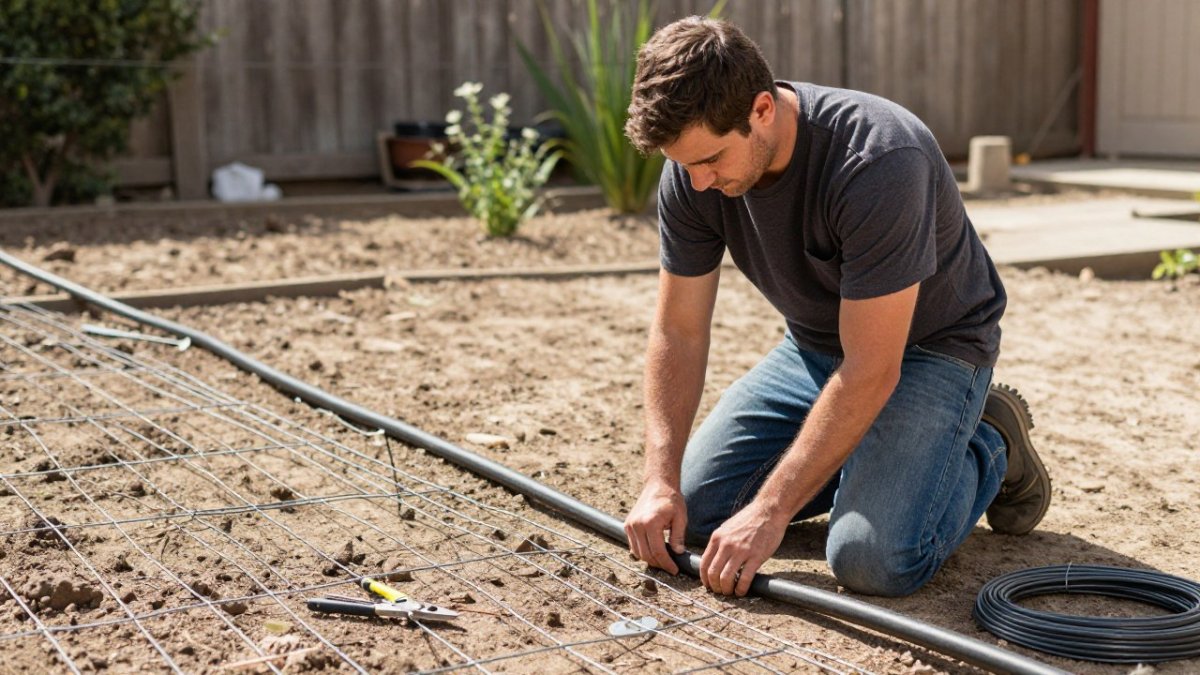
Gopher-proof irrigation means keeping tubing out of the tunnel zone where pocket gophers work in the top several inches of soil. Bury main runs deeper, sleeve exposed transitions in rigid PVC, and line valve boxes with quarter-inch galvanized hardware cloth. No plastic is truly gopher-proof, so pair barriers with trapping and ongoing monitoring.
- Pocket gophers tunnel in the top several inches of soil and chew tubing that sits in their path.
- Galvanized hardware cloth with quarter-inch openings is the highest-value upgrade for valve boxes.
- Cut mesh with a 2-inch overlap and secure it with galvanized staples every 6 inches.
- Burying lines 12 to 18 inches deep suits new in-ground installs but makes repairs harder.
- Repellents like castor oil and ultrasonic devices need reapplication and rarely hold a determined gopher.
Table of Contents
- How Gophers Damage Irrigation Systems and What to Look For
- A Step-by-Step Inspection and Diagnosis Process
- Gopher-Proof Drip Irrigation: Protecting Tubing and Emitters
- Choosing Chew-Proof Drip Irrigation Tubing
- Gopher Mesh for Irrigation Boxes and Valve Protection
- Rodent-Proof Drip Irrigation: Barriers, Burying, and Repellents Compared
- Finding Leaks, Repairing Damage, and Testing Your System
- Building an Eco-Friendly Gopher Control Plan for Your Property
- Frequently Asked Questions
How Gophers Damage Irrigation Systems and What to Look For
Gophers chew through irrigation lines because the tubing sits exactly where they tunnel, and without gopher-proof irrigation a single punctured drip line can waste water for weeks before anyone notices.
Here's the part most guides skip. Pocket gophers don't target your pipes on purpose.
The damage adds up fast:
- Punctured drip tape and drip lines that leak below the surface
- Chewed sprinkler wires and solenoid connections
- Undermined valve boxes that shift and crack
- Water pooling in beds with no visible source
Left alone, one gopher can turn a tidy micro irrigation zone into a repair job spanning several weekends.
Signs of Gopher Activity Around Your Lines
Fresh gopher mounds are the first clue. Look for fan-shaped dirt piles with a plugged hole off to one side, usually within a few feet of your garden beds or raised beds.
Then check the water. A sudden jump in usage with no change in your schedule points to a leak.
If you're unsure whether the culprit is a gopher or a mole, our guide on how to tell gopher damage from mole damage breaks down the difference in mound shape and tunnel depth.
Other signs worth checking:
- Chewed tubing visible at the soil line
- Emitters pushing weak or uneven flow
- Soft, sunken ground over a buried line
- Connectors popped loose from pressure loss
A Step-by-Step Inspection and Diagnosis Process
Diagnosing gopher damage follows a fixed order: walk the perimeter, trace the lines, then test the flow.
Start at the valve box and work outward. Here's a sequence you can follow.
- Walk the perimeter. Note every fresh mound within 10 feet of your lines.
- Lift the valve box lid. Look for chewed wires, loose solenoid connections, and dirt pushed up inside.
- Trace each drip line. Follow it hand over hand, checking for nicks and chew marks.
- Check the emitters. Uneven flow signals a breach upstream.
- Test the pressure. Shut off zones one at a time and watch for a pressure drop.
- Mark the damage. Flag each spot with a garden stake so repair is quick.
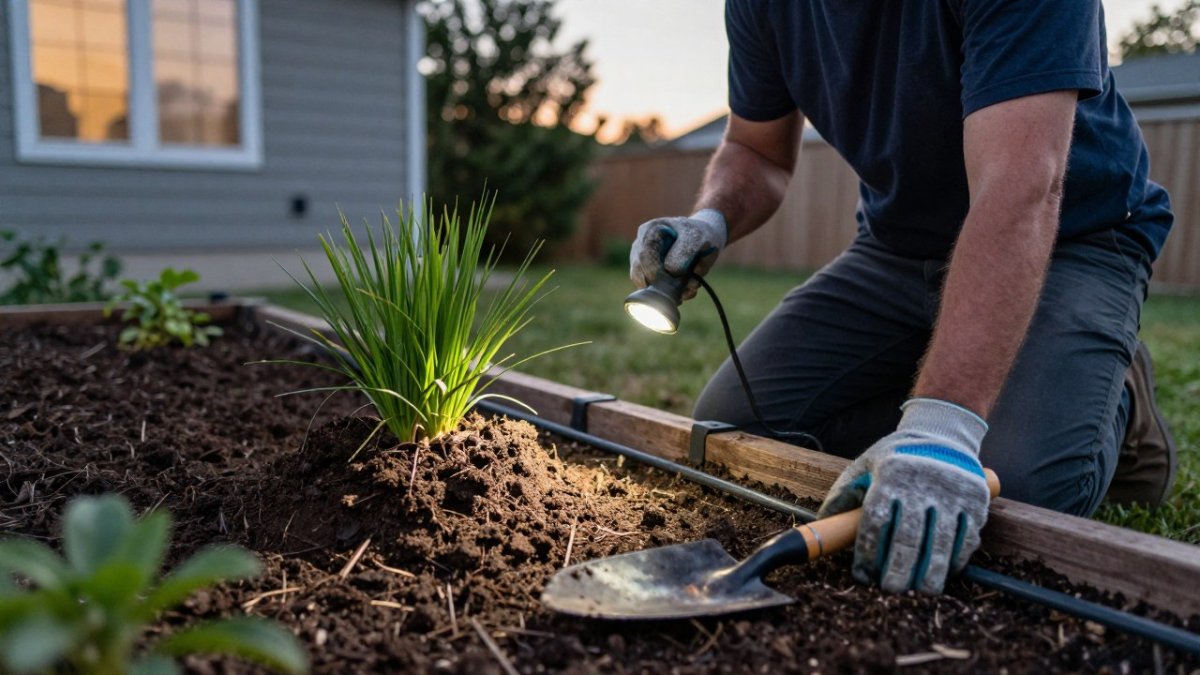
Watch out: skipping the pressure test is a common mistake. A chewed line under mulch can pass a visual check and still leak for months.
Gopher-Proof Drip Irrigation: Protecting Tubing and Emitters
Gopher-proof drip irrigation starts with one rule: keep the tubing out of the tunnel zone. Pocket gophers work mostly in the top several inches of soil, so moving your lines deeper or shielding them changes the math.
A practical approach, component by component:
- Main runs and lateral lines. Deeper burial of drip tubing is one option where soil and slope allow. In raised beds or shallow soils over rock, full burial may not be possible, so shielding becomes the primary defense.
- Exposed runs at bed entries and transitions. Rigid PVC conduit can be used where tubing leaves the ground and enters a bed, valve box, or planter.
- Emitters and drip tape. Emitters are the weak point because they sit at or near the soil surface and rodents gnaw at them along with the tubing. Keeping mulch light directly over the tubing lets you inspect it without digging.
- Joints, connectors, and fittings. Barbed connectors and compression fittings are common chew targets because they create a bulge in the line. Wrap exposed joints in a short section of split conduit or cover them with a mesh sleeve, and keep joints out of the top few inches of soil wherever possible.
- Filters, regulators, and manifolds. These components often sit in a valve box or at a head assembly where tubing transitions from buried to exposed. Protect them with the same mesh and cover strategy described in the valve-box section below.
The trade-off is real. Deeper lines are safer from chewing, but harder to inspect and repair. For raised beds, shielding beats burying.
Watch out: burying drip tape too deep in heavy clay can crush or kink the line and create the very leaks you are trying to prevent, so match depth to soil type and keep a shallow inspection strip along bed edges.
Choosing Chew-Proof Drip Irrigation Tubing
Chew-proof drip irrigation tubing is a misnomer worth correcting. No plastic is truly gopher-proof, but some products resist teeth far better than standard polyethylene.
What actually helps:
- Thicker wall tubing. More material means more chewing before a breach.
- Rigid PVC in exposed runs. Gophers rarely chew hard PVC the way they chew soft drip tape.
- Metal-cored or shielded lines. These cost more but hold up where pressure from rodents is constant.
- Short exposed runs. The less tubing you leave at the surface, the less you lose.
Here's how the common options compare on durability and suitability:
| Option | Durability | Best For | Trade-off |
|---|---|---|---|
| Standard drip tape | Low | Seasonal beds | Cheap, easily chewed |
| Thick-wall drip line | Medium | Perennial beds | Costs more, still vulnerable |
| Rigid PVC | High | Main runs, valve feeds | Rigid, harder to route |
| Metal-shielded line | High | High-pressure zones | Heaviest, priciest |
For most home gardens, thick-wall drip line plus PVC on the main runs covers the bases.
Gopher Mesh for Irrigation Boxes and Valve Protection
Gopher mesh for irrigation boxes is the single highest-value upgrade most properties skip. Valve boxes and solenoid housings sit at ground level, which makes them prime targets.
Galvanized hardware cloth with quarter-inch openings is one option for valve boxes; chicken wire can stretch and rust over time.
Installation basics:
- Cut mesh to fit the box opening with a 2-inch overlap
- Line the bottom and sides of the box
- Secure with galvanized staples every 6 inches
- Leave the lid accessible for service
Do the same around sprinkler valves and any exposed solenoid wiring. A mesh floor under the valve box stops gophers from entering from below, which is how most boxes get hit.
Rodent-Proof Drip Irrigation: Barriers, Burying, and Repellents Compared
Rodent-proof drip irrigation comes down to three strategies, and they don't perform equally. Barriers and burying do the heavy lifting. Repellents are a supplement at best. What most comparisons skip is a side-by-side look at cost, durability, and suitability, so here is how the main options stack up for a typical residential system.
| Method | Relative Cost | Durability | Best For | Main Trade-off |
|---|---|---|---|---|
| Galvanized hardware cloth barriers (quarter-inch mesh) | Low to moderate | Several years to a decade or more | Valve boxes, bed edges, exposed transitions | Must be installed before damage; edges can be bypassed if not buried |
| Deeper burial (12-18 inches) | Moderate (labor-heavy) | Long-lasting | New in-ground installs, main runs | Harder to inspect and repair; not practical in raised beds |
| Rigid PVC sleeving on exposed runs | Low | Long-lasting | Bed entries, valve feeds, transitions | Rigid and harder to route around curves |
| Repellents (castor oil, ultrasonic devices) | Low per application | Short-lived; needs reapplication | Supplemental deterrence only | Variable results; rarely holds a determined gopher |
| Trapping and baiting | Moderate | Immediate but not permanent | Active infestations, population knock-down | Requires regular monitoring and safe placement away from pets |
| Owl boxes and predator habitat | Moderate one-time | Long-term, indirect | Integrated pest management layer | Won't clear a heavy infestation on its own |
A few practical notes on each:
- Wire mesh barriers. Best durability for the money. Install quarter-inch galvanized hardware cloth at bed edges and around boxes, buried a few inches into the soil so gophers cannot push under the edge. Cost is moderate and the protection lasts years.
- Burying lines deeper. Good protection, but repairs get harder. Best for new installs, not retrofits, because re-routing established lines is labor-intensive.
- Repellents and deterrents. Variable results. Castor oil products and ultrasonic devices need reapplication and rarely hold a determined gopher. Treat them as a supplement, not a solution.
- Trapping and baiting. Effective but requires regular monitoring and safe placement away from pets. Follow label directions and keep bait stations secured.
- Predator-based controls. Owl boxes attract natural predators and fit well into an integrated pest management approach. They won't clear a heavy infestation, but they add steady pressure.
For a full comparison of natural methods, see our breakdown of eco friendly gopher removal methods for your yard.
No single method in this table eliminates gophers permanently, and combining approaches generally helps keep damage rare rather than merely delayed.
Finding Leaks, Repairing Damage, and Testing Your System
Leak detection in an irrigation setup can start with the meter: shut every zone off, note the meter reading, wait an hour, and read it again.
Then isolate. Run one zone at a time and watch for soft ground, bubbling, or a pressure drop. That narrows the search to a single run.
Repair steps:
- Shut off water to the affected zone
- Cut out the damaged section with clean, square cuts
- Join with a barbed connector or compression fitting
- Flush the line before reconnecting emitters
- Restore pressure and check for weeping joints
Testing matters as much as repair. Run the zone at full pressure for 15 minutes and walk the line again.
If damage keeps returning to the same spot, the gopher is still active. Our post on how to time gopher control for every season explains when removal work pays off most.
Building an Eco-Friendly Gopher Control Plan for Your Property
An eco-friendly plan combines habitat changes, physical barriers, and professional removal when the population outpaces DIY effort.
Start with the property, not the pest:
- Clear brush and debris that shelters gophers
- Keep a bare inspection strip along bed edges
- Install mesh before replanting, not after
- Monitor mounds monthly during active seasons
For properties with recurring pressure, professional removal can be a useful layer.
If you're weighing DIY against hiring help, our cost-benefit analysis of professional gopher removal lays out the trade-offs. And when you're ready to hand off the work, you can explore Ekoterra's eco-friendly pest control services for your property.
The honest limitation: no barrier lasts forever, and no plan eliminates gophers permanently without ongoing monitoring.
Gophers will keep probing your lines, and the damage rarely announces itself until water is already pooling underground.
Frequently Asked Questions
Will gophers chew through PVC irrigation pipe?
Yes. Gophers will gnaw through standard PVC irrigation pipe, especially where it runs shallow or sits near an active burrow. The damage often goes unnoticed until water pools at the surface or pressure drops. Thicker Schedule 40 PVC resists chewing longer than thin-walled pipe, and wrapping exposed runs in wire mesh adds another layer of defense. Check any line that crosses a known tunnel for bite marks and hairline cracks.
Does gopher mesh really protect drip irrigation systems?
Gopher mesh works when it is installed correctly. Galvanized wire mesh can be used around irrigation components when installed correctly. Mesh alone will not stop a determined gopher from entering an open valve box, so combine it with sealed lids and mesh baskets around valves and emitters. Inspect the mesh each season for rust and gaps.
How can I tell if gophers have damaged an irrigation line?
Look for soggy patches, sunken soil, or unusually green strips of turf above a buried line. A sudden drop in water pressure, emitters that stop flowing, or a sprinkler zone that will not hold pressure also point to chewing damage. Shut off the zone, walk the run, and check for fresh gopher mounds within a few feet of the line.
What should I do if a gopher damages my irrigation system?
Turn off the affected zone to limit water loss, then expose the damaged section and cut out the chewed portion. Splice in a new length of chew-proof tubing or pipe, wrap it in wire mesh, and backfill. Test the zone for pressure and leaks before closing the trench. If gopher activity continues, address the source with trapping, barriers, or a professional control plan rather than repairing the same line repeatedly.
