Last Updated: October 26, 2026
Quick Summary
Wildlife exclusion is the practice of blocking animals from entering a home rather than trapping them after they get inside. We start every job by finding the gaps animals actually use, then seal each one with chew-resistant materials and confirm the space is empty first. Verification takes about two weeks of checking for silence and stillness.
- Walk the property twice, once at ground level and once with a ladder, photographing every gap.
- Never seal an animal inside; confirm the space is empty before closing anything.
- Use steel wool for small holes, hardware cloth for vents, and metal flashing for rooflines.
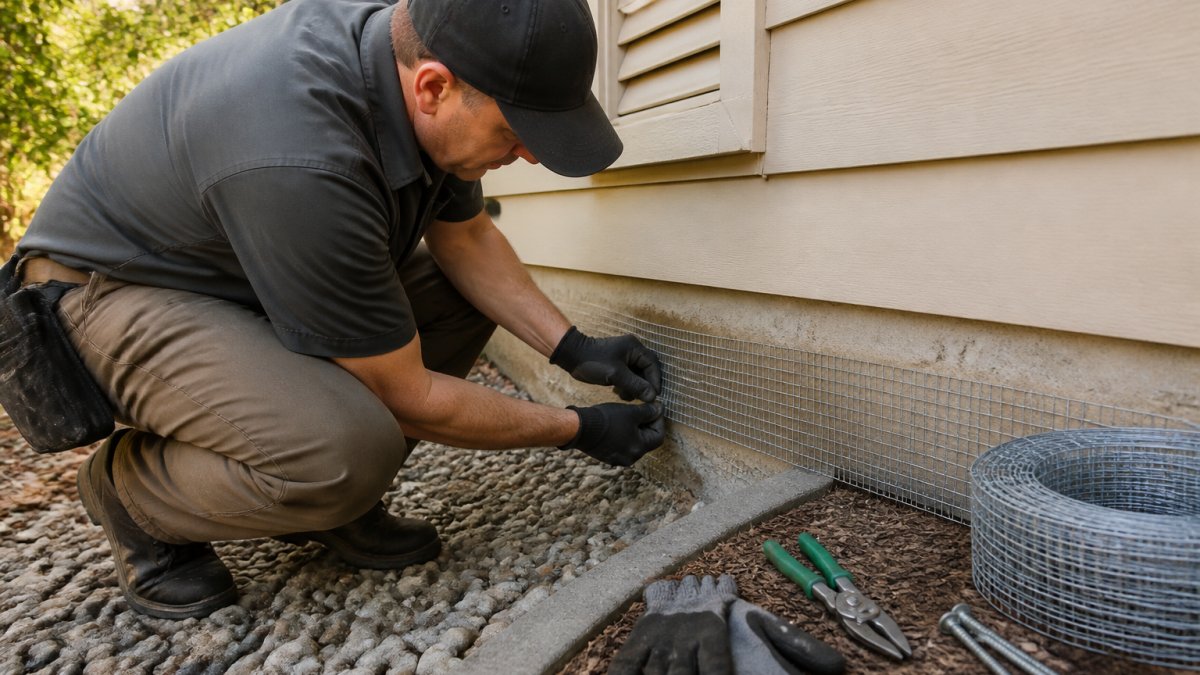
- Skirt decks and porches with metal mesh buried a few inches into the soil.
- Compare providers on scope and warranty language, not on the headline price.
Table of Contents
- Spotting Wildlife Entry Points in a Home
- Sealing Gaps and Animal-Proofing a House Step by Step
- How to Keep Animals Out From Under a House
- Humane Wildlife Removal and Species Timing
- Habitat Modification and Yard Habits That Deter Nuisance Wildlife
- Household Health Precautions for Children and Pets
- How to Verify Your Wildlife Exclusion Worked
- Choosing a Guaranteed Wildlife Exclusion Service
- Frequently Asked Questions
Spotting Wildlife Entry Points in a Home
Wildlife exclusion is the practice of blocking animals from entering a home rather than trapping them after they get inside.
Most homeowners look up. That is only half the story. Nuisance wildlife enters low as often as high, and the low entries are the ones people miss.
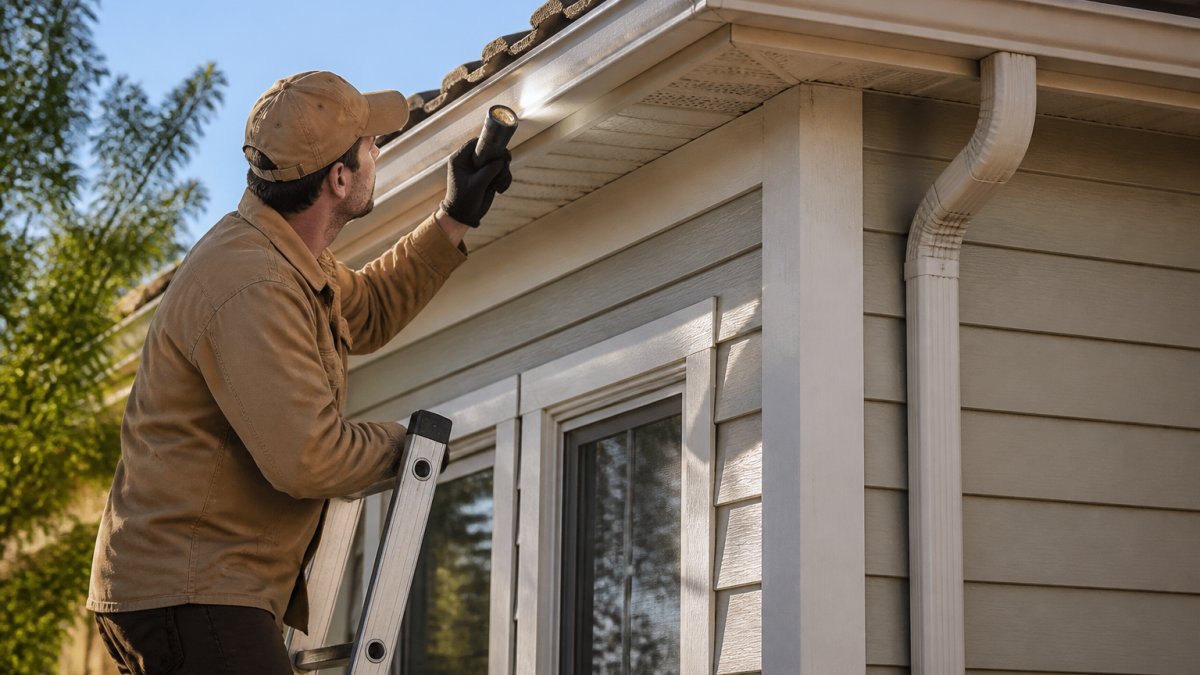
Walk the property twice: once at ground level, once with a ladder. Bring a flashlight and a phone camera. Photograph every gap you find, even small ones.
Attic, Roof, and Chimney Checks
Attic and roof entries are the classic ones. Look for torn soffit vents, lifted shingles, and gaps where the roofline meets a wall. Check the chimney cap.
Inside the attic, look for rub marks, droppings, and flattened insulation. These signs tell you which entry is active.
Foundation and Crawl Space Gaps
Crawl space vents, dryer vents, and the gap where siding meets the foundation are common weak spots. So are utility penetrations, where pipes and cables enter the house.
Check under decks and porches too. Those spaces stay dry and quiet, which makes them popular with skunks and opossums.
Sealing Gaps and Animal-Proofing a House Step by Step
Animal-proofing a house means closing every gap with a material the animal cannot chew, push, or dig through.
- Map the gaps. Photograph and number every entry you found. Rank them by activity.
- Clear the space first. Never seal an animal inside. Confirm the space is empty before closing anything.
- Match the material to the gap. Steel wool for small holes, hardware cloth for vents, metal flashing for rooflines.
- Secure the edges. Animals push at corners. Fasten every edge, not just the center.
- Check the fit. Push on the patch with your hand. If it moves, it will fail.
Watch out: stuffing a vent with foam alone is the most common mistake we see. Rodents chew straight through it in days.
Owners of older homes face extra limits. This guide to protecting historic homes from pests covers preservation-friendly materials in more detail.
How to Keep Animals Out From Under a House
Keeping animals out from under a house comes down to one rule: remove the welcome mat. Animals settle under homes for shelter, warmth, and safety from predators. Close the access and the appeal drops fast.
- Skirt decks and porches with metal mesh buried a few inches into the soil.
- Screen crawl space vents with hardware cloth, not chicken wire.
- Trim vegetation back from the foundation so animals lose cover.
Skunks and opossums dig under fences and foundations with ease. Bury the bottom edge of any barrier. A barrier that stops at the soil line is a suggestion, not a wall.
Humane Wildlife Removal and Species Timing
Humane wildlife removal means moving animals out without harm, and timing decides whether it works. Every species has a season when sealing is a bad idea, and the reason is almost always dependent young. A sealed mother will tear her way back in, and flightless young trapped inside will die and create a secondary odor and parasite problem.
The rule we follow: confirm the space is empty, then seal. Confirmation is not a guess. It is a check you can document.
How to Confirm a Space Is Empty Before Sealing
- Listen at dusk and dawn. Sit quietly near the entry for 15 to 20 minutes at both times. Scratching, chirping, or rustling means something is still inside.
- Look for a secondary exit. Most animals use more than one opening. A mother with young often moves them between openings, so a single sealed gap proves nothing.
- Check for young directly when it is safe. In an attic, look for a nest of shredded insulation, leaves, or fabric. Do not handle young with bare hands; wear gloves and wash afterward.
Species-by-Species Timing and Method Notes
- Squirrels: two birthing seasons in most of the country, typically late winter and mid-to-late summer. Check attics for young before sealing. Squirrels chew wood and aluminum, so use hardware cloth or metal flashing, not foam.
- Raccoons: spring and summer litters. A sealed mother will tear her way back in. Raccoons are strong enough to lift loose vent covers, so fasten every edge. In many areas, relocating a raccoon requires a permit or is prohibited; check your state wildlife agency before you trap.
- Bats: protected in many states during maternity season, usually late spring through summer. Sealing then traps flightless young inside. Bats also need a one-way door and a follow-up check, because a colony can number in the dozens and a single missed bat will die in the wall.
State wildlife agencies publish guidance on protected species and legal handling, and it is worth checking before you act. The timing rules above are general patterns, not a substitute for local rules.
Habitat Modification and Yard Habits That Deter Nuisance Wildlife
Habitat modification is the practice of changing your yard so it stops attracting animals.
Start with food. Secure garbage in cans with locking lids. Bring pet food inside at night. Pick up fallen fruit.
Then remove shelter. Stack firewood off the ground and away from the house.
Motion-activated lights help with some species. They do little against animals already used to people, so treat lights as one layer, not the answer.
Household Health Precautions for Children and Pets
Wildlife carries real health risks, and children and pets face the highest exposure. Droppings, urine, and nesting material can carry disease. Never sweep or vacuum dry droppings in a closed space; dampen them first and wear gloves.
Keep these rules for the household:
- Wear gloves for any cleanup, and wash hands after.
- Keep kids and pets out of attics and crawl spaces entirely.
- Bag and remove nesting material; do not compost it.
For families who want the whole approach to stay low-risk, this guide to non-toxic pest control in Santa Barbara explains pet-safe and child-safe methods, plus questions to ask before booking.
How to Verify Your Wildlife Exclusion Worked
Verification is simple, and it takes about two weeks. You are checking for silence and stillness.
- Listen at dusk. Sit quietly near the sealed area. Scratching or chirping means something is still inside.
- Recheck the patch. Look for fresh chew marks, pushed mesh, or new digging.
- Watch for tracks. A light dusting of flour at a gap shows footprints fast.
If activity continues after two weeks, the seal failed somewhere. Find the second entry. Animals rarely use just one.
Choosing a Guaranteed Wildlife Exclusion Service
A guaranteed wildlife exclusion service should stand behind the seal, not just the removal. Trapping an animal and leaving the gap open guarantees a repeat visit from the next one. The decision to hire is really a decision about access, height, and species risk.
When DIY Is Reasonable and When to Escalate
DIY exclusion is reasonable for ground-level gaps, crawl space vents, and yard-side sealing when you can see the gap, reach it safely, and confirm the space is empty. Escalate to a professional when any of these are true:
- The entry is on a roof, chimney, or second-story soffit.
- The animal is a bat, raccoon, or skunk, or you cannot confirm whether young are present.
- You have sealed once and activity continues after two weeks.
What Drives the Cost
Exclusion pricing is driven by access and materials, not by the animal alone. The main factors are:
- Height and access. Roof and chimney work needs ladders, fall protection, and often two technicians, which raises labor.
- Square footage of the seal. A single vent screen is a small job; a full roofline with multiple soffit gaps is a larger one.
- Materials. Hardware cloth, metal flashing, and one-way doors cost more than foam, and they last longer.
Ask for a written scope that lists each gap, the material for each, and whether the price includes a follow-up verification visit. A quote that lists only a total is hard to compare.
What a Real Guarantee Covers
A guarantee should cover re-entry, not just the initial visit. Ask what happens if an animal gets back in during the warranty period, how long the warranty runs, and whether it transfers if you sell the house. Get the answer in writing.
| Question | What a good answer looks like |
|---|---|
| What does the guarantee cover? | Re-entry at sealed points, with a defined warranty period |
| Do you seal or only trap? | Full exclusion with materials listed per gap |
| How do you handle young animals? | A clear, humane, legal process and a timing check |
| What methods do you use? | Species-specific, with one-way doors where needed |
| Is there a follow-up visit? | A scheduled verification check, not a call-back only |
At Ekoterra Gopher Pest and Wildlife Control, our work is built on eco-friendly methods and guaranteed results. We inspect, seal, and verify, so the fix holds after we leave. You can also reach our team directly to schedule an inspection.
Frequently Asked Questions
What is wildlife exclusion and is it worth it for a family home?
Wildlife exclusion is the practice of inspecting a property, sealing entry points, and making changes that keep animals out rather than simply trapping them. For family homes it is usually worth it because it addresses the cause of the problem. Removing one raccoon or squirrel without sealing the gap leaves the same entry open for the next animal. Exclusion also reduces animal damage to insulation, wiring, and roofing, and it lowers the chance of droppings or nesting material contaminating living space. A one-time inspection plus durable repairs often costs less than repeated removal calls.
Can I seal an entry point while an animal is still inside?
No. Sealing a gap while an animal is inside traps it, and a trapped animal may cause more damage trying to escape or die in the attic or wall cavity. Use the inspection step to confirm activity: look for fresh droppings, rub marks, tracks, or noises at dawn and dusk. If you are unsure, place a light dusting of flour at the suspected entry and check for tracks the next morning. Once you confirm the animal has left, seal the gap. Humane wildlife removal professionals can confirm exit timing and install a one-way door so the animal leaves and cannot return.
What materials actually keep wildlife from entering a home?
Hardware cloth with a mesh of about 1/4 inch or smaller, galvanized metal flashing, and metal vent covers hold up better than plastic mesh or foam. Foam sealant alone is not enough because rodents, squirrels, and raccoons can chew through it. For gaps along the foundation, use metal mesh packed with copper mesh or steel wool, then cover with a metal plate or concrete patch. On the roof, secure chimney caps and vent covers rated for wildlife. Check the material every season, since sun and rain degrade plastic faster than metal.
How can I keep wildlife out without using poison?
Focus on exclusion and habitat modification. Seal entry points with metal mesh and flashing, install chimney caps and vent covers, trim tree branches at least six feet from the roof, and keep garbage in locking bins. Remove pet food and bird seed at night, and clear brush piles and leaf litter away from the foundation. If an animal is already inside, use humane wildlife removal such as one-way doors and live traps set by a professional. These methods keep children and pets away from toxic baits and avoid secondary poisoning of hawks, owls, and neighborhood pets.
Wildlife exclusion is not a one-time patch. It is a set of habits, checks, and seals that keep working season after season. Ekoterra Gopher Pest and Wildlife Control handles the full job with eco-friendly methods, guaranteed results, and a verification visit so you know the work held. Get started with Ekoterra Gopher Pest and Wildlife Control and protect your home, your family, and the environment at the same time.
