
Table of Contents
- Non-Toxic Pest Control in Santa Barbara: What Homeowners Need to Know
- Comparison Table: Eco-Friendly and Non-Toxic Pest Control Options
- Pet-Safe Pest Control Santa Barbara: What to Verify Before Booking
- Child-Safe Pest Control Santa Barbara: Reading Safety Claims Carefully
- Integrated Pest Management for Homes: A Lower-Toxicity Framework
- Questions to Ask a Pest Control Company About Treatment Safety
- Pest-by-Pest Suitability: Rodents, Termites, Ants, Bed Bugs, and Wildlife
- Conclusion: Choosing a Non-Toxic Provider with Confidence
- Frequently Asked Questions
Last Updated: October 15, 2026
Non-Toxic Pest Control in Santa Barbara: What Homeowners Need to Know
Finding pest control companies in Santa Barbara that specialize in non-toxic methods safe for pets and children comes down to one thing: verified specifics, not marketing language.
Most homeowners start this search after a scare, not a sales pitch.
Here's what most guides get wrong: they treat "eco-friendly" as a single checkbox. In practice, providers range from fully poison-free approaches to standard chemicals with a green label.
How This Guide Was Built
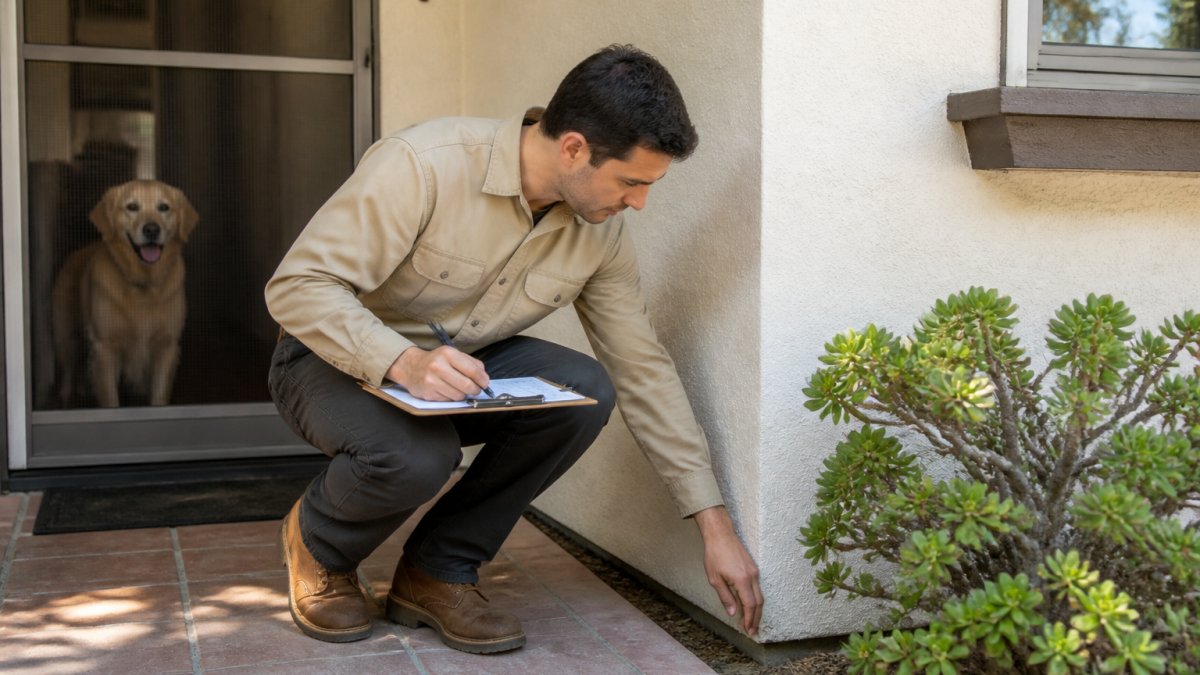
We built this guide around what providers can document, not what they advertise. That means we looked at three things: the treatment methods described in writing, the safety language used for pets and children, and the questions a homeowner can ask to verify both.
Three verification standards shaped every recommendation:
- Method transparency: Does the provider name the specific techniques used, or only promise "safe" results?
- Safety documentation: Are pet- and child-safety claims backed by defined treatment protocols?
- Pest-specific suitability: Does the approach actually work for the pest in question, or just sound gentler?
Comparison Table: Eco-Friendly and Non-Toxic Pest Control Options
Most guides treat "non-toxic," "eco-friendly," and "green" as interchangeable. They are not. What actually protects pets and children is the method, the active ingredient (if any), where it is placed, and how long the area stays off-limits afterward.
| Method | What It Actually Is | Active Ingredient | Typical Placement | Pet/Child Exposure Profile | Works Best For |
|---|---|---|---|---|---|
| Exclusion and sealing | Physical blocking of entry points with mesh, foam, copper mesh, or concrete | None | Cracks, gaps, vents, pipe penetrations, rooflines | No chemical exposure; risk is only tools and sealants during work | Rodents, wildlife, occasional ants trailing from outside |
| Sanitation and habitat removal | Removing food, water, and harborage that sustains pests | None | Kitchens, garages, crawlspaces, yards | No chemical exposure | Ants, cockroaches, rodents, wildlife |
| Traps (snap, live, glue) | Mechanical capture or kill | None | Along walls, inside cabinets, near entry points | Physical hazard only; place out of reach of pets and children | Rodents, gophers, some wildlife |
| Tamper-resistant bait stations | Enclosed bait blocks or gel in locked stations | Varies: anticoagulant rodenticides, boric acid, hydramethylnon, fipronil | Exterior perimeter, locked inside stations | Low exposure if stations are locked and anchored; secondary poisoning risk to pets and wildlife remains with rodenticides | Rodents, ants, cockroaches |
| Targeted low-toxicity sprays | Spot application of reduced-risk products | Varies: diatomaceous earth, essential-oil formulations, insect growth regulators, botanical extracts | Cracks, baseboards, void spaces, exterior perimeter | Re-entry interval applies; some essential oils are toxic to cats | Ants, spiders, occasional invaders |
| Heat treatment | Raising ambient temperature to lethal levels for pests | None | Whole room or structure | No residue; occupants and pets vacate during treatment | Bed bugs |
| Biological control | Introducing or conserving natural predators | None | Outdoors, landscape | No chemical exposure | Aphids, some lawn and garden pests |
The pattern that matters: methods with no active ingredient (exclusion, sanitation, traps, heat) carry no toxicant exposure risk, but they take longer and depend on finding the source.
A second distinction readers rarely see: "reduced-risk" and "minimum-risk" are actual EPA categories. Minimum-risk pesticides are exempt from federal registration because their active ingredients appear on a specific EPA list, but exempt does not mean harmless, dose, placement, and species sensitivity still matter. That is why the table above separates placement and exposure profile from the product name.
Pet-Safe Pest Control Santa Barbara: What to Verify Before Booking
Pet-safe pest control Santa Barbara homeowners can rely on starts with a written answer to one question: what exactly goes into and around your home, and how long does it stay a concern? A provider that cannot name its methods, products, and re-entry times before arrival is not offering pet-safe service, it is offering a promise.
What a Real Treatment Plan Contains
Ask for the plan in writing before you book. A complete one includes:
- Active ingredient name for every product, not just the brand. "Rodent bait" is not enough; "bromadiolone block in a locked exterior station" is.
- EPA registration number for each product. You can look it up in the EPA's pesticide product database to confirm what it is and what it is labeled for.
- Application zones, interior only, exterior perimeter only, or both, with a simple diagram or room list.
- Re-entry interval for each treated area, stated in hours. This is the time pets and children should stay off the surface.
Questions to Ask About Pet Exposure
- What specific products will be applied inside the home versus outside?
- How long should pets stay off treated surfaces, and does that change for cats versus dogs?
- Are baits placed in tamper-resistant stations pets cannot access, and are those stations anchored?
- What happens if a pet comes into contact with a treated area?
- Can you provide the product label or safety data sheet before treatment?
Why Re-Entry Time Matters More Than the Word "Safe"
Even low-toxicity products have a re-entry interval. A surface that is dry to the touch is not necessarily clear, some residues remain active for hours, and granular or dust formulations can be tracked indoors on paws and shoes. The practical rule most practitioners follow: keep pets and children off treated surfaces until the product is fully dry and the labeled re-entry time has passed, whichever is longer.
A Quick Pre-Booking Checklist
Before you sign, confirm you have received:
- A written treatment plan with active ingredients and EPA registration numbers.
- Re-entry intervals in hours for each treated area.
- Confirmation that any bait is in tamper-resistant, anchored stations.
- A species-specific note if you have cats, birds, reptiles, or fish.
- The Poison Control number and the product's first-aid language.
- A named technician or supervisor you can call if a question comes up after treatment.
A provider who supplies all six is showing you a process. One who deflects is showing you a sales script.
Child-Safe Pest Control Santa Barbara: Reading Safety Claims Carefully
Child-safe pest control Santa Barbara families can trust depends on understanding what the term does and doesn't mean. "Child-safe" is a marketing phrase, not a certification. No agency issues a child-safe seal for pest control, so the phrase means whatever the provider intends it to mean.
What you can verify is the method. Poison-free approaches carry no toxicant exposure risk because no toxicant is used. Reduced-chemical approaches lower risk by limiting where and how much product is applied.
What 'Child-Safe' Does and Does Not Mean
It does not mean zero risk in every scenario. Even low-toxicity products have re-entry intervals, the time you should keep children away from a treated area.
According to EPA guidance on pesticide safety and children, children can be more sensitive to pesticides because their bodies are still developing and they often put hands and objects in their mouths. That's why re-entry timing and application placement matter more than the word "safe" on a brochure.
Integrated Pest Management for Homes: A Lower-Toxicity Framework
Integrated pest management for homes is a framework that prioritizes prevention, monitoring, and targeted treatment over routine chemical application. It's the backbone of most genuinely low-toxicity pest control, and it's worth understanding before you compare providers.
The approach follows a sequence:
- Inspect to identify the pest and find entry points.
- Exclude by sealing gaps, cracks, and openings.
- Remove food, water, and shelter sources.
- Monitor with traps or stations to track activity.
- Treat only the affected area, using the least aggressive method that works.
For rodent control and rat control, this often means exclusion and trapping rather than poison, which also avoids the secondary poisoning risk that rodenticides pose to pets and wildlife. For termite control, it means a proper termite inspection before any treatment decision, since termite inspection findings determine whether baiting, barriers, or another method fits.
Questions to Ask a Pest Control Company About Treatment Safety
Questions to ask a pest control company about treatment safety should cover method, product, timing, and guarantees. Ask them before you book, not after the truck arrives.
- Which pests does your non-toxic or reduced-chemical approach actually handle well, and which require something stronger?
- Do you offer a complimentary quote and upfront pricing before any work begins?
- What does your guarantee cover if the pest returns?
- Are your technicians trained in wildlife exclusion and humane trapping?
- Can you share customer reviews or references from similar properties?
A provider that answers these clearly is showing you its process. One that deflects is showing you its sales script.
Pest-by-Pest Suitability: Rodents, Termites, Ants, Bed Bugs, and Wildlife
Not every pest responds equally to non-toxic methods, and honest providers say so.
Rodent and rat control: Exclusion and trapping work well and avoid poison entirely.
Ant control: Baiting and entry-point sealing handle most ant problems.
Bed bug control: This is the hardest case for non-toxic methods.
Wildlife control and exclusion: Humane removal plus sealing entry points is the standard, and it's entirely chemical-free.
Conclusion: Choosing a Non-Toxic Provider with Confidence
The gap between a "green" label and a genuinely non-toxic approach comes down to documentation and method. Ask what's used, where it's applied, and how long to keep pets and children clear. Providers who answer clearly earn your business.
Ekoterra Gopher Pest and Wildlife Control specializes in eco-friendly pest control solutions, environmentally conscious services, and guaranteed results across Ventura, Los Angeles, and Santa Barbara Counties.
Frequently Asked Questions
What is the safest pest control company for homes with pets and children?
There is no single safest company, but the safest providers share traits: they use integrated pest management for homes, start with exclusion and sanitation before chemicals, and document every product applied. Ask for the product label, safety data sheet, and re-entry time. Look for a locally owned, highly rated provider with verified customer reviews that specifically mention pets and children. Non-toxic pest control works best when the provider explains why each step is needed.
How long should pets and children stay away after pest control treatment?
Re-entry time depends on the product and method used, not on the company name. Baits, traps, and exclusion work usually require no evacuation at all. Some sprays and dusts require waiting until surfaces are dry, often a few hours. Ask the technician for the exact re-entry interval in writing before they start. If a provider cannot give you a specific number tied to a specific product, that is a warning sign.
Are non-toxic pest control treatments effective?
Yes, when they are matched to the pest. Trapping, exclusion, baiting, and habitat modification handle rodents, wildlife, and many ant problems without broad spraying. Termite control often still needs targeted treatments, but these can be placed away from living areas. The key is a pest inspection first, then a plan that combines prevention, exclusion, and treatment. A poison-free approach fails when it skips the inspection step.
What questions should I ask a pest control company about its products?
Ask which products will be applied, where, and why each one is necessary. Request the EPA registration number and the safety data sheet. Ask about re-entry time for pets and children, and whether the technician is licensed in California. Ask if they offer a complimentary quote with upfront pricing and a written service plan. Finally, ask what happens if the pest problem returns, and get the guarantee in writing.