Table of Contents
- What to Look for in a Wildlife Removal Company
- How to Evaluate Wildlife Removal Company Reviews
- California Wildlife Trapping Laws: What Homeowners Need to Know
- Wildlife Exclusion and Entry-Point Sealing: The Permanent Fix
- Dead Animal Removal Cost: What Affects the Price
- Comparing Top-Rated Providers in Southern California
- Frequently Asked Questions
Last Updated: October 15, 2026
What to Look for in a Wildlife Removal Company
Finding top-rated professional wildlife removal companies for residential properties in Southern California starts with one hard truth: the cheapest quote usually costs the most later. Wildlife removal is not pest spraying.
Below, we break down the credentials, methods, and pricing questions that separate a real wildlife control specialist from a truck with a trap in the back.
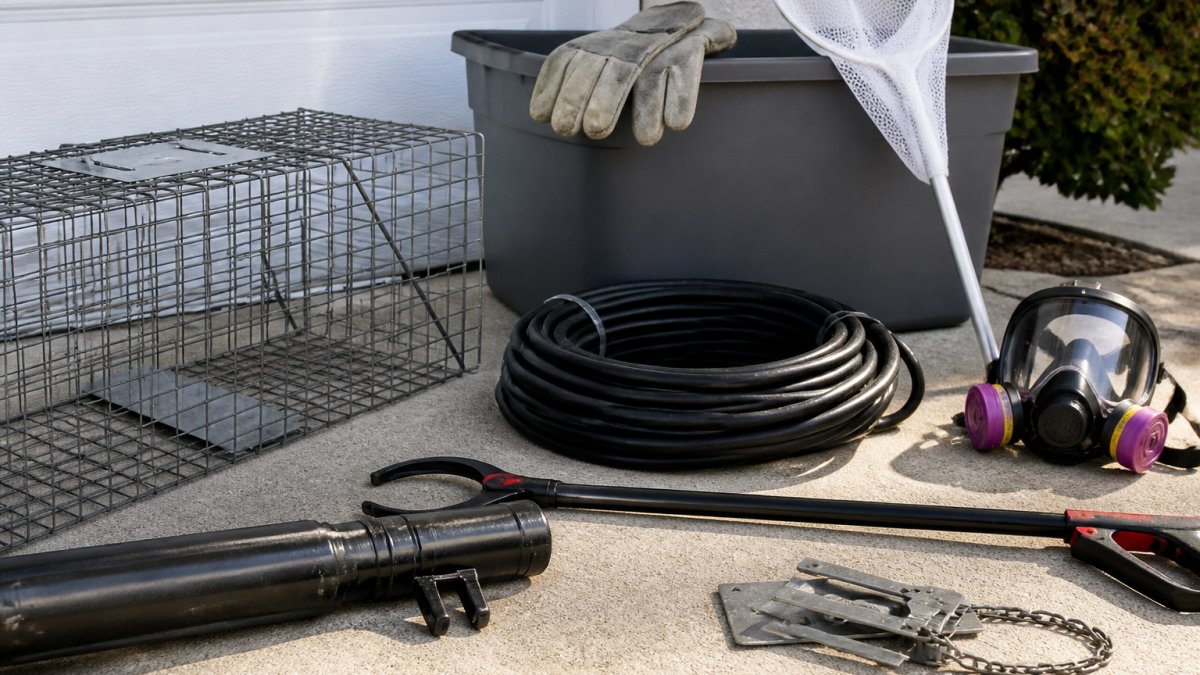
Wildlife removal is the licensed process of trapping, relocating, or excluding nuisance animals such as raccoons, opossums, squirrels, skunks, and rodents from a home or business, then sealing the entry points they used.
Licensing and Insurance Requirements
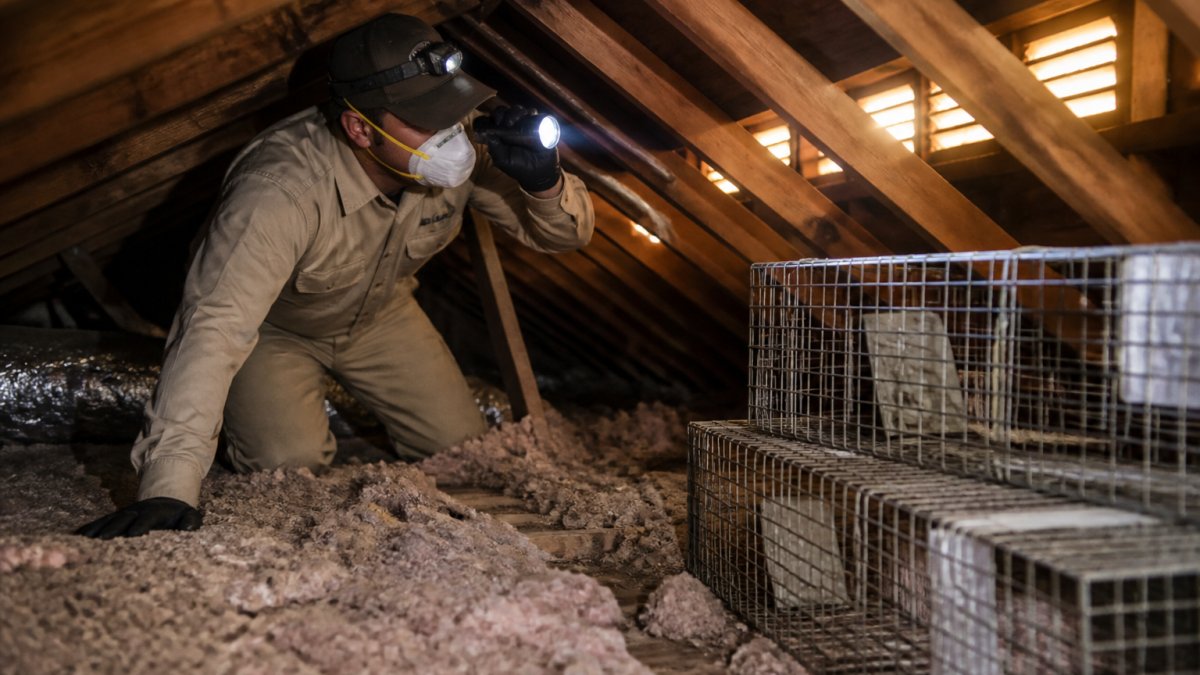
Ask for two documents before anyone walks your property: a state-issued trapping permit or wildlife control license, and a current certificate of insurance.
California regulates the trapping of many mammal species, and a legitimate operator should be able to show credentials on request. Unlicensed operators often skip insurance entirely, which leaves you exposed if a technician is injured on your roof or a protected species is mishandled.
Humane Methods and Eco-Friendly Practices
Humane removal means the animal is captured without injury, handled by trained technicians, and dealt with according to state rules, not dumped in the nearest canyon.
Eco-friendly wildlife control also means the treatments used inside your home are safe for children and pets. Ask what products a company applies, where they apply them, and whether the methods are non-lethal. A provider that cannot answer those three questions plainly is not the one you want near your attic.
How to Evaluate Wildlife Removal Company Reviews
Wildlife removal company reviews tell you more about a provider's follow-up than its first visit. Anyone can trap an animal. The reviews that matter describe what happened weeks later, when the entry point was or wasn't sealed.
Read for patterns, not star averages. A 4.8 rating built on 40 reviews that all mention "quick response" tells you little about long-term results. Look for reviews that name the species, the fix, and the outcome.
Red Flags in Reviews and Star Ratings
- Reviews that only praise speed. Fast trapping without exclusion work means the problem returns.
- No reviews older than a few months. A company with a thin, recent review history may be new or rebranded.
- Repeated complaints about the same issue. If several reviewers mention animals returning, believe them.
Cross-check reviews across more than one platform. A company with strong ratings on a single site and none elsewhere is worth a second look.
California Wildlife Trapping Laws: What Homeowners Need to Know
California wildlife trapping laws restrict which species you can trap, how you can trap them, and what you may do with a captured animal. Homeowners cannot simply set a trap and relocate a raccoon to the hills.
Most native wildlife is protected under state law, and relocation of certain species is limited or prohibited because moving animals spreads disease and disrupts ecosystems. The California Department of Fish and Wildlife regulations on wildlife control set the rules on trapping, handling, and relocation that any legitimate operator follows.
This is the single biggest reason to hire a licensed company rather than a handyman with a cage trap. Getting it wrong can mean fines, and it can mean an animal dies in a trap you set illegally.
Wildlife Exclusion and Entry-Point Sealing: The Permanent Fix
Wildlife exclusion and entry-point sealing is the work that actually solves the problem. Trapping removes the animal you have. Sealing the entry points prevents the next one from moving in.
A company that traps and leaves is running a subscription business by accident. You will call them again next season, and the season after that. Exclusion work closes the loop.
Common Entry Points Around Your Home
- Roof and soffit gaps. Raccoons and squirrels pry these open; they are the most common entry.
- Foundation vents and crawl space openings. Skunks and opossums use these to den.
- Chimney caps. A missing or damaged cap is an open door for birds and raccoons.
Dead Animal Removal Cost: What Affects the Price
Most providers in this space publish a phone number instead of a price, which is why homeowners cannot comparison-shop.
How Dead Animal Removal Is Priced
Pricing generally follows one of three models:
- Flat inspection or diagnostic fee. Many companies charge a set fee to locate the carcass and assess access. This fee is often credited toward the removal if you hire them.
- Removal fee by location and access. The base removal price scales with how hard the carcass is to reach. An open crawl space is the low end. A wall cavity, a sealed attic, or a space under a slab is the high end because it requires cutting, extraction, and repair.
- Add-on services. Sanitation, odor treatment, debris removal, and entry-point sealing are frequently quoted separately. Ask whether each is included or added.
Factors That Move the Number
| Cost Factor | Why It Matters |
|---|---|
| Location of carcass | Wall, attic, and slab access require cutting and repair |
| Species and size | Larger animals mean more material and stronger odor treatment |
| Time since death | Longer decomposition means more contamination and deeper odor penetration |
| Contamination cleanup | Feces, urine, and nesting debris need sanitizing, not just removal |
| Odor treatment | Sealed spaces hold smell and often need fogging or ozone work |
| Follow-up prevention | Sealing entry points adds labor and materials |
| After-hours or emergency call | Nights, weekends, and holidays commonly carry a premium |
How to Build Your Own Estimate
You will not get an exact number without an on-site look, but you can bracket the job before you call:
- Identify the location. Open, accessible spaces are the cheapest. Enclosed cavities are the most expensive.
- Note the species if you can. Size drives material and odor treatment.
- Ask whether cleanup is included. If it is not, ask for it as a line item so you can compare apples to apples.
- Ask about the guarantee. A removal with no follow-up warranty is cheaper up front and often more expensive overall.
- Request the estimate in writing. A written scope with line items is the only fair basis for comparison.
Why You Should Get More Than One Quote
Because pricing models vary, two companies can quote very different numbers for the same job and both be reasonable. One may bundle cleanup and sealing; the other may list them separately. The only way to compare is to normalize the scope: ask every provider to quote removal, sanitation, odor treatment, and entry-point sealing as separate lines, then compare the totals.
For current pricing on dead animal removal and exclusion work in your area, contact Ekoterra Gopher Pest and Wildlife Control directly for a written quote.
Comparing Top-Rated Providers in Southern California
Instead of trusting a star average, score every company you contact on the same six criteria and compare the answers side by side.
The Six-Point Provider Scorecard
Ask each provider the identical questions, in writing, and record the answers. A company that scores well across all six is worth a higher quote than one that wins on price alone.
| Criterion | What to Ask | What a Strong Answer Looks Like | What a Weak Answer Looks Like |
|---|---|---|---|
| Credentials | "What is your state trapping permit number, and can you email your certificate of insurance?" | Sends both the same day, no follow-up needed | Says "we're licensed" but won't produce a number |
| Service area and response time | "Do you serve my ZIP code, and what is your realistic arrival window today?" | Names your city, gives a same-day or next-day window | Vague "we cover the area" with no window |
| Method | "Will you trap, exclude, or both, and how do you handle a protected species?" | Describes exclusion-first approach and species-specific handling | Talks only about trapping and hauling away |
| Cleanup scope | "Does the quote include sanitation, odor treatment, and debris removal?" | Itemizes each in the written scope | Says cleanup is "extra" or won't commit |
| Guarantee | "What happens if animals return after the job?" | Written warranty period with a return visit | Verbal "we stand behind our work" with no terms |
| Review evidence | "Which platforms are you reviewed on, and how recent is the newest review?" | Consistent reviews across multiple platforms, recent activity | One platform only, or nothing newer than several months |
How to Read the Answers
Score each answer as strong, partial, or weak. A provider with five strong answers and one partial is a safer hire than one with three strong answers and three weak ones, even if the second company quotes less. The pattern matters more than any single answer.
Two practical checks sharpen the comparison:
- Ask for a written estimate, not a phone number. A phone quote is a guess. A written estimate forces the provider to state the scope, the exclusions, and the price, which is what you compare.
- Call the same day you request the estimate. Response speed on the sales call is a reasonable preview of response speed on the service call. A company that takes three days to return a quote will likely take three days to return for a follow-up visit.
Why This Beats a Star Rating
A 4.9-star average tells you other people were satisfied. It does not tell you whether the quote included exclusion work, whether the technician was insured, or whether the company returns calls after the invoice is paid. The scorecard answers those questions directly, which is the difference between hiring a top-rated company and hiring a company that happens to have good reviews.
U.S. Fish and Wildlife Service guidance on living with wildlife
Frequently Asked Questions
How much does dead animal removal cost?
Dead animal removal cost depends on the animal's size, location, and accessibility. Removing a small animal from an open crawl space costs less than extracting a large animal from a sealed attic or wall cavity. Additional factors include whether deodorization, sanitation, or repairs are needed. Most companies provide a phone consultation and inspection before quoting. Request a written estimate that covers removal, cleanup, and preventive sealing so you can compare providers fairly.
Is it legal to trap animals on your property in California?
California wildlife trapping laws allow homeowners to trap certain nuisance animals on their own property, but regulations vary by species. Some animals require a permit from the California Department of Fish and Wildlife, and relocation is often restricted or prohibited. Trapping without proper licensing can result in fines. Hiring a licensed wildlife removal company ensures compliance with state regulations and humane handling standards, and it protects you from legal liability.
What should I look for when hiring a wildlife removal company?
Look for a company with proper licensing, insurance, and a track record of positive wildlife removal company reviews. Verify that technicians use humane removal methods and offer exclusion work to seal entry points after removal. Ask about same-day or next-day appointment availability, emergency response, and whether they provide written guarantees. A reputable provider will inspect your property, explain the process clearly, and give you a detailed quote before starting work.
Do wildlife removal companies seal entry points after removing animals?
Many top-rated companies include wildlife exclusion and entry-point sealing as part of their service, but not all do. Sealing is critical because it prevents new animals from entering the same openings. Ask specifically whether the quote includes exclusion work, what materials they use, and whether they offer a warranty on the repairs. Without sealing, you risk a repeat infestation within weeks, especially during breeding season when animals actively seek shelter.
Wildlife problems rarely fix themselves, and the wrong provider can leave you paying for the same issue twice. Ekoterra Gopher Pest and Wildlife Control handles the full job: humane removal, exclusion and entry-point sealing, and the sanitation work that keeps odors and contamination out of your home. We serve residential and commercial properties with eco-friendly methods and guaranteed results. Get started with Ekoterra and get a property that stays wildlife-free.