Table of Contents
- Safe Pest Control for Pets and Kids: What Actually Matters
- Integrated Pest Management for Homes: The Framework That Reduces Risk
- Natural Pest Control Methods That Work (And Their Real Limits)
- Reading the Label: Pet-Safe Ingredients and Species-Specific Toxicity
- How Long to Keep Pets Away After Pest Control
- Post-Application Cleaning and the Emergency Response Guide
- Pest Prevention Tips for Families: Stopping the Next Infestation
- Conclusion: Building a Safer Home Year-Round
- Frequently Asked Questions
Last Updated: October 6, 2026
Safe Pest Control for Pets and Kids: What Actually Matters
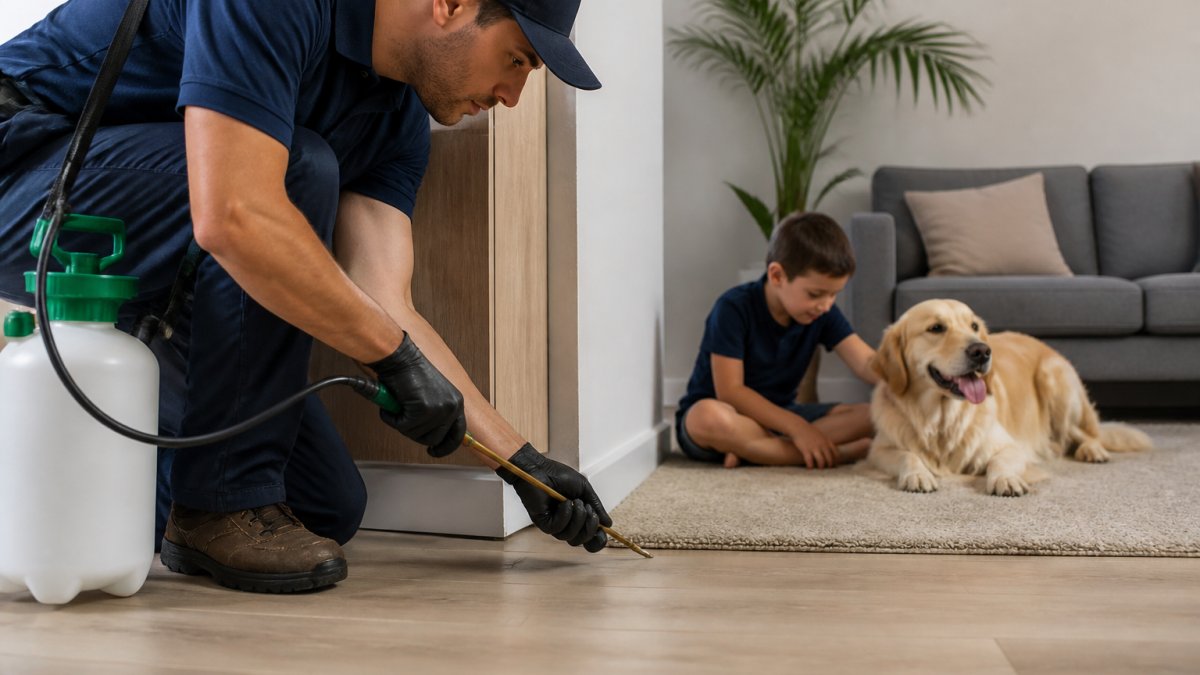
Safe pest control for pets and kids starts with one principle: use the least toxic method that solves the problem, and keep everyone off treated surfaces until the product has fully dried or the re-entry interval has passed. This guide from Ekoterra Gopher Pest and Wildlife Control breaks down what works, what the label tells you, and how to build a home that doesn't invite pests back.
Most homeowners reach for a spray can first. That's backwards: prevention, exclusion, and targeted treatment carry far less risk than blanket chemical application and hold up longer.
The stakes are real: children and pets share the floor with pests, and their smaller body weight means even low-toxicity products demand respect. Below is the framework professionals use, the ingredients worth trusting, and how long to keep everyone clear.
Integrated Pest Management for Homes: The Framework That Reduces Risk
Integrated pest management for homes is a tiered approach that starts with prevention and only escalates to chemical treatment when monitoring shows it's necessary. Rather than spraying on a schedule, IPM relies on inspection, sanitation, exclusion, and targeted intervention.
The tiers work in order:
- Inspect and identify. Confirm which pest you're dealing with before treating anything. A bait that works on ants does nothing for rodents.
- Sanitize and exclude. Seal cracks, repair screens, store food in sealed containers, and fix leaks.
- Monitor. Use traps or sticky cards to track activity and confirm whether your steps worked.
- Treat selectively. Apply the least toxic effective product only where the pest travels.
- Evaluate. If activity continues, adjust the approach rather than escalating blindly.
This sequence matters because it reduces the total volume of any product in your home. The EPA's integrated pest management guidance outlines the same hierarchy for residential settings.
Natural Pest Control Methods That Work (And Their Real Limits)
Natural pest control methods work well for prevention and light infestations, but they have honest limits. Diatomaceous earth damages the outer shell of crawling insects through surface contact, but it's effective only in dry, undisturbed areas and nearly useless once wet.
What holds up:
- Diatomaceous earth for crawling insects along baseboards and entryways, reapplied after moisture.
- Botanical-based repellents derived from plant oils for perimeter and indoor deterrent.
- Traps and bait stations for monitoring and knocking down rodent activity.
Where natural methods fall short is deep or established infestations. A gopher tunneling under a lawn or rodents nesting in a wall cavity won't be solved by a repellent spray.
Reading the Label: Pet-Safe Ingredients and Species-Specific Toxicity
No pesticide is universally pet-safe, which is why ingredient-level transparency matters more than any "green" label.
Species matter enormously. Cats metabolize many compounds differently than dogs, and some ingredients fine for dogs are dangerous for cats.
Pet-safe ingredients are those with low mammalian toxicity when used per label instructions. Common examples include diatomaceous earth, certain botanical oils, and boric acid in bait form, which is placed where pets can't reach it.
Synthetic pesticides aren't automatically unsafe. Many are rigorously tested and safe when applied correctly.
| Ingredient Type | Typical Use | Pet Consideration |
|---|---|---|
| Diatomaceous earth | Crawling insects | Low risk; avoid inhaling dust |
| Pyrethrin | Contact kill sprays | Toxic to cats and fish |
| Boric acid bait | Ants, roaches | Safe in sealed stations only |
| Rodent bait stations | Rodents | Must be tamper-resistant, pet-proof |
| Botanical oils | Repellent, barrier | Generally low risk; check label |
The National Pesticide Information Center maintains plain-language profiles on active ingredients.
How Long to Keep Pets Away After Pest Control
The re-entry interval depends on the product, application method, and surface, not a single universal number. The label is the legal authority, but most products fall into recognizable categories that help you plan before opening the container.
Re-entry intervals by application type (typical label ranges):
| Application Type | Typical Re-Entry Interval | Key Condition |
|---|---|---|
| Indoor aerosol/fogger | Ventilate per label, then 2-4 hours minimum | All surfaces dry; air exchanged |
| Indoor crack-and-crevice spray | Until dry, often 1-2 hours | Treated zones only |
| Indoor broadcast spray | 4-6 hours or until fully dry | Carpet and upholstery hold moisture longer |
| Outdoor perimeter barrier | Until dry, typically 2-4 hours | Plus any label-specified interval |
| Outdoor granular broadcast | After watering-in and drying | Pellets can be tracked indoors on paws |
| Bait stations / tamper-resistant boxes | No re-entry interval if sealed | Must remain inaccessible |
| Rodenticide in tamper-resistant station | No re-entry interval if sealed | Never place where a pet can chew the station |
Surface matters as much as product. Non-porous surfaces, tile, sealed countertops, glass, dry quickly and hold little residue.
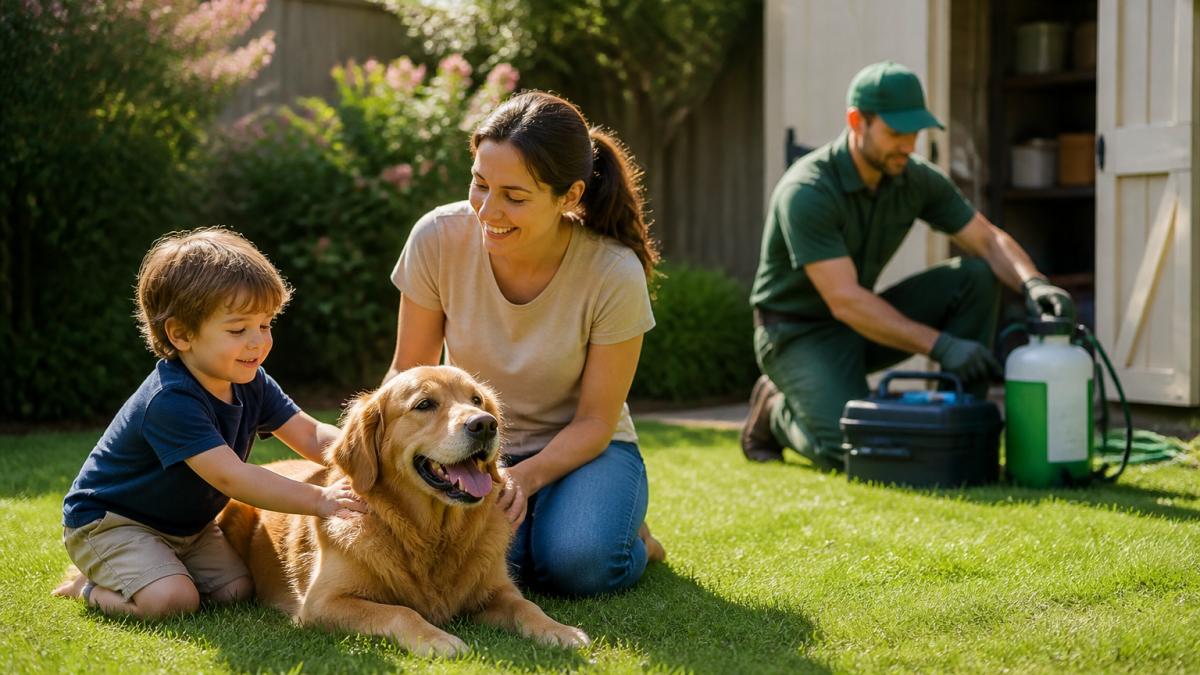
A practical re-entry checklist:
- Read the re-entry interval on the label before application, photograph it
- Confirm surfaces are dry to the touch, not just less wet
- Ventilate indoor spaces for the full interval the label specifies
Post-Application Cleaning and the Emergency Response Guide
Most guides stop at "wipe down surfaces." That advice is incomplete and sometimes wrong. Cleaning after a treatment follows a specific order, because the wrong move can spread product into areas it was never meant to reach.
The cleaning sequence:
- Wait out the full re-entry interval. Do not start cleaning early. Cleaning during the interval puts you in the treated zone without protection.
- Ventilate first. Open windows and run fans before you touch anything. Airborne residue settles; moving air clears it.
- Clean only what the label permits. Some labels prohibit wiping treated surfaces because it removes the residual that makes the product work. Others require it. Read before you scrub.
- Work top to bottom, dry to wet. Dust high surfaces first with a damp cloth, then move to floors. A dry cloth on a treated surface can aerosolize residue.
- Use a dedicated cloth and discard or wash it separately. Do not reuse the same rag on food-contact surfaces.
- Clean food-contact surfaces last and separately. Counters, tables, highchair trays, and cutting boards get their own cloth and their own rinse.
Surface-by-surface protocol for homes with crawling infants:
- Floors and rugs: Vacuum with a HEPA filter after the interval, then damp-mop with mild detergent. For broadcast-sprayed carpets, a second vacuum pass 24 hours later picks up loosened residue.
- Baseboards and trim: Wipe the top edge only with a damp cloth. Do not scrub the treated crevice, that pushes product onto the floor where a crawling child's hands will find it.
- Furniture: Wipe hard surfaces; vacuum upholstery with a HEPA attachment. If the label prohibits cleaning upholstery, cover it with a washable throw for the interval.
Emergency response: what to do if a pet or child is exposed.
Symptoms in pets: drooling, vomiting, diarrhea, tremors, muscle twitching, lethargy, unusual agitation, dilated pupils, difficulty breathing, or seizures. In children: nausea, vomiting, headache, dizziness, excessive salivation, pinpoint pupils, or unexplained lethargy.
The response sequence:
- Move the person or animal away from the treated area immediately. Fresh air first.
- Skin contact: Wash thoroughly with soap and water for 15 minutes. Remove and bag contaminated clothing.
- Eye contact: Flush with lukewarm water for 15-20 minutes, holding the eyelid open.
- Inhalation: Get to fresh air. If breathing is labored, call 911.
- Swallowed: Do not induce vomiting. Do not give food, milk, or water unless a medical professional tells you to. Inducing vomiting can cause more damage with petroleum-based or caustic products.
- Call for guidance with the label in hand. For pets, call your veterinarian or an animal poison control service. For people, call Poison Control. Have the active ingredient, EPA registration number, and product name ready.
- If symptoms are severe, seizures, unconsciousness, difficulty breathing, call 911 or go to an emergency vet immediately. Do not wait for a phone consultation.
Keep the Poison Control number and your vet's number saved before you ever apply anything. If you have a bird or reptile in the home, add an avian or exotic-animal vet to that list, many general-practice vets will refer you out, and the referral costs time you may not have.
Pest Prevention Tips for Families: Stopping the Next Infestation
Pest prevention tips for families come down to removing what pests need: food, water, and shelter. Do that consistently and you'll need far less treatment.
- Store cereal, pet food, and pantry staples in sealed containers, not bags.
- Fix leaky faucets and eliminate standing water.
- Seal gaps around pipes, doors, and foundations with copper mesh or sealant.
Preventative maintenance beats reactive spraying every time. A quarterly walk-around for new gaps and moisture takes minutes and prevents infestations that require professional intervention.
For larger properties, HOAs, or food service operations, a consistent professional schedule keeps compliance and safety on track without guesswork, especially with a provider who documents every treatment and uses eco-friendly methods.
Conclusion: Building a Safer Home Year-Round
The challenge with safe pest control for pets and kids isn't finding a product. It's building a routine that keeps pests out without putting your family at risk, season after season. Ekoterra Gopher Pest and Wildlife Control handles that for homeowners and property managers across Ventura, Los Angeles, and Santa Barbara Counties, using eco-friendly pest control solutions, environmentally conscious services, and guaranteed results. Protect your health, family, and property with pest management you can trust.
Frequently Asked Questions
What pest control products are safe for both kids and pets?
Products with botanical-based active ingredients like pyrethrin, diatomaceous earth, and plant-derived oils carry lower toxicity levels for mammals than synthetic pesticides. The label instructions and safety data sheet tell you the real story: look for an EPA registration number, a re-entry interval, and a clear statement about children and pets. Bait gel placed in sealed stations and rodent bait stations keep the active ingredients away from kids and pets entirely. No pesticide is risk-free, so always confirm the application method and residual treatment details before anyone re-enters the treated area.
How long should children and pets stay away after pest control?
Re-entry intervals vary by product and application method. Many indoor sprays and residual treatments require two to four hours of ventilation before kids and pets return; some foggers and barrier treatments need longer. Outdoor lawn applications often call for waiting until the surface is dry, which can take several hours. The label is the final authority, and a professional applicator should give you a specific time in writing. If you are unsure, wait longer and open windows to improve indoor air quality before anyone re-enters.
Are natural pest control products always safe for children and pets?
No. 'Natural' and 'plant-derived' do not automatically mean non-toxic. Botanical-based products like pyrethrin still carry toxicity levels that matter for cats, fish, and small pets, and essential oil repellents can cause reactions in some animals. Diatomaceous earth is a low-risk option when it is food-grade and applied away from breathing zones. Always read the label, check the safety data sheet, and keep pets away during application. Natural pest control methods reduce risk, they do not remove it.
What should I ask a pest control company before treatment?
Ask for the active ingredients in writing, the safety data sheet, and the re-entry interval for each product they plan to use. Ask whether the treatment is a contact kill, a residual treatment, or a bait gel, because each has different exposure risks. Confirm how they handle pets and kids during application and whether they use integrated pest management for homes. A professional, eco-friendly provider should answer these questions without hesitation and give you a written safety protocol before they start.
How do I get rid of bugs in my house without harming pets?
Start with prevention: seal cracks, store food in sealed containers, fix leaks, and reduce clutter that gives pests harborage. For active problems, use sealed bait stations, sticky traps placed out of reach, and targeted diatomaceous earth in wall voids. Vacuum regularly and wash pet bedding to control fleas and ticks. If the infestation is widespread, hire a provider that practices integrated pest management for homes and uses pet-conscious products. Post-application cleaning protocols, like wiping surfaces and washing pet bowls, add another layer of safety.
Is there any pesticide that doesn't harm pets?
No pesticide is completely harmless, but some carry much lower risk when applied correctly. Diatomaceous earth, sealed bait gel stations, and mechanical traps pose minimal exposure risk when placed away from pets. Botanical-based products with pyrethrin are toxic to cats and fish, so they require strict re-entry intervals. The safest approach combines low-toxicity products, proper application method, and a clear re-entry interval. Always follow label instructions and consult your veterinarian if your pet has a health condition.