Quick Summary
Facial mole removal is worth it when a clinician first confirms the spot is benign, since changing, bleeding or irregular moles need evaluation and possibly biopsy before any removal. Cosmetic removal of a long-stable, benign mole is a reasonable choice that you can plan at your own pace.
- A dermatologist usually evaluates first, often with a dermatoscope, before deciding on removal.
- Watch for growth or shape change, irregular edges, two or more colors, non-healing bleeding, or a new mole after age 30.
- Confirm in writing that removed tissue will be sent to a pathology lab, since this is not guaranteed.
- Insurance typically covers removal only when medical necessity is documented; cosmetic removal is usually paid out of pocket.
- Verify board certification through the American Board of Dermatology or American Board of Plastic Surgery before booking.
Table of Contents
- Warning Signs That Point to Melanoma
- How a Dermatologist Who Removes Moles Evaluates the Spot
- Dermatologist or Plastic Surgeon for Facial Mole Removal
- Removal Methods, Scarring, and What Results Look Like
- How Much Facial Mole Removal Costs and Whether Insurance Pays
- Insurance Coverage: Medical Necessity Versus Cosmetic Removal
- Booking Your Facial Mole Evaluation and Pathology Follow-Up
- Frequently Asked Questions
When a Facial Mole Needs Evaluation Before Removal
A facial mole should be checked by a clinician before anyone removes it. If you are wondering whether timing matters, see when to remove moles and why a suspicious mole should not wait.
Many people want a mole gone because it bothers them. That is a valid reason. The safer order is to confirm what the spot is, then decide whether to remove it for cosmetic reasons.
Last Updated: November 17, 2026
Warning Signs That Point to Melanoma
Melanoma is the most serious form of skin cancer (Skin Cancer (Including Melanoma), Patient Version). Dermatologists often screen for it using the ABCDE rule: asymmetry, irregular border, color variation, diameter over about 6 millimeters, and evolving shape or size. The American Academy of Dermatology explains these signs in its American Academy of Dermatology melanoma warning signs guidance.
Watch for these changes in a facial mole:
- Growth or shape change over weeks or months
- Irregular or notched edges instead of a smooth outline
- Two or more colors such as brown, black, red or blue
- Bleeding, crusting or itching that does not heal
Any one of these is a reason to book a visit. Do not wait to see whether it settles on its own.
Cosmetic Concerns Versus Suspicious Changes
A mole you have had since childhood and never changed is usually a cosmetic issue. A mole that is growing, bleeding or changing color is a medical issue. The two need different paths.
For a cosmetic concern, you can plan removal at your own pace. For a suspicious change, the spot should be examined and, if needed, sent for a biopsy first.
How a Dermatologist Who Removes Moles Evaluates the Spot
A dermatologist starts with a close visual exam, often with a handheld magnifier called a dermatoscope.
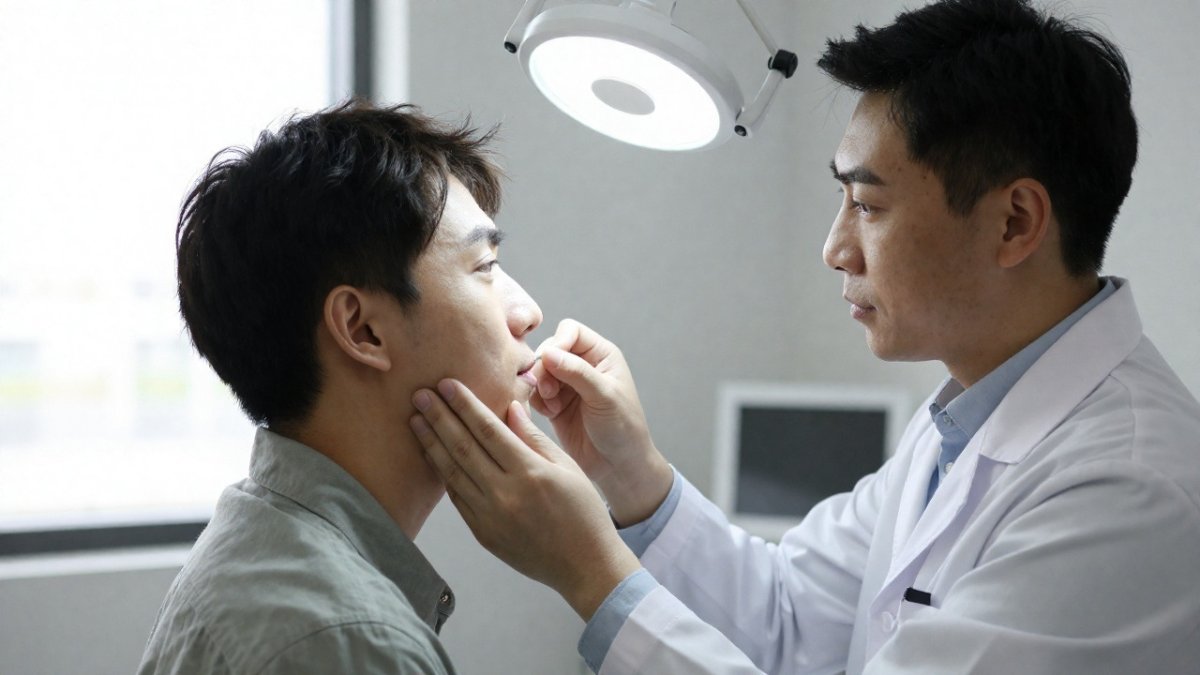
If the spot looks benign, the dermatologist may remove it for cosmetic reasons. If anything looks concerning, they usually take a sample of tissue for a biopsy.
Ask the clinic whether the removed tissue will be sent to a pathology lab. Many people assume it always is, but that is not guaranteed.
Dermatologist or Plastic Surgeon for Facial Mole Removal
Both dermatologists and plastic surgeons remove facial moles, and both can do it well. The right choice depends less on the title on the door and more on the specific training, volume, and workflow of the person who will actually do the procedure.
| Factor | Dermatologist | Plastic Surgeon |
|---|---|---|
| Core training | Skin disease, dermoscopy, skin cancer | Surgical reconstruction, cosmetic closure |
| Typical strength | Distinguishing benign from suspicious spots | Complex closures and scar revision on the face |
| Biopsy access | Usually in-house pathology | Often in-house or via affiliated lab |
| Scar planning | Standard techniques, sometimes referral | Advanced closure and revision options |
| Best fit | Unclear, changing, or multiple moles | Large, deep, or cosmetically prominent moles |
A practical rule: if you are unsure what the mole is, start with a dermatologist. If the mole is clearly benign, large, and the main concern is how the scar will look, a plastic surgeon is a reasonable first call.
Credential Checklist for Choosing a Clinician
Use this checklist before you book, and verify each item rather than accepting it at face value:
- Board certification. Confirm the clinician is certified by the American Board of Dermatology or the American Board of Plastic Surgery. Look the name up in the board's public verification tool rather than relying on a clinic website badge.
- Fellowship or focused training. Ask whether the clinician completed a micrographic surgery, Mohs, or facial plastic surgery fellowship, since facial work concentrates in those paths.
- Procedure volume for this exact location. Ask how many facial mole removals the clinician performs in a typical month, and how many on your specific area (nose, eyelid margin, lip, ear).
- Method experience. Confirm the clinician routinely performs the method being proposed for you, shave, excision, or laser, not just one technique.
You can verify board certification through the American Board of Dermatology or the American Board of Plastic Surgery. Ask the clinic for the clinician's full name and check it yourself.
Questions to Ask at the Consultation
Bring the same short list to every consultation so you can compare answers side by side:
- What do you think this mole is, and what makes you say that?
- Will the tissue be sent for pathology, and if not, why not?
- Which removal method are you recommending, and what are the alternatives?
- Who performs each step, the consult, the removal, the closure, the pathology review?
- What scar should I expect at six months, and what would you do if it heals poorly?
- What are the specific risks for this location, such as a depressed scar, pigment change, or a notch at the eyelid margin?
- What is the total cost, including pathology and any follow-up visit?
- Who calls me with the result, and how soon?
Watch out: A clinic that cannot name the pathology lab, cannot describe the closure technique, or will not put the plan in writing is a reason to get a second opinion before scheduling.
Removal Methods, Scarring, and What Results Look Like
The most common methods are shave removal, surgical excision and, for small benign spots, cautery or laser. To see how long healing takes and what aftercare looks like, read mole removal healing stages and aftercare steps.
Scarring depends on the method, the location and your skin type. A scar on the face may fade over several months but can remain visible. Ask your clinician to show you photos of past results.
Watch out: Removing a mole at home with a blade or over-the-counter product can cause infection, deep scarring and missed melanoma. Always have a clinician do the removal.
How Much Facial Mole Removal Costs and Whether Insurance Pays
Facial mole removal pricing is not standardized. The total depends on the method, the size and depth of the mole, whether pathology is ordered, the clinician's specialty, and the facility. Ask for a written estimate that itemizes each component instead of a single bundled number.
A typical estimate breaks into these line items:
- Consultation or evaluation fee, sometimes waived if you proceed the same day.
- Removal procedure fee, varies by method (shave, excision, laser) and by location on the face.
- Pathology and lab fee, billed separately when tissue is sent for analysis, and often the largest surprise on the bill.
- Facility fee, applies in hospital-owned or surgical-center settings, not usually in a standalone office.
- Follow-up visit, for suture removal, scar check, or pathology review.
Because prices vary by region and practice, treat any quote you receive as specific to that clinician and confirm it in writing before the procedure.
Medical Necessity, Cosmetic Removal, and Insurance
Insurance generally covers removal when a clinician documents that the mole is suspicious, changing, bleeding, irritated, or otherwise medically indicated.
Cosmetic removal, meaning removal done only to improve appearance on a mole the clinician judges benign, is usually paid out of pocket.
Before the procedure, ask the clinic three questions and get the answers in writing:
- Will this be submitted as medical or cosmetic?
- If medical, what diagnosis code and documentation will support it?
- If the claim is denied, what will I owe out of pocket?
Watch out: A clinic that submits a cosmetic removal as medical without documented necessity can leave you with a denied claim and a full balance after the fact.
Network Status and Out-of-Pocket Costs
Even a medically necessary removal can cost more than expected if the clinician or the pathology lab is out of network. Check both:
- The clinician, confirm in-network status with your plan before booking, not after.
- The pathology lab, labs are frequently out of network even when the clinician is in network, and the lab bill can arrive separately weeks later.
- The facility, hospital-owned clinics may bill a facility fee that an office-based practice does not.
If you are paying out of pocket, ask whether the practice offers a cash or self-pay rate and whether the pathology fee is included or billed separately. Request the estimate in writing and keep it with your records.
Pathology Results and Follow-Up Responsibilities
When tissue is removed, confirm before the procedure that it will be sent to an accredited pathology lab and who will communicate the result.
If results are abnormal, the next step is usually a discussion of further treatment or a wider excision, and that conversation should be scheduled rather than left to chance.
Insurance Coverage: Medical Necessity Versus Cosmetic Removal
Insurance generally covers removal when a doctor documents that the mole is suspicious, bleeding, irritated or changing. This is called medical necessity. Insurance usually does not cover removal done only to improve appearance.
Before the procedure, ask the clinic whether they will submit the claim as medical or cosmetic. Get that answer in writing. This helps you avoid an unexpected bill.
Booking Your Facial Mole Evaluation and Pathology Follow-Up
Book an evaluation first if the mole is changing or you feel unsure. If you are ready to schedule removal, how to time mole removal surgery by season explains how timing affects sun exposure and recovery.
A dermatologist or plastic surgeon is the right clinician to see for a facial mole. Keep the evaluation and the pathology follow-up in your own hands, and never let a removal happen without a confirmed result.
Frequently Asked Questions
Is a dermatologist a better option for mole removal than a plastic surgeon?
For a suspicious or unclear mole, a board-certified dermatologist is usually the better first choice because they can examine the lesion, decide whether a biopsy is needed, and coordinate pathology review. A plastic surgeon may be a strong option when the goal is primarily cosmetic and the mole is clearly benign, especially if fine scar placement is the priority. Ask each clinician how many facial removals they perform and whether they handle pathology follow-up themselves. Either way, confirm board certification through the American Board of Dermatology or the American Board of Plastic Surgery.
Should a mole be checked before it is removed?
Yes. Any mole that has changed in size, shape, or color, bleeds, itches, or looks different from your other moles should be evaluated before removal. A clinician can assess the lesion and decide whether the entire mole should be sent for pathology. Removing a mole without examination can leave a possible melanoma undiagnosed or make later treatment more complicated. A visit before removal also helps you understand whether the procedure is medically necessary or cosmetic.
How much does it cost to remove a mole from your face?
Pricing depends on the clinician, the removal method, the number of lesions, and whether pathology is required, so there is no single standard figure to quote. Costs can also vary by practice and region. Contact the clinic directly for an itemized estimate covering the consultation, the procedure, and laboratory testing. Ekoterra Gopher Pest and Wildlife Control does not offer medical services, so please check with a licensed medical provider for current pricing.
Will insurance cover facial mole removal?
Insurance is more likely to cover removal when a clinician documents medical necessity, such as a mole that is suspicious, bleeding, irritated, or needs pathology. Purely cosmetic removal is usually not covered. Before scheduling, ask your insurer whether a prior authorization is needed and ask the clinic to verify your benefits. Expect to pay the deductible or coinsurance on covered services, and request a written estimate so you know your out-of-pocket costs in advance.
