Last Updated: October 28, 2026
Quick Summary
Most mole removal appointments take about 30 minutes, but healing takes longer. Shave removal usually heals in 1 to 2 weeks, with full skin recovery in 2 to 4 weeks. Excision with stitches often takes 4 to 6 weeks to fully heal, and scars can take months to fade.
- Most mole removal visits are short, often finished within 30 minutes.
- Shave removal usually heals initially in about 1 to 2 weeks.
- Stitches are commonly removed within 7 to 14 days after excision.
- Full healing after excision often takes 4 to 6 weeks.
- Keep the wound covered and protected from sun until your provider says it is safe.
Table of Contents
- How Long the Mole Removal Appointment Itself Takes
- When Mole Removal Is Medically Necessary
- Mole Removal Recovery Time by Method
- Mole Removal Healing Stages, Week by Week
- Mole Removal With Stitches Healing Time
- Mole Removal Aftercare That Shortens Healing
- Book Your Mole Evaluation Before Scheduling Removal
- Frequently Asked Questions
How Long the Mole Removal Appointment Itself Takes
If you are wondering how long mole removal takes from start to finish, the honest answer starts with the appointment itself. Most mole removal visits are short.
A typical visit follows a predictable sequence, and each step has its own rough timing:
- Check-in and intake: 5 to 10 minutes. You will confirm your history, medications, and any changes you have noticed in the mole.
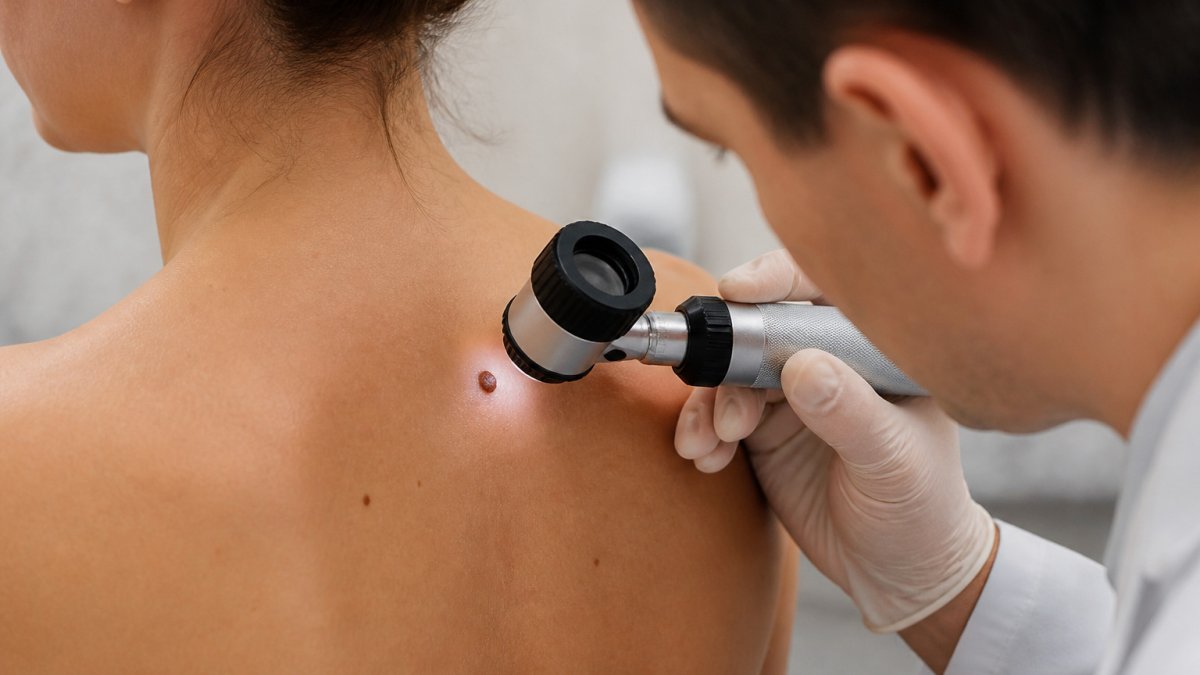
- Clinical evaluation: 5 to 10 minutes. Your provider examines the mole, often with a dermatoscope, and confirms the removal plan.
- Numbing: 5 to 10 minutes. A local anesthetic such as lidocaine is injected around the mole. The injection stings briefly, then the area goes numb within a few minutes.
- Removal: 5 to 15 minutes. A shave removal is usually on the faster end; an excision with stitches takes longer because the wound must be closed in layers.
- Hemostasis and dressing: 5 to 10 minutes. Your provider stops any bleeding, applies a bandage, and gives you written aftercare instructions.
- Observation: 5 to 15 minutes. You may sit briefly so your provider can confirm bleeding has stopped before you leave.
Plan for a little extra time before and after. Arrive early enough to complete paperwork, and do not schedule a tight commitment immediately afterward in case the visit runs long or you feel lightheaded from the anesthetic.
Procedure-specific timing matters. A small shave removal of a raised mole can be finished in under 15 minutes of procedure time. A surgical excision with layered stitches for a deeper or larger mole commonly takes 20 to 30 minutes of procedure time, plus the check-in and observation windows. If your provider is removing more than one mole, add roughly 10 to 15 minutes per additional site.
Some providers send the tissue to a lab for testing. That adds time to your follow-up and results call, not to the appointment itself. Ask at check-out when to expect pathology results, since turnaround varies by lab.
If you are planning around work or travel, the appointment itself is rarely the bottleneck. Healing is the part that takes longer, and it varies more than most people expect.
When Mole Removal Is Medically Necessary
Not every mole needs to come off, but some should be evaluated quickly. A dermatologist will look at the mole's shape, color, size, and any recent changes. These are often summarized with the ABCDE rule: asymmetry, irregular border, uneven color, diameter over about 6 millimeters, and evolving appearance (the American Academy of Dermatology).
Removal is usually medically necessary when:
- The mole looks like it has changed in size, shape, or color
- It bleeds, itches, crusts, or does not heal
- It has an irregular border or uneven color
- A doctor cannot rule out a suspicious lesion by looking at it
A dermatologist may remove the entire mole and send it for biopsy and pathology testing (pubmed.ncbi.nlm.nih.gov). This is the only reliable way to know whether the cells are benign or cancerous. If you have a concerning mole, do not wait to find out. Early evaluation gives you the most options.
Mole Removal Recovery Time by Method
Recovery depends on how the mole is removed. The two most common approaches have very different timelines.
Shave Removal and Cauterization
Shave removal slices off the raised part of the mole with a thin blade. The base may be treated with cauterization, which uses heat to stop bleeding. This method usually leaves a small wound that heals from the bottom up.
- Initial healing: about 1 to 2 weeks
- Full skin recovery: often 2 to 4 weeks
- Possible side effects: mild redness, scabbing, or light scarring
Surgical Excision With Stitches
Excision removes the mole along with a margin of surrounding skin, and the wound is closed with stitches. This method is often used for deeper moles or those sent for full pathology review.
- Stitches are commonly removed in about 7 to 14 days
- Full healing often takes 4 to 6 weeks
- The scar may take several months to fade
Recovery time depends on how the mole is removed, and the two common methods have very different timelines.
| Method | Initial healing | Full skin recovery |
|---|---|---|
| Shave removal and cauterization | About 1 to 2 weeks | Often 2 to 4 weeks |
| Surgical excision with stitches | Stitches commonly removed in 7 to 14 days | Often 4 to 6 weeks |
Mole Removal Healing Stages, Week by Week
Knowing what to expect at each stage can help you spot normal healing from a problem.
- Days 1 to 3: The area may be sore, slightly swollen, and covered with a bandage. Some oozing is normal.
- Days 4 to 7: A scab forms. Keep it covered and avoid picking at it.
- Weeks 2 to 3: The scab falls off, and the new skin looks pink or shiny.
- Weeks 4 and later: The color evens out, and the scar softens over time.
Contact your provider if you notice increasing pain, pus, a foul smell, fever, or bleeding that does not stop with gentle pressure.
Mole Removal With Stitches Healing Time
Stitches add a few steps to recovery. Most people follow this general pattern:
- Keep the wound clean and dry for the first 24 to 48 hours
- Change the dressing as your provider instructs
- Return for stitch removal, usually within 1 to 2 weeks
- Avoid heavy lifting or strenuous exercise that stretches the wound for several weeks
Stitch removal is quick and usually painless. Healing after the stitches come out takes longer, so keep the area protected from sun and friction.
Mole Removal Aftercare That Shortens Healing
Good aftercare can help the wound close cleanly and reduce scarring, but the right steps depend on how the mole was removed and what you have planned in the weeks after. Most providers recommend the following core steps:
- Keep the area clean with mild soap and water. Gentle cleansing once or twice daily is enough; scrubbing delays closure.
- Apply a thin layer of petroleum jelly or the ointment your provider suggests. A moist wound bed supports faster epithelialization than a dry scab.
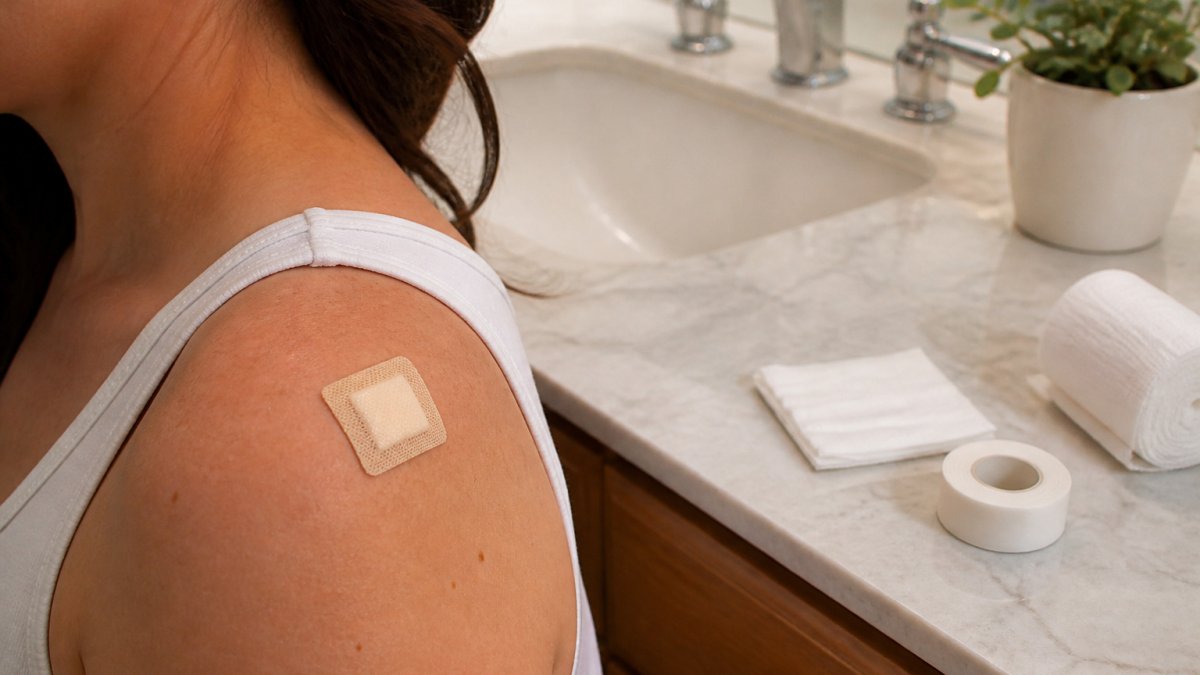
- Cover the wound with a bandage until it closes. Change the dressing as instructed or whenever it becomes wet or soiled.
- Protect the area from direct sun with clothing or broad-spectrum sunscreen once it is healed enough. Fresh scar tissue is highly sensitive to ultraviolet exposure.
- Avoid picking, scratching, or soaking the area in pools, hot tubs, lakes, or baths until it is fully closed.
Watch out: sun exposure on a fresh wound can cause dark, lasting discoloration. Keep the scar covered until your provider says it is safe, and continue sun protection on the site for several months after it closes.
Procedure-specific aftercare
Shave removal and excision heal differently, so the aftercare emphasis shifts:
- Shave removal: The wound is shallow and heals from the bottom up. Keep it moist with petroleum jelly and covered for the first several days. Avoid picking the scab that forms, since early scab removal can deepen the wound and worsen scarring.
- Excision with stitches: Keep the wound clean and dry for the first 24 to 48 hours, then follow your provider's dressing schedule. Avoid heavy lifting and strenuous exercise that pulls on the stitches for several weeks. Return for stitch removal, usually within 1 to 2 weeks.
- Biopsy or partial removal: Follow the same wound-care basics, and watch for bleeding or signs of infection. Ask when pathology results are expected so you can plan follow-up.
Planning around travel, swimming, and exercise
Timing your removal around your calendar can make aftercare easier without delaying evaluation of a concerning mole:
- Swimming and water activities: Wait until the wound is fully closed and your provider clears you. Pools, hot tubs, lakes, and oceans all carry infection risk for an open wound.
- Vacations and travel: If you are traveling soon, ask your provider whether the wound can be managed with a simple dressing and whether stitch removal can be coordinated with another clinician.
- Exercise: Light activity is usually fine, but avoid activities that stretch or rub the site. Sweating under a bandage can irritate the wound, so change the dressing after workouts.
- Sun-heavy plans: Schedule elective removals so the healing window does not overlap with a beach trip or long outdoor event, and plan sun protection for the scar afterward.
When not to delay removal
Seasonal scheduling is reasonable for elective, cosmetic, or comfort-driven removals. It is not reasonable for a mole that is changing, bleeding, itching, crusting, or otherwise concerning. Those features warrant prompt clinical assessment regardless of the season, your travel plans, or your exercise schedule. Do not wait for a better time of year to have a suspicious mole evaluated.
Book Your Mole Evaluation Before Scheduling Removal
If you are unsure whether a mole needs removal, schedule an evaluation first. A dermatologist can tell you whether removal is necessary, which method fits your mole, and what recovery will look like for you. Ekoterra Gopher Pest and Wildlife Control encourages anyone with a changing mole to get it checked promptly rather than waiting for the healing timeline to become a concern.
Frequently Asked Questions
How long does mole removal take to heal?
Most mole removals heal in about 2 to 4 weeks for shave removal and 4 to 6 weeks for excision with stitches. Scars can take several months to fade.
Does mole removal hurt?
Local anesthetic numbs the area before removal, so most people feel pressure rather than pain. Soreness is common for a few days afterward.
Can a mole grow back after removal?
If the entire mole is removed, it usually does not return. Partial removal can leave cells behind that may regrow.
Frequently Asked Questions
How long does a mole removal appointment take?
Most mole removal appointments take between 15 and 45 minutes, including numbing and cleanup. Shave removals on small moles are often quickest, while excisions that require stitches or a biopsy can take longer. The dermatologist or provider will confirm the expected time when you book, and the appointment often includes a brief review of aftercare instructions before you leave.
How long does it take a mole removal wound to heal?
Most mole removal wounds heal within one to four weeks. Shallow shave removals often close in about one to two weeks, while deeper excisions with stitches may take two to four weeks to fully heal. Healing depends on the size and depth of the site, your skin type, and how well you keep the area clean and protected from sun exposure.
When should I contact a doctor after mole removal?
Contact your provider if you notice increasing redness, warmth, swelling, pus, a foul smell, bleeding that does not stop with gentle pressure, or fever. Stitches that come loose early or a wound that opens should also be reported. Your provider will also follow up on the pathology results if the mole was sent for biopsy, which is an important step regardless of how the healing looks.
Can I go back to work after mole removal?
Most people can return to work the same day or the next day, especially if the job does not involve heavy lifting, sweating, or friction on the treated area. If the mole was on a high-friction spot such as the back, underarm, or waistline, you may want to adjust your activities for several days. Follow your provider's instructions on dressing changes and keep the site dry until it has sealed.
