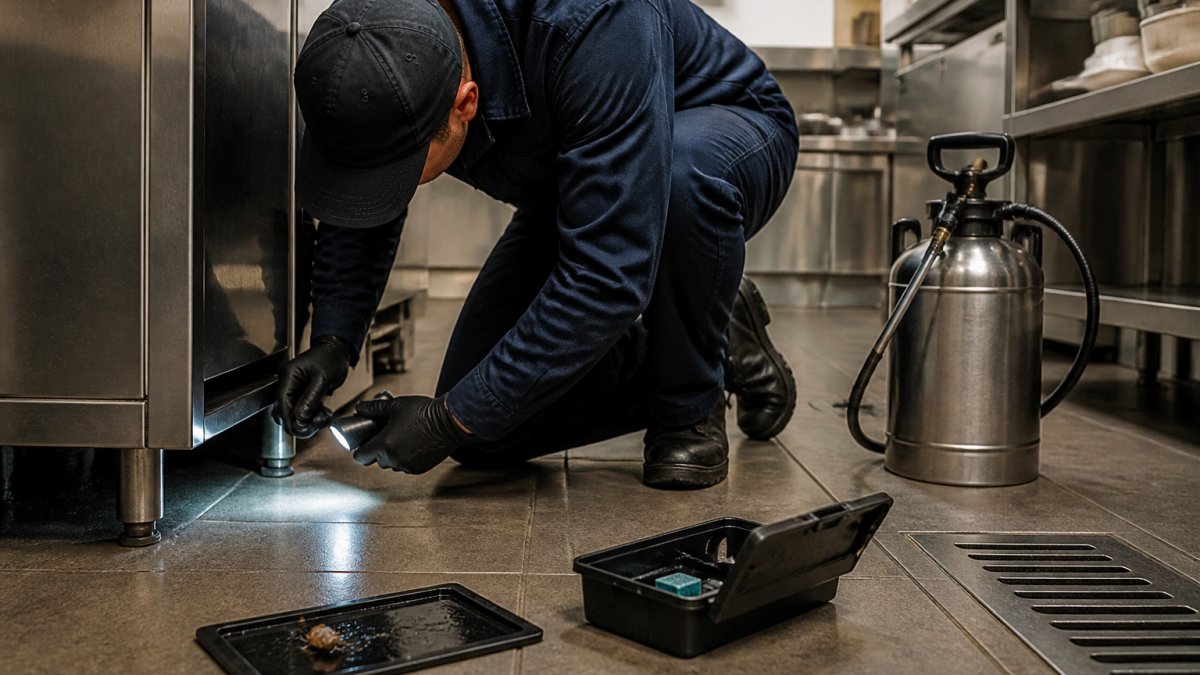
Table of Contents
- Why Commercial Pest Control for Restaurants Is Not Optional
- The Restaurant Pest Control Checklist Every Kitchen Needs
- Restaurant Pest Prevention: What Works Between Visits
- How Often Should a Restaurant Have Pest Control Service?
- What Drives Restaurant Pest Control Cost
- Eco-Friendly Commercial Pest Control for Restaurants
- Frequently Asked Questions
Last Updated: October 8, 2026
Why Commercial Pest Control for Restaurants Is Not Optional
A single rodent sighting during a health inspection can shut your kitchen down for days. That's the reality of commercial pest control for restaurants: it isn't a maintenance line item you get to defer when margins tighten. It's the difference between passing your next inspection and losing a week of revenue.
At Ekoterra Gopher Pest and Wildlife Control, we work with food service operators who treat pest management as part of their food safety plan, not an afterthought. The FDA Food Code sets the baseline for sanitation and pest control in food establishments, and local health departments enforce it during routine inspections.
Here's the part most operators miss: pests don't announce themselves. They show up in the gaps between your quarterly service visits, which is why prevention between visits matters as much as the visits themselves.
Below, we break down exactly what a workable restaurant pest control checklist looks like, how often you actually need service, and what drives the cost.
The Restaurant Pest Control Checklist Every Kitchen Needs
A restaurant pest control checklist is a written, recurring set of inspections your staff performs to catch pest activity before it becomes an infestation. It works because your team is in the kitchen every day, while a technician is there monthly at best.
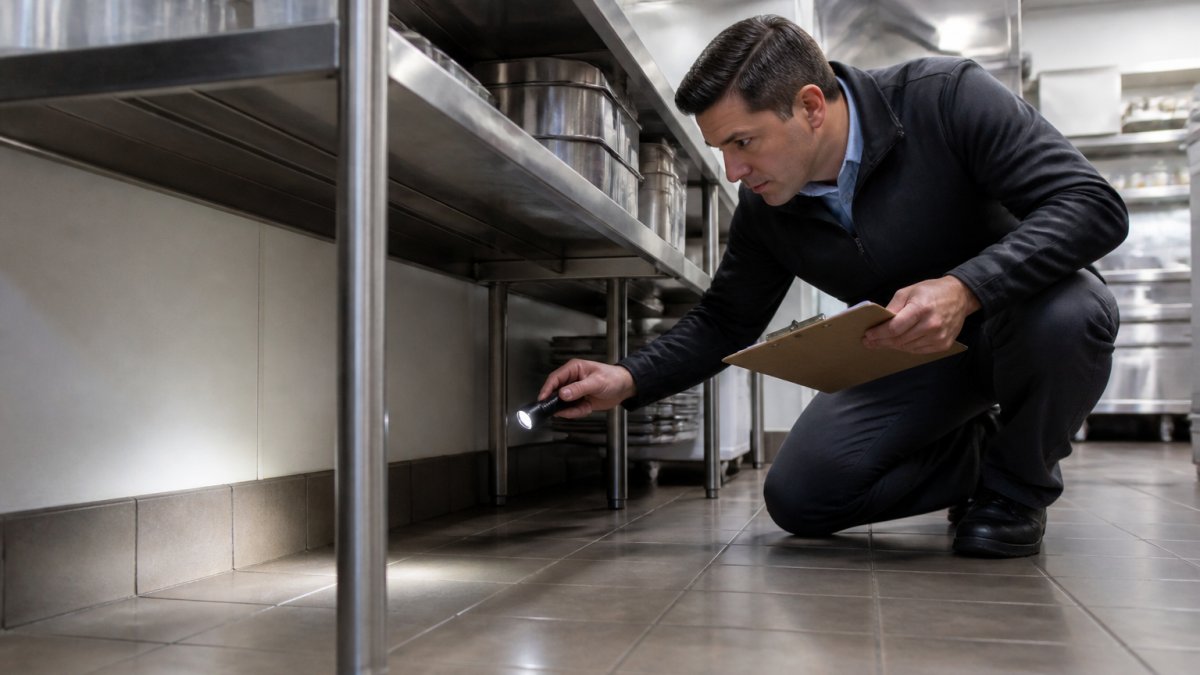
Daily and Weekly Checks
Daily checks take minutes and catch problems early. Assign them to closing staff.
- Wipe down and inspect under all prep tables and shelving
- Check behind and beneath dishwashing equipment for moisture
- Confirm all trash bins are emptied and lids secured
- Look for droppings, gnaw marks, or grease trails along baseboards
- Verify walk-in cooler door seals are intact
- Inspect incoming deliveries for signs of pests before shelving
Weekly, add a deeper pass: pull equipment away from walls, check the back of dry storage, and inspect the loading dock area.
Monthly and Quarterly Deep Checks
Monthly deep checks should cover areas staff rarely touch: ceiling voids, utility rooms, and the space behind fixed equipment. Quarterly, bring in a professional to inspect structural entry points, roof lines, and drainage areas.
Restaurant Pest Prevention: What Works Between Visits
Restaurant pest prevention comes down to removing what pests need: food, water, and shelter. Most infestations we see trace back to one of those three, not to a failure of the pest control service itself.
Start with these high-impact fixes:
- Seal entry points. A common mistake is ignoring gaps under doors and around pipe penetrations. Mice pass through openings the width of a pencil (the CDC).
- Fix moisture first. Leaking drains and condensation trays create the humid environment roaches and rodents need to thrive.
- Rotate stock properly. First in, first out reduces the chance that forgotten product becomes a food source.
- Keep dumpsters away from the building. Distance and secured lids cut off an easy food supply.
What most guides miss is that pest prevention in a restaurant is a staffing issue as much as a facilities issue. If closing duties aren't assigned to a specific person, they don't happen.
How Often Should a Restaurant Have Pest Control Service?
Most restaurants should have professional pest control service monthly, with weekly or biweekly visits for high-volume kitchens, multi-unit operations, or buildings with a history of activity. The right frequency depends on your risk factors, not a one-size schedule.
Consider these variables:
| Risk Factor | Lower Frequency | Higher Frequency |
|---|---|---|
| Volume of food prep | Limited menu | Full scratch kitchen |
| Building age | New construction | Older structure, shared walls |
| Prior pest history | No incidents | Repeat activity |
| Surrounding environment | Isolated lot | Shared retail or food court |
A single freestanding restaurant with a limited menu can often hold a monthly schedule. A multi-tenant building with shared trash areas needs more attention because pests move between units.
What Drives Restaurant Pest Control Cost
Restaurant pest control cost depends on the size of your facility, the frequency of service, the type of pest, and how much exclusion work the building needs. There's no flat rate that fits every kitchen.
The main cost drivers:
- Square footage and layout. More prep areas and storage rooms mean more inspection points.
- Service frequency. Monthly plans cost less per visit than weekly programs, but weekly programs catch problems faster.
- Pest type. Rodent and wildlife exclusion takes more labor than routine insect monitoring.
- Exclusion repairs. Sealing entry points, repairing screens, and fixing door sweeps add material and labor.
- Compliance requirements. Facilities with stricter inspection schedules may need documented reporting.
Because pricing varies so widely by property, we don't quote flat numbers. Request a walkthrough and you'll get a plan scoped to your actual kitchen, not a generic package.
Eco-Friendly Commercial Pest Control for Restaurants
Eco-friendly commercial pest control for restaurants focuses on exclusion, sanitation, and targeted treatments instead of broad chemical application. That approach matters more in a kitchen than anywhere else, because your staff and customers are feet away from wherever treatment happens.
The EPA guidance on integrated pest management describes IPM as a decision-making process that combines biological, cultural, physical, and chemical tools to manage pests with the least possible hazard. For a restaurant, that means:
- Sealing and proofing entry points before reaching for any treatment
- Using monitoring stations to identify exactly where activity is happening
- Applying targeted treatments only in the specific areas that need them
- Documenting everything so your inspector can see the reasoning
We built Ekoterra around this model because it's the only approach that holds up under both health inspection and everyday kitchen use. Our methods prioritize ecological responsibility, and our service is backed by guaranteed results.
If you've tried eco-friendly pest control before and it didn't hold, the issue is usually the plan, not the approach. Exclusion work done properly is what makes the difference between a treatment that masks a problem and one that ends it.
A pest problem in a restaurant isn't a maybe. It's a when, and the operators who stay inspection-ready are the ones with a documented, recurring program in place before anything shows up. Ekoterra Gopher Pest and Wildlife Control provides eco-friendly pest and wildlife management with guaranteed results for food service and commercial properties across Ventura, Los Angeles, and Santa Barbara Counties. Our approach protects your health and your customers, protects the environment, and gives you a service record you can hand an inspector without flinching. Get started with Ekoterra and build a kitchen that stays pest-free and inspection-ready.
Frequently Asked Questions
What does commercial pest control for restaurants include?
A service visit typically covers inspection of kitchens, storage rooms, and dining areas; identification of pest entry points; targeted treatment for roaches, rodents, flies, and ants; and a written report with findings and recommendations. Many providers also set monitoring stations and advise on sanitation fixes. For restaurants, the report matters as much as the treatment because health inspectors may ask to see pest control records during a routine inspection.
How often should a restaurant have pest control service?
Most restaurants need monthly service at minimum. High-volume kitchens, older buildings, or facilities with prior pest issues often need visits every two to four weeks. During peak season or after a nearby construction project disturbs rodent habitats, temporary weekly visits may be warranted. The right frequency depends on your building, volume, and history, so ask your provider to justify the schedule based on your specific risk factors.
Is pest control safe to use around restaurant food?
Yes, when applied correctly. Licensed technicians use EPA-registered products and follow label directions that specify where and how treatments can be applied in food-handling areas. Most applications happen after closing or in non-food zones, and technicians should tell you about re-entry times. Eco-friendly options like gel baits, traps, and exclusion work reduce chemical exposure further. Ask your provider for product labels and safety data sheets before service begins.
What records should restaurants keep for pest control?
Keep every service report, including the date, technician name, findings, products used, and any corrective actions recommended. Store monitoring station maps, product labels, and safety data sheets in one binder or digital folder. Health inspectors in most jurisdictions expect to see a documented pest control log during inspections. Good records also help you spot recurring problems and hold your provider accountable for results.