Table of Contents
- How Gopher Tunnels Affect the Soil Under Your Home
- Direct Structural Damage Versus Indirect Effects
- Signs of Gophers Near a House Foundation
- How Deep Gophers Dig and How Close Tunnels Become a Risk
- Risk by Foundation Type and Soil Conditions
- Safe, Legal Ways to Remove Gophers From Under the House
- Booking Your Gopher Inspection and Next Steps
- Frequently Asked Questions
How Gopher Tunnels Affect the Soil Under Your Home
Last Updated: November 8, 2026
Can gophers damage a house foundation? Yes, they can, though it depends on how close their tunnels run and what kind of soil sits under your home. Gophers rarely undermine a foundation on purpose. They dig for food and shelter, and those tunnels can change the ground around your home's footings.
Gophers are University of California Agriculture and Natural Resources pest guidance pocket gophers that dig extensive underground tunnel systems. They push soil to the surface as mounds, but most of their work happens below the surface where you can't see it.
A foundation is only as stable as the soil beneath it. When tunnels remove or loosen that soil, the support under the footing can shift.
Soil conditions matter a great deal here:
- Loose or sandy soil collapses more easily around tunnels.
- Clay-heavy soil holds its shape better but can crack and shift as it dries and wets.
- Fill dirt placed during construction is often less compacted, so tunnels cause more trouble there.
Tunnels can also carry water into the soil around the foundation. That moisture changes how the ground behaves, which adds to the risk.
Direct Structural Damage Versus Indirect Effects
Gopher damage to a home falls into two groups. Direct damage happens when tunnels physically weaken the ground that holds up the structure. Indirect effects come from the way gophers disturb the yard and drainage around the house.
Direct structural effects include:
- Voids forming under concrete slabs or footings
- Settling that causes cracks in walls or floors
- Doors and windows that begin to stick
Indirect effects include:
- Water pooling where tunnels disrupt surface drainage
- Damaged irrigation or utility lines
- Dead plants and uneven lawn near the foundation
Indirect damage is often easier to spot first. A soggy patch or sinking lawn near the house is a reason to look closer.
Signs of Gophers Near a House Foundation
Catching activity early makes a big difference, but a quick glance at the lawn is not enough. A practical inspection means knowing what to look for, how to tell fresh activity from old, and how to document what you find so you can track changes over time.
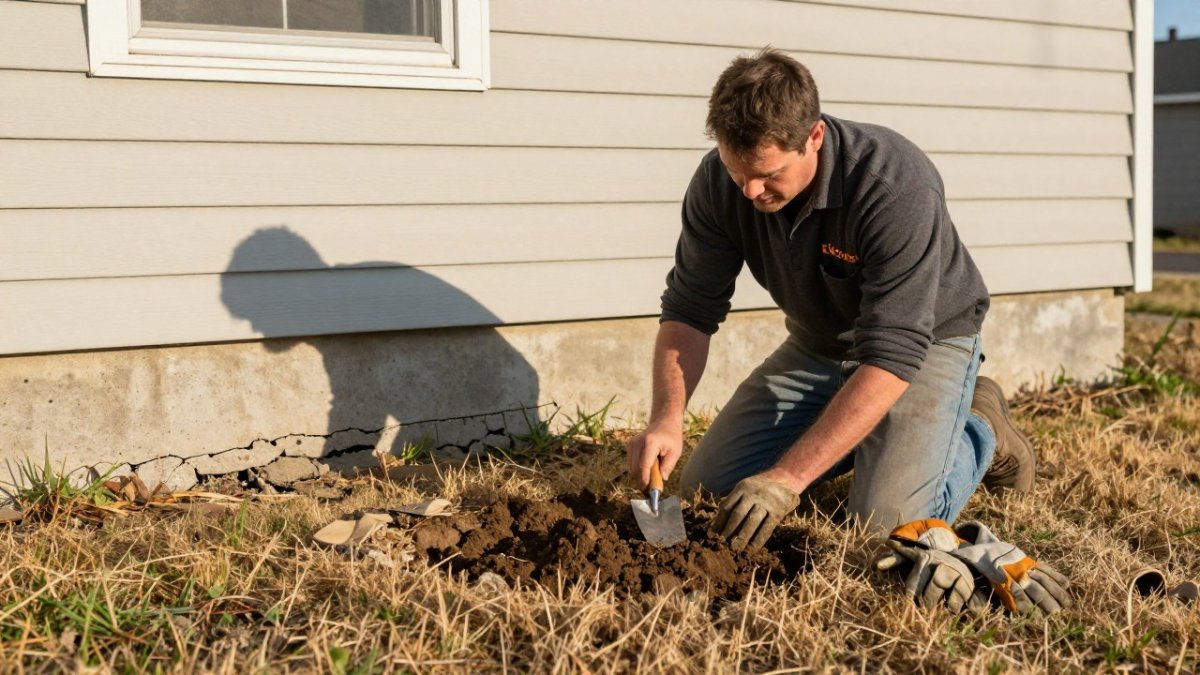
Start with a perimeter walk. Walk the full outside edge of the house, then a band roughly 10 to 15 feet out from the foundation. Carry a phone or notepad and note every mound, hole, soft spot, and crack you see. Do this at the same time of day on repeat visits so conditions are comparable.
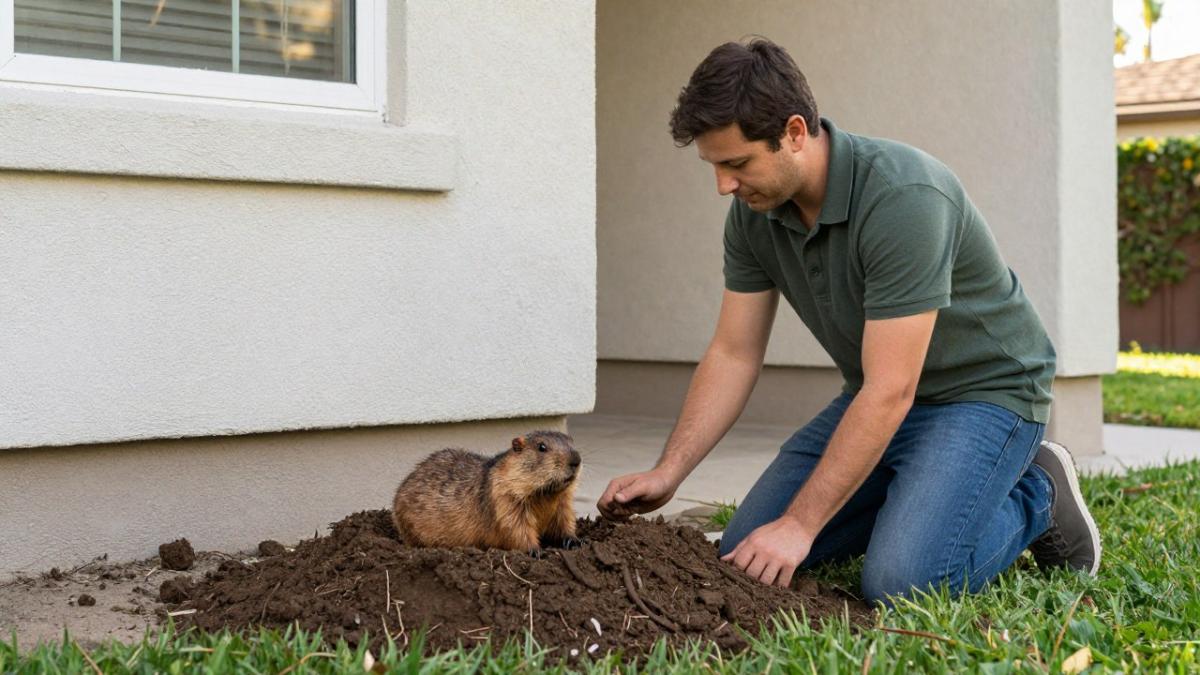
Distinguish active tunnels from old mounds. A fresh gopher mound is typically fan-shaped and made of loose, crumbly soil with no visible hole, because the gopher plugs the tunnel entrance from below. Older mounds settle, crust over, and may grow weeds.
Check the ground near the foundation. Press your foot gently across the lawn within a few feet of the footing. Ground that gives way, feels hollow, or sounds different from surrounding soil deserves a closer look. Note any soft or sunken spots and photograph them with a ruler or coin for scale. To confirm whether gophers or moles made the signs you're seeing, learn how to tell gopher damage from mole damage.
Look at the house itself, not just the yard. Walk the interior and exterior walls and note cracks in stucco, brick mortar, drywall, patios, walkways, and driveways. Not every crack is structural, and many are ordinary shrinkage or settlement cracks. To see what a professional assessment looks at, read what a residential wildlife inspection covers.
Document changes over time. Photograph each crack and soft spot with a date reference, and use a pencil mark or small tape label at the crack end so you can see whether it grows. Keep a simple log of dates, locations, and what changed. This record is far more useful to a pest professional or structural engineer than a one-time description.
Watch out: do not fill, compact, or pour concrete over a soft spot before you know what caused it. Covering the symptom can hide an active tunnel or drainage problem and make diagnosis harder.
Know when a sign is not gopher-related. Moles push up volcano-shaped mounds with a visible center hole, and armadillos leave shallow conical digs and disturbed mulch. If you are unsure which animal is responsible, note the mound shape and hole pattern before treating anything.
The article's signs and checks can be sorted at a glance:
| Check | What it tells you | Action |
|---|---|---|
| Fresh mound | Fan-shaped, loose soil, no visible hole | Likely active tunnel |
| Probe test | Soil pushed into probe hole next day | Strong sign of current activity |
| Soft spot near footing | Ground gives way or sounds hollow | Photograph with a scale and note it |
| Widening crack | Crack grows over time | Log date and location |
| Moles | Volcano mound with center hole | Not a gopher sign |
| Armadillos | Shallow conical digs, disturbed mulch | Not a gopher sign |
How Deep Gophers Dig and How Close Tunnels Become a Risk
Gophers usually dig main tunnels roughly 6 to 12 inches below the surface, though deeper runs are possible (Pocket Gophers / Pistachio / Agriculture). Their lateral tunnels branch out and can reach several feet from the mound. The closer those tunnels run to a footing, the greater the chance of soil loss beneath it.
Here's a simple way to think about risk:
- Tunnels more than several feet from the foundation rarely threaten its support.
- Tunnels running directly under footings, slabs, or the edge of a patio deserve prompt attention.
- Multiple tunnels converging near the house raise the risk significantly.
Exact distances vary with soil type, moisture, and construction. If you are weighing whether hiring help is worth the cost, see our cost-benefit analysis of professional gopher removal. No single number guarantees safety, so a professional inspection is the best way to judge your situation.
Risk by Foundation Type and Soil Conditions
Not every home faces the same threat from gophers. The foundation type and the soil around it both shape how vulnerable a house is.
- Slab-on-grade foundations sit directly on the soil, so tunnels beneath the slab can leave it unsupported.
- Crawl space foundations have more air space, but tunnels can still undermine the perimeter footings.
- Basement foundations are deeper, so the soil around them is often more stable, but tunnels near the walls can still allow water intrusion.
Soil conditions tip the balance. Sandy or disturbed fill soil raises the risk, while dense, well-compacted clay lowers it. Homes built on sloped lots or over recently graded ground also deserve closer watching.
Safe, Legal Ways to Remove Gophers From Under the House
Many homeowners want gophers gone quickly, but the method matters. Start by checking local regulations, since some trapping and control methods have specific rules. In California, for example, the California Department of Fish and Wildlife oversees wildlife rules that can affect how and when you control gophers.
Effective, responsible options include:
- Trapping, using traps placed in active tunnels by a trained technician
- Exclusion, such as buried wire mesh barriers around planting areas
- Habitat management, reducing food sources like irrigated lawn edges and garden roots
Be cautious with DIY poisons. Improper use can harm pets, children, and wildlife, and it doesn't always solve the problem.
Booking Your Gopher Inspection and Next Steps
Not every gopher sighting near a house is an emergency, and not every crack is caused by gophers. The useful question is how urgent the situation is and who should look at it. Use the following decision path to sort routine activity from possible structural movement.
Low urgency: gophers in the yard, no house symptoms. You see fresh mounds in the lawn or garden but no soft spots near the foundation, no new cracks, and no sticking doors or windows. This is a pest-control problem, not a structural one. Schedule a control visit, keep the area near the foundation monitored, and re-check after rain when soil movement is easiest to see.
Moderate urgency: activity close to the foundation or visible ground movement. You find tunnels within a few feet of the footing, soft or sunken ground near the house, or a crack that has visibly widened since you started tracking it. Book a gopher inspection promptly and ask the inspector to map tunnel locations relative to the foundation and to note any voids or disturbed soil under slabs or patios.
High urgency: symptoms inside the house. Doors or windows that suddenly stick, cracks that appear or widen quickly, sloping floors, or separation where walls meet ceilings or floors point to possible foundation movement. Stop treating this as a pest issue first. Have a structural professional evaluate the house, and handle gopher control in parallel so the cause is addressed, not just the symptom.
What a good inspection should cover. Ask whether the provider will walk the perimeter, probe active tunnels, photograph mounds and soft spots, and give you a written summary of tunnel locations and any areas of concern. Ask how they distinguish active from old activity and what they recommend if they find soil loss near the foundation. Before you book, read how to hire a professional gopher control service that works.
Watch out: do not let anyone inject expanding foam, concrete, or chemical soil stabilizers under a slab or footing to "fix" gopher damage without a structural assessment first. Those treatments can mask movement or create new problems, and they do not address the animal.
Your next steps, in order:
- Finish your own perimeter walk and photograph every mound, soft spot, and crack with a date reference.
- Note which signs are within a few feet of the foundation versus farther out in the yard.
- Call a qualified gopher control provider for an inspection and ask for a written summary of tunnel locations and areas of concern.
- If the inspection finds soil loss under a slab, footing, or patio, or if you see interior symptoms, schedule a licensed structural professional before authorizing repairs.
- After control, re-inspect the same spots on the same schedule and compare your photos to confirm the ground has stabilized.
You can book a gopher inspection with Ekoterra Gopher Pest and Wildlife Control to find out how deep the tunnels run and whether your foundation is at risk. Ask us to walk you through what the inspection covers before you decide.
Frequently Asked Questions
Can gophers ruin a house foundation?
Gophers rarely cause a sudden collapse, but their tunnels can remove soil from around and under footings over time. When enough soil washes out or compacts unevenly, a slab or footing can settle and crack. The risk is greater when tunnels run close to the foundation, when the soil is loose or sandy, or when water from broken irrigation or drainage lines carries soil away into the voids. If you see new cracks, sloping floors, or doors that stick, have a licensed structural engineer or foundation contractor inspect the home. Pest control alone will not repair settlement damage.
How deep do gophers dig near a foundation?
Pocket gophers typically dig main tunnels roughly 6 to 12 inches below the surface, with some runs going deeper depending on soil moisture and temperature. Their feeding laterals sit closer to the surface. A foundation footing often extends 12 inches or more below grade, so tunnels that run beside or just beneath a footing can disturb the soil supporting it. Because depth varies, the practical question is not only how deep the gophers dig but whether their tunnels reach the soil directly under or next to the structure.
How do you get rid of gophers under the house?
Start by confirming that gophers, not moles or ground squirrels, are the source. Trapping is the most direct method: set traps in active tunnels, check them often, and reset as needed. Exclusion with buried hardware cloth around garden beds and perimeter plantings helps prevent re-entry. Pesticides and gas products are regulated, so confirm that any product is registered for this purpose and follow the label exactly. Ekoterra can assess your property and advise on an approach suited to your home. Pricing depends on property size and access, so request a quote for current rates.
Are gopher traps safe to use around pets and children?
Traps placed deep inside active tunnels pose less risk than surface baits, but any trap can injure a child or pet that reaches it. Place traps inside tunnels, out of reach of the family and pets, and check them daily. Avoid poisoned baits, which can be taken by dogs, cats, and wildlife, and which are restricted in many settings. If you have young children or pets, a professional technician can set and monitor traps safely and document what was removed.
