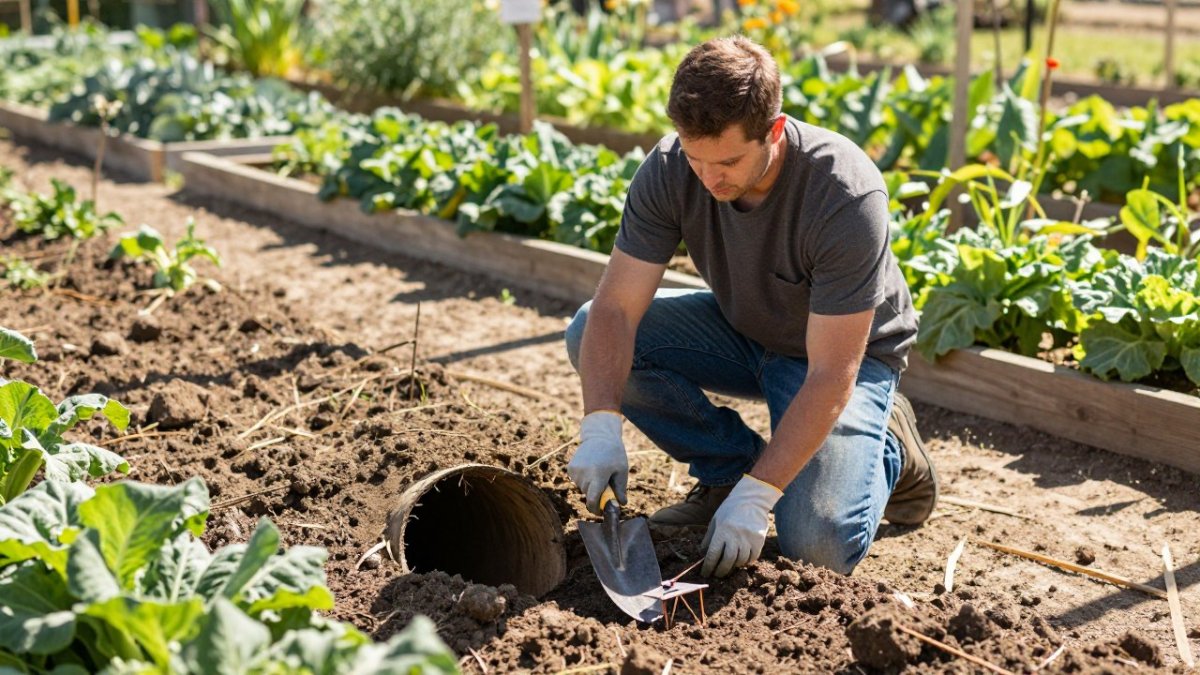
Last Updated: November 26, 2026
Quick Summary
Effective vole control for vegetable gardens starts with confirming voles are the cause, then clearing cover within 3 to 5 feet of beds and sealing raised-bed bottoms with 1/4-inch hardware cloth. Trapping along active runways and protecting individual plants with wire collars add further protection.
- Confirm voles by looking for surface runways 1 to 2 inches wide and small round holes about 1 to 1.5 inches across.
- Cut grass and weeds within 3 to 5 feet of garden beds and keep the open strip bare or gravelled.
- Line raised bed bottoms with 1/4-inch hardware cloth, extending about 2 inches past each side.
- Set snap traps in pairs 5 to 10 feet apart directly on active runways, checking them at least once daily.
- Rank habitat clearing and physical barriers above repellents, since castor oil sprays fade after rain.
Table of Contents
- How to Identify Vole Damage in a Garden Before You Act
- Step 1: Clear Cover and Open Space Around Garden Beds
- Step 2: Build Vole-Proof Raised Garden Beds with Hardware Cloth
- Step 3: Protect Individual Plants and Roots
- Step 4: Set Up Vole Trapping in Vegetable Gardens
- Natural Vole Control for Vegetable Gardens: Repellents and Deterrents Compared
- Your Next Step: Checking Your Garden Beds This Season
- Frequently Asked Questions
How to Identify Vole Damage in a Garden Before You Act
Vole control for vegetable gardens starts with knowing you have voles at all. Once you know voles are responsible, identifying the paths and feeding areas they use can help you prevent vole damage before it spreads through the garden.
Voles are small, mouse-like rodents that feed on roots, bulbs, seedlings, and bark. They are most active near ground cover, so a garden next to tall grass or weeds is at higher risk.
Common signs of vole activity:
- Surface runways: narrow, pathlike trails through grass or mulch, often 1 to 2 inches wide
- Tunnel entrances: round holes about 1 to 1.5 inches across, with little or no dirt mound
- Chewed plant stems and roots, often at or just below soil level
Vole Damage vs. Moles, Mice, and Gophers
Other garden pests cause similar damage, so comparing the signs helps. Moles push up raised, crumbly mounds and eat insects, not plants. Gophers leave fan-shaped mounds with a plugged side hole and pull whole plants down into their tunnels. Mice tend to nibble seeds and leave no runways.
Here is a quick comparison:
| Pest | Main Sign | Plant Damage | Tunnel Entrance |
|---|---|---|---|
| Voles | Surface runways, small holes | Roots, bulbs, stems chewed | Small, round, little dirt |
| Moles | Raised ridges, soft mounds | Little direct plant damage | Hidden under mounds |
| Gophers | Fan-shaped mounds, plugged hole | Whole plants pulled down | Mound with side plug |
| Mice | Seed loss, no runways | Seeds and seedlings eaten | Rarely visible |
Confirming Voles Are Present
Before you set traps or buy repellents, confirm voles are the problem. Look for fresh runways in the early morning, when the grass is wet and tracks show clearly. Check tunnel entrances for droppings, which look like small dark pellets. Set a simple test by sprinkling flour or sand on a runway and checking it the next day for footprints.
Step 1: Clear Cover and Open Space Around Garden Beds
Voles need cover to move safely. Removing that cover is a useful first step in a vole control plan for vegetable gardens.
Start by cutting grass, weeds, and thick ground cover within 3 to 5 feet of your garden beds. Pull back mulch that sits in a thick layer against plant bases. Keep the open strip bare or covered only with gravel. Voles avoid open ground because hawks, owls, and cats can spot them there.
Do this every few weeks:
- Mow or trim the area short
- Remove debris, fallen fruit, and leaf piles
- Keep woodpiles and boards off the ground near beds
Cleared space will not stop an established colony by itself, but it makes your beds less attractive.
Step 2: Build Vole-Proof Raised Garden Beds with Hardware Cloth
Raised beds help, but only if the bottom is sealed. Voles can tunnel right up into an open-bottomed bed. Lining the base with hardware cloth stops them from getting in from below.
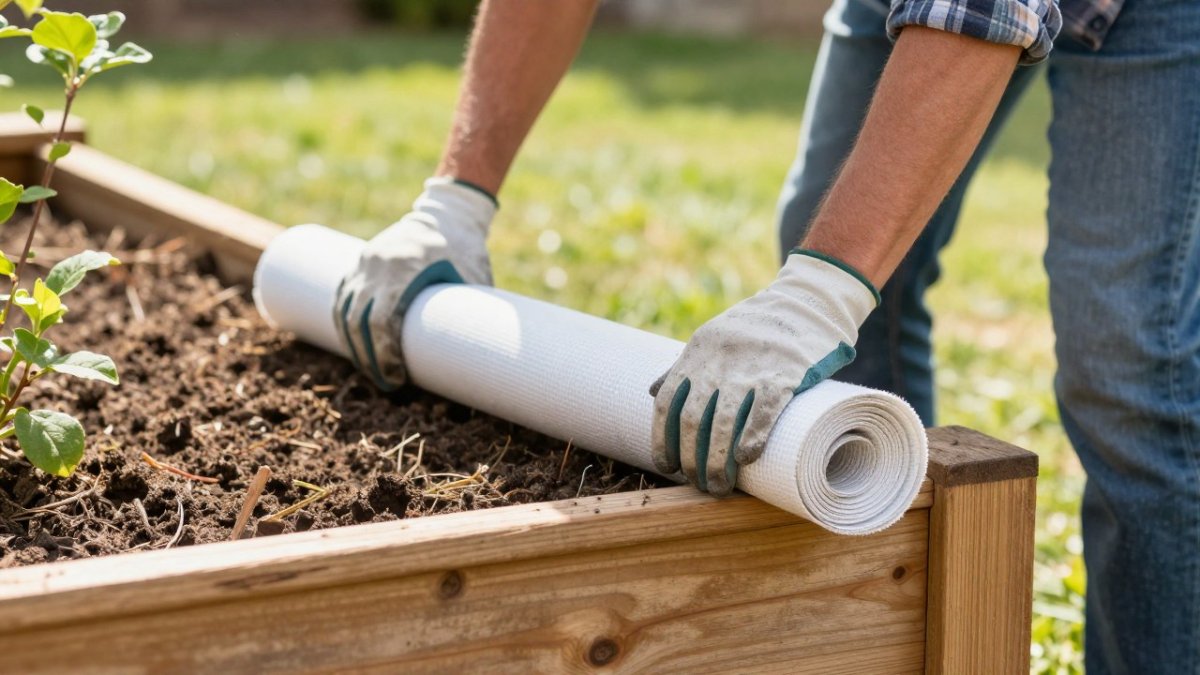
Step-by-Step Hardware Cloth Installation
- Choose 1/4-inch galvanized or vinyl-coated hardware cloth. Larger mesh lets voles through.
- Measure the bed bottom and cut the mesh about 2 inches larger on each side.
- Lay the mesh flat on the ground before you set the bed frame in place.
- Set the frame on top and fold the extra mesh up the inside walls.
- Staple or screw the mesh to the frame so no gaps remain.
- Add soil on top of the mesh and water it in.
Watch out: Gaps at the corners and along the frame joints are where voles usually sneak through. Check each seam before planting.
Step 3: Protect Individual Plants and Roots
Some plants need protection even in beds, especially young transplants, bulbs, and root crops. Place a wire cylinder or plant collar of 1/4-inch mesh around the stem and push it 4 to 6 inches into the soil.
For bulbs like tulips and crocuses, plant them in wire baskets or line the planting hole with mesh before adding soil. Strip mesh works well around fruit tree trunks too, set a few inches below ground.
Step 4: Set Up Vole Trapping in Vegetable Gardens
Trapping can reduce a vole population, but results depend on where and when you set traps. Voles follow the same runways repeatedly, so scouting before you set anything is the difference between a full trap line and an empty one.
Choose the Right Trap
Two trap styles dominate home garden use:
- Snap traps (mouse or rat size): A standard mouse snap trap works for voles, which are smaller than rats. Rat-size traps can work but may not trigger reliably on a light vole. Set the trigger light so a vole's weight fires it.
- Multiple-catch live traps: These capture several voles without killing them, but you must check them daily and release animals according to state wildlife rules. Live traps are bulkier and harder to place directly on a narrow runway.
Avoid glue boards outdoors. They catch non-target animals such as birds, shrews, and beneficial insects, and they raise humane-handling problems in most garden settings.
Where to Place Traps
Place traps directly on active runways, not randomly around the garden. A runway is a narrow, packed trail through grass or mulch, usually 1 to 2 inches wide. Set the trap perpendicular to the runway with the trigger end facing the path the vole travels. Voles are cautious, so a trap sitting across the trail is more likely to be investigated than one set parallel to it.
- Set traps in pairs, about 5 to 10 feet apart along the same runway, to cover both directions of travel.
- Cover traps with a small inverted box or a piece of board to protect them from rain and to shield non-target animals. Leave a 1- to 2-inch gap at each end so voles can enter.
- Anchor traps so they do not tip. A trap that wobbles will not fire cleanly.
When Trapping Works Best
Trapping is most effective in fall and early spring, when vole populations are building and food is scarcer. In vegetable gardens, set traps after harvest cleanup and again before spring planting, when voles move toward tender seedlings. Trapping during the growing season is still useful but requires more frequent checks because traps can be disturbed by other animals.
Bait and Handling
Peanut butter, rolled oats, or a mix of the two works as bait. For a closer look at which baits perform on lawns and garden areas, see which vole baits actually work. A small dab is enough; a large glob can foul the trigger.
Watch out: Traps left unchecked for more than a day can catch non-target animals or allow a captured animal to suffer. Check every trap at least once daily, preferably in the morning.
Reading Trap Results
A common pattern is a burst of catches in the first few days, followed by a drop-off. That drop-off usually means you have reduced the local population, not that you have eliminated it. Voles from adjacent cover can move back in within weeks. Keep traps set along the garden perimeter after the initial catch to intercept newcomers, and pair trapping with the habitat clearing and barrier steps above so the garden stays less attractive.
Natural Vole Control for Vegetable Gardens: Repellents and Deterrents Compared
Many gardeners want options that avoid harsh chemicals. The honest answer is that repellents and deterrents vary widely in effectiveness, and most work best as supporting steps rather than stand-alone fixes. Here is a realistic comparison of what each option can and cannot do in a vegetable garden.
Castor Oil Sprays
Castor oil is the most common commercial repellent for voles. It is usually sold as a concentrate mixed with water and sprayed on runways, mulch, and plant bases. The mechanism is taste and smell aversion: voles avoid treated surfaces.
- Realistic expectation: Short-term reduction in activity on treated runways. Results fade after rain or irrigation.
- Reapplication: Every 1 to 2 weeks during active vole season, and after any significant rain.
- Best use: Treating runways and bed edges as a temporary barrier while you install permanent measures.
Soap and Homemade Solutions
Dish soap mixed with water, garlic sprays, and similar homemade mixes are widely shared but poorly supported for voles. Evidence is limited, and results are inconsistent. If you try them, treat them as experiments rather than reliable controls, and do not rely on them where seedlings are at risk.
Sound and Ultrasonic Devices
Ultrasonic stakes and sound devices are marketed as humane deterrents. In practice, voles often adapt quickly, and the devices do not reliably protect root crops or bulbs underground. Most practitioners find that sound devices are not a substitute for barriers or trapping. They may have a short-term startle effect, but do not count on them for season-long protection.
Physical Barriers
Mesh barriers and clean garden edges remain the most reliable non-chemical choice. A 1/4-inch hardware cloth base under a raised bed and wire collars around transplants block voles physically rather than relying on behavior change. Barriers take time to install, but they do not need regular reapplication.
How to Judge Whether a Method Is Working
Set a simple monitoring plan before you spend money on any deterrent. Mark a few active runways with a small stake, sprinkle flour or sand on them, and check the next morning for fresh footprints.
Watch out: Repellents and sound devices can affect non-target animals and may be regulated differently depending on how they are labeled.
A Realistic Ranking for Vegetable Gardens
For most vegetable gardens, the order of impact is: habitat clearing first, physical barriers second, trapping third, and repellents or sound devices last as supporting steps. Repellents may offer short-term relief while you install barriers, but they are unlikely to protect a harvest on their own.
Your Next Step: Checking Your Garden Beds This Season
Walk your garden this week. Look for runways, tunnel holes, and damaged roots. Clear the cover, check your bed bottoms, and set traps where you see fresh activity.
Vole problems rarely fix themselves, but a clear plan makes them manageable. If you need hands-on help or want to confirm what is causing the damage, Ekoterra Gopher Pest and Wildlife Control offers eco-friendly pest and wildlife management across Ventura, Los Angeles, and Santa Barbara Counties. If you are weighing whether to hire help, what vole control typically costs breaks down the likely expenses.
Frequently Asked Questions
What do voles hate the most?
Voles avoid areas where they cannot hide. They prefer dense cover such as tall grass, thick ground cover, and dense weeds, so clearing those and keeping vegetation mowed short makes a garden far less attractive to them. Open, exposed ground gives predators such as hawks, owls, and snakes a clear view, which voles instinctively avoid. Removing hiding spots is a practical first step, and it mostly costs time. Combine it with barriers for the best results in a vegetable garden.
How can I tell whether voles are damaging my vegetable garden?
Look for surface runways, which are narrow, clean paths through grass or mulch about an inch or two wide, and for small entrance holes roughly the size of a quarter at the base of plants. Voles often gnaw roots and bulbs and may pull seedlings underground, leaving plants that wilt or die with no obvious cause. Moles leave raised ridges of soil, and mice leave droppings and chewed seeds, so checking for runways and holes first helps you tell the pests apart before you spend money on control.
Are homemade vole repellents safe to use around vegetables?
Many homemade repellents, such as castor oil or soap sprays, can be used around vegetables when applied as directed, but results are inconsistent and they must be reapplied after rain. Avoid any product labeled for rodents that you cannot confirm is safe for edible plants, and never use rodenticides near food crops or where pets and children play. Read label directions carefully, rinse produce before eating, and rely on barriers and trapping as your primary methods.
What is the most effective way to keep voles out of a garden?
One approach combines several methods: clearing cover, installing hardware cloth under raised beds, protecting roots with wire mesh, and trapping active areas. Single methods rarely solve persistent problems. Hardware cloth with openings of about 1/4 inch blocks voles from entering, while trapping reduces the population already present. Check beds regularly, repair any gaps, and keep monitoring for new runways through the season.
