Table of Contents
- What Vole Control Costs Depend On
- Professional Vole Control: What's Included
- Vole Removal Cost Factors: Regional and Seasonal Variation
- DIY Vole Control: Cost Comparison and Limitations
- Vole Prevention: Long-Term Cost Savings
- Getting an Accurate Vole Control Quote
- Frequently Asked Questions
Last Updated: October 16, 2026
What Vole Control Costs Depend On
Most pest control companies won't publish a flat vole control price because every job is quoted per property. Instead, they price a handful of line items, know those and you can compare quotes instead of vague ranges.
A typical professional vole job breaks into five billable pieces:
- Inspection or assessment, often free as a lead-generation offer, otherwise commonly $75 to $150 for a residential property.
- Initial treatment, trapping, burrow treatment, and/or repellent application. This is the largest line and usually scales with acreage and runway count.
- Follow-up visits, monitoring and re-trapping, commonly billed per visit or bundled into a package.
- Exclusion or barrier work, hardware cloth around beds, tree guards, foundation sealing. Usually quoted separately from pest control.
- Damage repair, lawn restoration, replanting, irrigation repair. Almost always a separate contractor.
When a company advertises a single number, ask which of those five it covers. A "$199 vole treatment" without follow-ups isn't cheaper than a "$450 program" with three visits, it's a different product.
Property Size and Infestation Severity
Treatment scales with treated area, not lot lines. A quarter-acre lawn with a few runways is a different job than two acres with tunnels under a garden, foundation bed, and fruit trees.
Most providers price the first zone (around the structure and high-value plantings) at a base rate, then add per-zone or per-acre charges. That's why two neighbors with identical lots can get quotes differing by hundreds.
Severity drives the number of treatment rounds more than the price of any one round.
Treatment Type and Follow-Up Requirements
Different methods carry different cost structures:
- Trapping, low material cost, high labor cost. Effective, but requires repeat visits to check and reset traps, so the labor line grows with the number of visits.
- Rodenticide baiting, lower labor per visit, but restricted in many residential settings and risky for nontarget wildlife, so many providers avoid it near pets, children, or raptor habitat.
- Repellents, cheapest per application, weakest per dollar. Granular and spray repellents need reapplication every four to eight weeks to hold any effect, so the annual cost climbs.
- Habitat modification, highest upfront labor, lowest long-term cost, because it removes the conditions voles need rather than chasing animals.
Follow-up is the line homeowners most often forget to ask about, a single visit almost never ends a vole problem. Before signing, ask how many follow-ups are included, what each extra visit costs, and what triggers a free return.
Regional and Seasonal Price Variation
Labor rates, fuel, and local demand move the same job up or down from market to market. Dense metro areas with high overhead sit at the top of the range; rural areas with long drive times can also price high, since travel time is billable.
Season matters too. Vole activity peaks in fall and winter as animals move toward structures and food, when providers are busiest and least likely to discount.
Warranty, Guarantee, and Retreatment Terms
Guarantees are where similar-looking quotes diverge. Read the terms for four things:
- Duration, 30 days, 90 days, or a full season are all common. A longer window is worth paying more for if vole pressure in your area is high.
- Scope, does the guarantee cover the whole property or only the treated zones?
- Trigger, does the company return for free on a phone call, or only after a re-inspection confirms new activity?
- Exclusions, most guarantees are voided by new construction, landscaping changes, or the homeowner attempting DIY treatment in the covered area.
A strong guarantee isn't free, it's priced into the initial quote. That's fine, as long as you know you're paying for it.
Professional Vole Control: What's Included
Hiring a professional vole control service means paying for expertise, equipment, and accountability. Knowing what happens during treatment helps you judge whether a quote is reasonable.
Inspection and Assessment
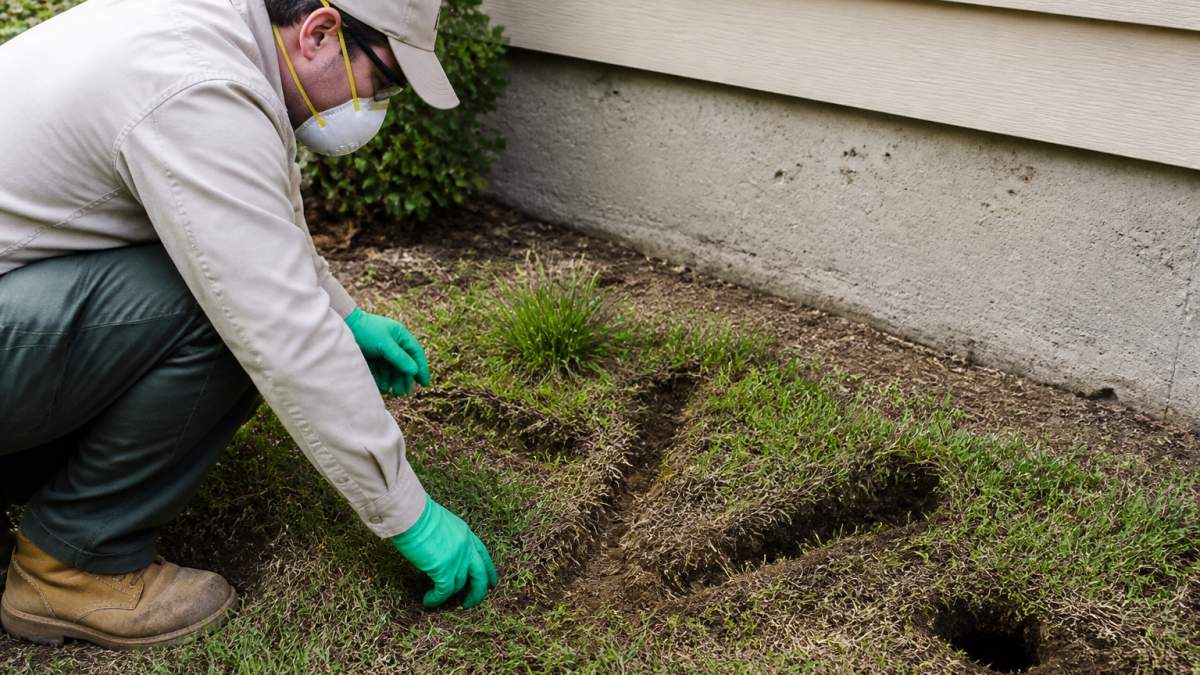
Professional treatment begins with a thorough inspection.
The inspection takes 30 minutes to an hour depending on property size and informs both the treatment strategy and the estimate. It often reveals what homeowners miss, secondary populations or damage deeper than surface runways suggest.
Treatment Methods and Guarantees
Professional services typically combine techniques. Trapping is primary, specialized traps placed along active runways.
Many services offer guarantees: some promise elimination within a set timeframe, others a free follow-up if voles return within a set period. Stronger guarantees cost more upfront but reduce your financial risk.
Ask about the guarantee before committing: does it cover the whole property or only treated areas, how long does it last, and what triggers a free follow-up?
Vole Removal Cost Factors: Regional and Seasonal Variation
Vole control cost varies significantly by geography and time of year, since regional vole pressure and seasonal activity affect treatment frequency and intensity.
Regional differences stem from climate, soil, and local populations.
Seasonal variation is pronounced. Fall and winter bring peak activity as voles seek food near structures, so treatment costs more, infestations are more severe and need intensive intervention.
Providers factor regional conditions and seasonal trends into pricing, a coastal property may quote differently than an identical inland one.
DIY Vole Control: Cost Comparison and Limitations
DIY versus professional isn't a materials-cost question, it's total cost over time. The two columns look very different once you count labor, repeat applications, and damage that accumulates while you experiment.
What DIY Actually Costs
Start with the shopping list:
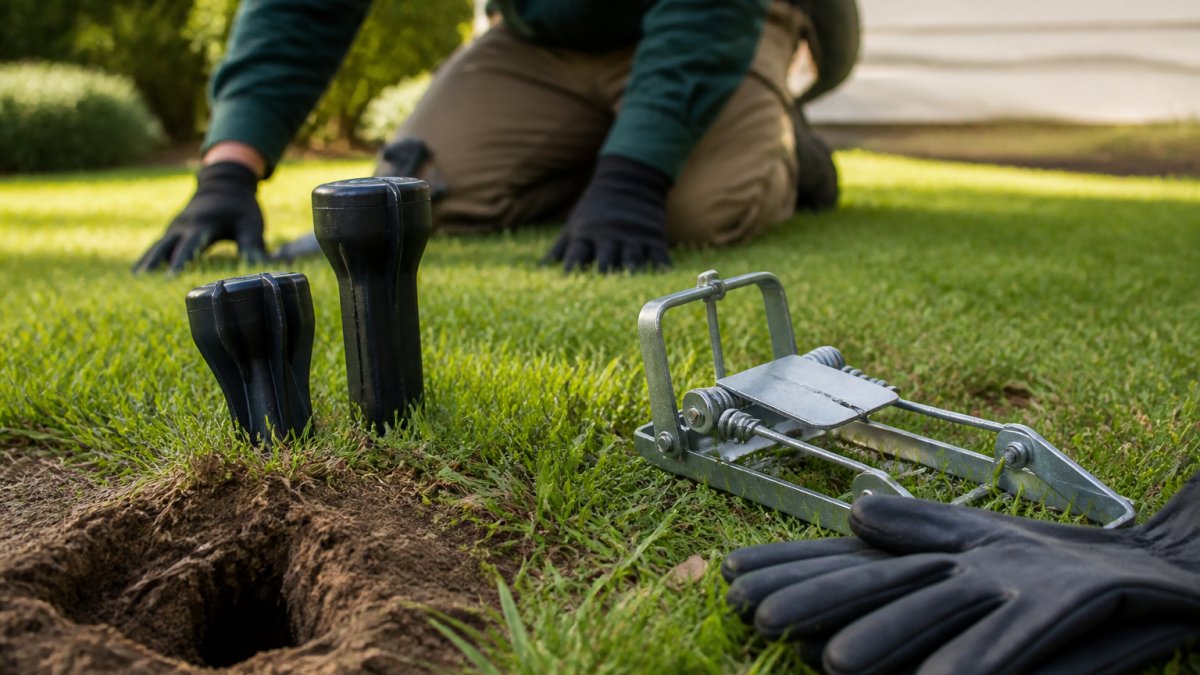
- Traps, snap traps, body-grip traps, and multi-catch traps for voles run roughly $3 to $25 each depending on type and brand. A residential property usually needs 5 to 10 set at once, so $30 to $200 in traps.
- Bait and attractants, a few dollars to $20 per season.
- Repellents, granular, castor-oil, and predator-urine products typically run $10 to $50 per application depending on coverage area. Most need reapplication every four to eight weeks through the active season, so a fall-through-spring program can mean four to six applications.
- Barrier materials, hardware cloth, stakes, and tree guards for exclusion work commonly run $30 to $150 for a typical yard.
- Lawn and garden repair, grass seed, topsoil, and replacement plants for damaged beds. This is the line most DIY budgets miss entirely, and it is often the largest one.
Added up, a serious DIY season lands in the low hundreds of dollars in materials, genuinely lower than a professional program.
The Hidden Line: Your Time
Trapping voles isn't like setting a mousetrap in a pantry. You must find active runways (narrow, well-worn paths through grass and thatch), set traps at the right depth and angle, and check them often enough that catches aren't wasted.
Put a number on that time: at $25 an hour, 15 hours is $375 of unpaid labor. The DIY materials savings aren't savings, they're a labor transfer.
Where DIY Breaks Down
DIY works on small, early infestations but fails on established ones, expensively:
- Reproduction outpaces trapping. Voles breed fast, and a small population becomes large within a season. Catching three a week while numbers grow is a losing race.
- Damage continues while you experiment. Voles girdle trunks, eat roots and bulbs, and tunnel under lawns and irrigation lines. Every week of trial-and-error adds damage to repair.
- Repellents fade. One that works for three weeks won't work for twelve. Homeowners who stop reapplying in month two see activity return in month three and blame the product, when the schedule was the issue.
The Honest Comparison
A fair side-by-side looks like this:
| Cost category | DIY | Professional |
|---|---|---|
| Materials and supplies | Low to moderate | Included in service price |
| Your labor | 10-20+ hours, unpaid | None |
| Repeat applications | Required, ongoing | Bundled or per visit |
| Follow-up and monitoring | Your responsibility | Included or quoted |
| Guarantee if voles return | None | Common, terms vary |
| Damage repair | Separate, often large | Separate, often large |
DIY wins the first row; professional wins every row after. Which is cheaper depends on infestation severity, what your time is worth, and whether you catch it early enough for DIY to have a real chance.
A Reasonable Decision Rule
- A few runways, caught early, small yard: DIY is a defensible choice. Budget for traps, repellent, and reapplication, and plan to check traps consistently.
- Voles in the garden, foundation beds, or around trees: Call a professional. The damage potential is too high to treat as a learning project.
- You have already tried DIY for a month with no reduction: Stop. You are paying twice, once in materials and time, once in accumulating damage.
- You have pets, children, or wildlife concerns: Ask specifically what methods a provider uses before you buy any rodenticide, and prefer trapping and habitat modification where possible.
Vole Prevention: Long-Term Cost Savings
The cheapest vole control is prevention. Fixing the conditions that attract voles stops the problem before it starts, saving thousands in treatment and repair.
Habitat modification removes what voles need.
Exclusion keeps voles out of vulnerable areas: hardware cloth around garden beds and tree bases, sealed gaps where they might enter structures, and removal of food sources like fallen fruit, seeds, and debris piles.
Seasonal vigilance catches infestations early. Inspecting in fall and spring, when activity rises, reveals new populations quickly, and early intervention prevents the exponential growth that makes control expensive.
Getting an Accurate Vole Control Quote
Getting quotes from multiple providers reveals cost variation and what drives pricing locally, but comparing them requires knowing what each company includes.
Questions to Ask Before You Commit
Ask every provider these questions before accepting a quote:
What does the initial treatment include, and does it cover the whole property or specific areas? What methods are used, and how long does treatment take? Are follow-ups included or extra, and how many are typically recommended? If activity continues, is there a guarantee or warranty, how long does it last, and what voids it?
Request an itemized quote breaking down materials, labor, and follow-ups.
Ask about vole-specific experience. Providers handle many species, gophers, moles, ground squirrels, and expertise varies. A vole specialist understands vole behavior, seasonal patterns, and effective treatment combinations better than a generalist.
If environmental practices matter to you, ask about them. Ask whether a provider minimizes environmental impact and is transparent about its chemicals and techniques.
Vole control cost depends on property size, infestation severity, treatment methods, and location. When you're ready to address vole activity, Ekoterra Gopher Pest and Wildlife Control provides comprehensive, eco-friendly pest and wildlife management solutions with guaranteed results. Contact us for a customized quote, we'll explain exactly what's included and help you understand the investment required for lasting pest control.
Frequently Asked Questions
How much does professional vole control cost?
Professional vole control costs depend on property size, infestation severity, and treatment type. Pricing varies based on the extent of vole activity, number of follow-up treatments needed, and whether warranty or guarantee coverage is included. Contact Ekoterra for a customized quote that reflects your specific property and infestation level.
Is DIY vole control cheaper than hiring a professional?
DIY vole control methods like trapping and repellents have lower upfront costs, but they often fail to eliminate severe infestations and require repeated applications. Professional vole removal, while higher in initial cost, typically provides guaranteed results, warranty protection, and prevents costly lawn damage and root destruction over time. The long-term value often favors professional treatment.
How many treatments does vole control usually require?
Most vole infestations require an initial treatment followed by one or more follow-up visits. The number of treatments depends on infestation severity, property size, and the treatment method used. Early intervention often requires fewer treatments, while severe infestations may need multiple applications spread over weeks or months to ensure complete removal and prevent reinfestation.
What factors affect the cost of vole removal?
Key cost factors include property size, infestation severity, treatment type (trapping, exclusion, repellent), number of follow-up treatments, warranty coverage, and regional pricing variation. Labor costs, inspection complexity, and whether habitat modification or lawn restoration is needed also influence the final price. A free estimate accounts for all these variables.