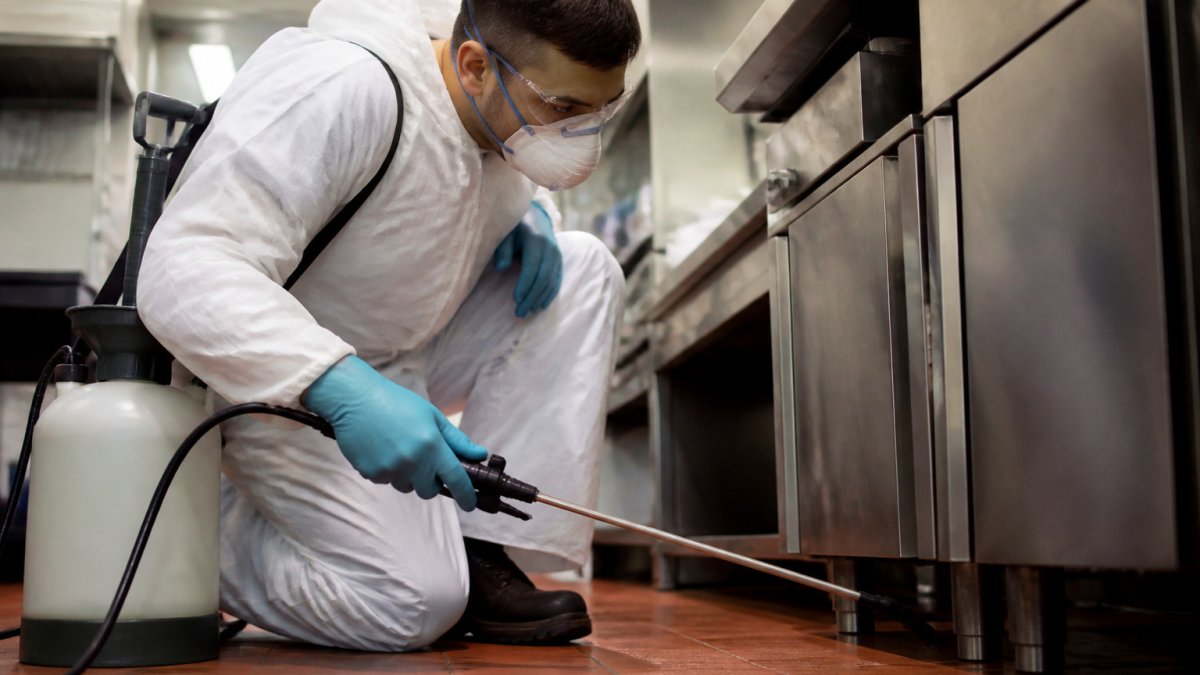
Last Updated: November 3, 2026
Quick Summary
Effective restaurant cockroach treatment works as a system: find the source, cut off food and water, then treat with targeted products placed where roaches actually live. Clean first, seal cracks second, and treat third with gel bait, bait stations, and insect growth regulators, then monitor with sticky traps. German and American cockroaches need different placements, so treating every roach the same way is why infestations come back.
- Apply pea-sized gel bait dots in cracks, hinges, and corners near harborage, never on food-contact surfaces.
- Rotate bait active ingredients every few months to avoid bait resistance.
- Check sticky traps weekly and record counts; rising counts mean the plan needs adjustment.
- German cockroaches respond to gel bait and IGRs; American cockroaches need exclusion and drain-area treatment.
- Escalate to a licensed professional if trap counts rise despite treatment or activity appears near open food.
Table of Contents
- Cockroach Control in Restaurants: What Actually Works
- How to Get Rid of Cockroaches in a Commercial Kitchen
- Cockroach Gel Bait for Restaurants: Placement and Best Practices
- Sticky Traps, Bait Stations, and Monitoring Tools
- Chemical vs. Non-Chemical Controls: What's Safe in a Food Establishment
- How Long Does Restaurant Cockroach Treatment Take?
- Building an Integrated Pest Management Plan for Your Restaurant
- Next Steps: Getting a Professional Assessment
- Frequently Asked Questions
Cockroach Control in Restaurants: What Actually Works
A single cockroach spotted during a health inspection can shut a kitchen down. That is why restaurant cockroach treatment options deserve more than a spray-and-hope approach. Effective cockroach control in restaurants works as a system: find the source, cut off food and water, then treat with targeted products placed where roaches actually live. Below, we break down what works, what fails, and how to build a plan that holds up under inspection.
Signs You Have a Cockroach Infestation
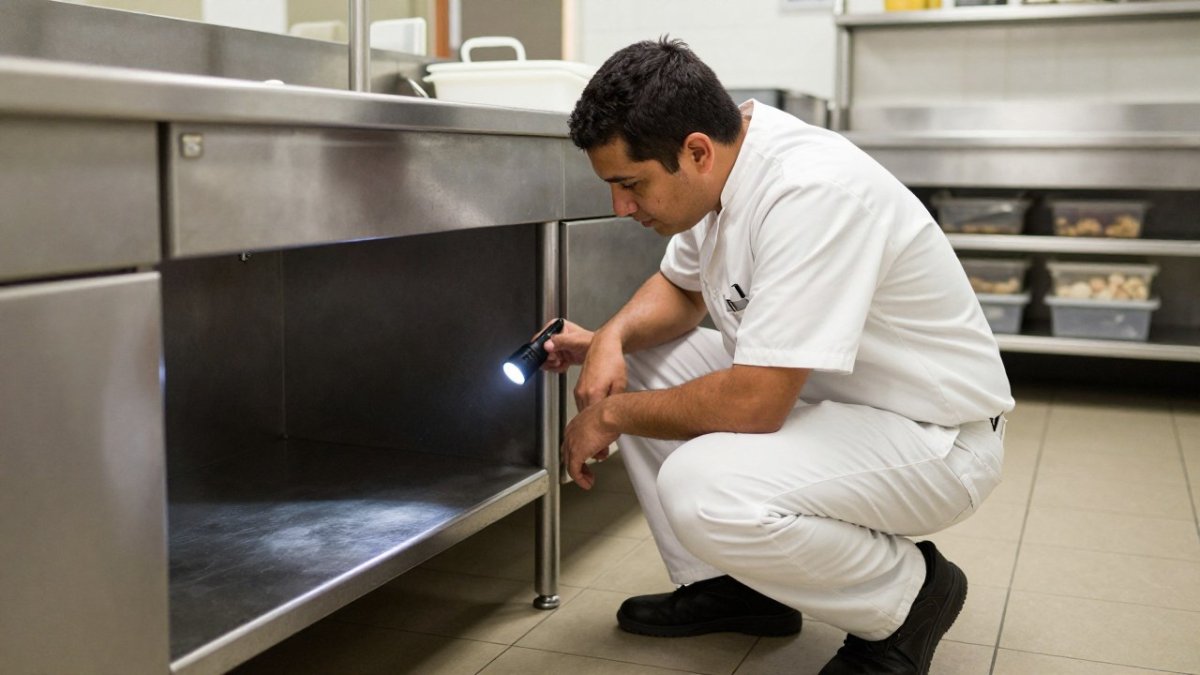
Look for droppings, egg capsules, grease smears, and a musty odor before you ever see a live roach. Cockroach activity usually starts in warm, wet spots: under sinks, behind dish machines, inside motor housings, and along the seams of prep tables. Check these spots on a schedule:
- Dark pepper-like droppings in drawers and on shelf edges
- Brown egg capsules glued behind equipment
- Smear marks along wall-floor junctions
- Live roaches scattering when lights come on
- A stale, oily smell in storage rooms
A common mistake is waiting for a visible roach. By then, harborage areas are already crowded.
Species Matter: German vs. American Cockroaches
German cockroaches and American cockroaches need different treatment placements. German cockroaches are small, tan, and live in tight cracks near heat and water, often inside kitchen equipment. They breed fast, so gel bait and insect growth regulators work well against them. American cockroaches are larger, reddish-brown, and often enter from drains or sewer lines (Cockroaches and Schools | Managing Pests in Schools). They respond better to targeted treatment near entry points and moisture sources. Treating every roach the same way is one reason infestations come back.
How to Get Rid of Cockroaches in a Commercial Kitchen
Getting rid of cockroaches in a commercial kitchen starts with sanitation, then moves to exclusion, then treatment. Skip the first two steps and bait will not keep up. The usual rule of thumb: clean first, seal second, treat third, monitor always.
Sanitation and Moisture Control
Food debris, grease buildup, and standing water feed a cockroach infestation. Deep clean the places routine mopping misses:
- Pull equipment out and clean behind and beneath it
- Degrease hoods, fryer sides, and floor drains
- Fix dripping pipes and dry wet floors before close
- Store food in sealed containers, never in open bags
- Remove trash nightly and wash bins
Moisture matters as much as food. Roaches need water more than they need a meal.
Sealing Cracks and Removing Clutter
Clutter creates hiding places, and cracks and crevices give roaches a free highway. Seal gaps around pipes, wall penetrations, and baseboards with caulk or steel wool. Break down delivery boxes immediately, since corrugated cardboard is a favorite harborage. Keep storage shelves off the floor and away from walls so you can inspect them.
Cockroach Gel Bait for Restaurants: Placement and Best Practices
Cockroach gel bait for restaurants works best in small dots placed close to harborage, not sprayed in wide bands. Apply pea-sized placements in cracks, hinges, and corners where roaches travel. Rotate bait active ingredients every few months to avoid bait resistance. Never place gel bait on food-contact surfaces, and always follow label directions. Watch out: bait applied over grease or old insecticide residue gets ignored, so clean the surface first.
Sticky Traps, Bait Stations, and Monitoring Tools
Monitoring tools tell you whether treatment is working. Sticky traps placed along walls and under equipment catch roaches and show you where activity is highest. Bait stations add another layer of control while doubling as monitors. Check traps weekly and record trap counts. Rising counts mean the infestation severity is not dropping, so adjust placement. This data is also useful documentation for inspections.
Chemical vs. Non-Chemical Controls: What's Safe in a Food Establishment
In a food establishment, the choice between chemical and non-chemical control is not a preference, it is a sequence.
Non-chemical controls (always first):
- Sanitation that removes grease, food debris, and standing water
- Exclusion: sealing cracks, pipe penetrations, and gaps around doors and windows
- Moisture correction: fixing leaks, drying floors before close, and clearing drain clogs
- Clutter removal, especially corrugated cardboard and stacked storage
- Monitoring with sticky traps to locate activity before treating
Chemical controls (targeted, label-driven):
- Gel baits placed in cracks, hinges, and voids near harborage, never on food-contact surfaces
- Bait stations for edge-of-kitchen and storage areas
- Targeted residual insecticides applied only to cracks, crevices, and voids per the label
- Insect growth regulators (IGRs) to break the breeding cycle in harborage areas
- Desiccants such as diatomaceous earth or boric acid in wall voids and equipment housings, away from food
The food-safety rules that govern placement:
- Never apply any product to food-contact surfaces, utensils, prep tables, or areas where food is stored or prepared.
- Cover or remove exposed food, dishes, and single-service items before any application.
- Follow the label's re-entry interval and any requirement to wash surfaces before food prep resumes.
- Keep bait and insecticide away from areas where children or untrained staff could contact them.
- Store all products in labeled containers away from food storage, and keep safety data sheets on file.
How to choose between them:
Use non-chemical controls alone only for very light activity caught early by monitoring. Once you confirm harborage, droppings, egg capsules, or repeated trap catches, add gel bait and IGRs in the harborage itself.
Watch out: applying a residual insecticide over or near bait placements can cause bait aversion, and spraying wide bands in a kitchen spreads product where it does not belong, both are common reasons a treatment fails inspection.
Species-specific differences in product choice:
German cockroaches, which cluster in warm cracks near water, respond well to gel bait and IGRs placed inside equipment housings and along seams.
When to escalate to a professional:
If bait placements are ignored after cleaning and rotation, if trap counts rise despite treatment, or if activity appears near open food or in multiple harborage areas, call a licensed pest-control professional.
How Long Does Restaurant Cockroach Treatment Take?
Treatment duration depends on severity, species, and how well sanitation and exclusion hold up. Pricing and scheduling details depend on the property, so contact Ekoterra Gopher Pest and Wildlife Control directly for an assessment.
Phase 1: Preparation before treatment (same day to a few days)
- Deep clean harborage areas and remove food and water sources.
- Clear counters, cover or remove exposed food, utensils, and single-service items.
- Seal cracks and voids where possible so treatment reaches the right places.
- Schedule work during closed hours to avoid disrupting service and to allow re-entry time.
Phase 2: Application and re-entry (treatment day)
- Apply gel bait, bait stations, and IGRs in harborage and along travel routes.
- Follow the label's re-entry interval before staff return to the treated area.
- Wash food-contact surfaces before food prep resumes, per the label and your food-safety plan.
- Record products used, placements, and any surfaces covered or removed.
Phase 3: Monitoring and follow-up (one to several weeks)
- Check sticky traps weekly and record counts by location.
- Expect a follow-up visit to confirm counts are falling and to refresh bait.
- Rising counts or new activity in a different area mean the plan needs adjustment, not just more product.
Reopening criteria after treatment:
A kitchen can resume normal prep when the re-entry interval has passed, food-contact surfaces have been cleaned per the label, and no product remains on surfaces where food is handled. If the label requires a wash-down, document it. Inspectors may ask for service reports and a log showing corrective actions.
Why treatments fail and what to do:
- Bait aversion or resistance: rotate active ingredients every few months and clean surfaces before placing new bait.
- Poor placement: bait over grease or old insecticide residue gets ignored; place pea-sized dots in cracks and hinges near harborage.
- Sanitation lapses: if grease and food debris return, bait cannot keep up.
- Species mismatch: German and American cockroaches need different placements and emphasis.
- Untreated entry points: American cockroaches entering from drains or sewer lines require exclusion and drain-area treatment.
Documentation that supports the timeline:
Keep a simple log of sightings, trap counts, cleaning checks, corrective actions, and pest-control visits. This record shows inspectors that treatment is monitored and adjusted, and it gives you a factual basis for deciding when to escalate to a licensed professional.
Building an Integrated Pest Management Plan for Your Restaurant
An integrated pest management plan ties everything together: inspection, sanitation, exclusion, targeted treatment, and monitoring, with clear staff responsibilities and records. Assign daily cleaning checks, weekly trap reviews, and monthly deep cleans. Document everything, because inspectors want to see logs, service reports, and corrective actions. For a full walkthrough of prevention checklists and service frequency, see our guide to commercial pest control for restaurants. You can also review what records a restaurant needs for pest control so your documentation is audit-ready.
| Problem | Fix | Impact |
|---|---|---|
| Droppings under equipment | Deep clean and pull equipment monthly | Removes food and harborage |
| Roaches in delivery boxes | Break down boxes same day | Cuts new introductions |
| Bait ignored | Clean surface, rotate active ingredient | Restores bait uptake |
| Rising trap counts | Adjust placement, add follow-up | Confirms control is working |
Next Steps: Getting a Professional Assessment
A professional assessment turns guesswork into a plan. A technician identifies species, maps harborage, and sets a treatment and monitoring schedule. Before you sign anything, read our guide on the restaurant pest control contract terms to review, and use these 7 steps to verify pest control certification before hiring so you know who is working in your kitchen. When you are ready, you can view our commercial pest control service and book an assessment.
Frequently Asked Questions
What should a restaurant do if it finds cockroaches?
Act immediately. Remove any visible food debris and standing water, then contact a pest-control professional for an inspection. Avoid fogging or spraying pesticides in food-prep areas, as this can contaminate food-contact surfaces and violate health codes. Document the sighting, seal the affected area if possible, and schedule a follow-up inspection to confirm the infestation is under control.
Can a restaurant get shut down for having roaches?
Yes. Health inspectors can close a food establishment if they find a cockroach infestation that poses an immediate health risk. The U.S. Food and Drug Administration's Food Code and local health departments treat roaches as evidence of unsanitary conditions. A single roach sighting may trigger a re-inspection, while a heavy infestation can lead to suspension of your operating permit until the problem is corrected.
How long does restaurant cockroach treatment take?
Treatment duration depends on the size of the kitchen, the severity of the infestation, and the species involved. Contact Ekoterra Gopher Pest and Wildlife Control for an assessment and a timeline specific to your property.
Are cockroach sprays safe to use in a commercial kitchen?
Only EPA-registered products labeled for use in food establishments are safe, and they must be applied according to label directions. Never spray over food-contact surfaces, prep areas, or utensils. Many restaurants use gel baits and bait stations instead of broad sprays because they target harborage areas without contaminating food. Always consult a licensed pest-control technician before applying any insecticide in a commercial kitchen.
A cockroach problem in a restaurant rarely fixes itself, and one failed inspection can cost you far more than prevention. Ekoterra Gopher Pest and Wildlife Control offers eco-friendly pest control solutions, environmentally conscious services, and guaranteed results for commercial properties. Get started with Ekoterra Gopher Pest and Wildlife Control and protect your kitchen with a plan built to pass inspection.
