Last Updated: November 7, 2026
Quick Summary
To protect tree roots from voles, install a buried wire-mesh trunk guard and clear cover from the base of the tree. For trees in loose soil or under heavy pressure, add a wider root-zone barrier set beyond the expected root spread.
- Use 1/4-inch hardware cloth, since 1/2-inch mesh lets voles through.
- Bury the bottom edge of the guard 2 to 3 inches deep to stop tunneling.
- Keep the guard about 1 inch from the bark to prevent rubbing and moisture.
- Overlap guard seams by at least 2 inches and secure them every few inches.
- Inspect guards monthly in winter and after storms, and clear snow from the trunk.
Table of Contents
- How Voles Damage Tree Roots and Bark
- Choosing a Root Protection Method by Tree Age and Infestation
- Installing Vole-Proof Tree Guards Step by Step
- Protecting Tree Roots From Voles in Winter
- Natural Methods to Protect Tree Roots From Voles
- Maintaining Your Guards and Next Steps for Your Trees
- Frequently Asked Questions
How Voles Damage Tree Roots and Bark
Voles are small, mouse-like rodents that chew on tree roots and bark, especially in winter when other food is scarce. To protect tree roots from voles, start by knowing what their damage looks like.
Voles tunnel just under the surface of the soil and gnaw on roots and the lower trunk. Bark girdling is the most serious harm. When voles strip bark all the way around a trunk, water and nutrients cannot reach the tree above that point. A girdled young tree can die within a season.
The damage often goes unnoticed until spring. Pay attention to these signs:
- Gnaw marks on bark near the base of the trunk
- Shallow, narrow runways through grass or mulch
- Small holes at the soil surface around the tree
- Wilting or yellowing leaves on an otherwise healthy tree
- Missing bark at the root collar, the spot where the trunk meets the soil
Signs of Vole Damage Versus Mice or Rabbits
Several rodents and animals feed on tree bark, so it helps to tell them apart. Voles usually leave a ragged, chiseled gnaw mark with small teeth marks. Mice tend to leave cleaner, more scattered marks on bark higher up the trunk. Rabbits leave diagonal cuts that are sharp and angled, often above the snow line.
Look at the tunnels too. Vole runways are narrow and sit at ground level. Their tracks are most common in dense cover. If you see distinct, angled cuts above the snow line, rabbits are more likely the cause.
Choosing a Root Protection Method by Tree Age and Infestation
A trunk guard protects bark, but it does not protect roots. Voles feed on roots below the surface, and the right root-protection method depends on tree age, soil type, and how heavy the infestation is. Use this decision guide to pick a method instead of guessing.
Start with three questions
- How old is the tree? Seedlings and trees in their first three years have small root systems and thin bark. A mature tree with a thick trunk can tolerate some surface feeding but still loses roots to tunneling.
- What is the soil like? Loose, sandy, or loamy soil lets voles tunnel deeply and quickly. Heavy clay slows tunneling but holds moisture against guards and roots.
- How bad is the pressure? A few runways in the lawn is light pressure. Runways crisscrossing the root zone, fresh droppings, and chewed roots at the drip line indicate heavy pressure.
Match the method to the situation
- Newly planted trees, any soil, light to heavy pressure: Install a full wire-mesh guard buried below the soil surface, and add a root-zone barrier if the tree is in loose soil. New roots are shallow and vulnerable, so combine trunk and root protection from planting day.
- Established trees, light pressure, clay soil: A trunk guard plus cleared ground at the base is usually enough. Voles rarely tunnel far in compacted clay, so watch the root collar and the first few inches of root flare.
- Established trees, heavy pressure, sandy or loamy soil: Combine a trunk guard with an underground mesh barrier around the root zone, and trap along active runways. Loose soil is where root feeding does the most damage.
- Orchards and rows of trees: Guard every trunk and keep mulch and ground cover short between rows. Voles move along cover, so a continuous cleared strip slows them more than isolated guards.
- Trees near brush piles, stone walls, or tall grass: Remove the cover first. Habitat next to the tree matters as much as any guard, because voles use it as a highway to the roots.
Root-zone barriers versus trunk guards
A trunk guard wraps the trunk and blocks girdling. A root-zone barrier is a mesh cylinder or trench set wider than the trunk, out at the drip line or beyond, that blocks tunneling into the root mass.
Watch out: burying a solid barrier, plastic sheeting, or fine mesh with no drainage can create a bathtub effect that drowns roots and invites rot. Use hardware cloth with openings that pass water, and never seal the soil surface over the root zone.
When trapping belongs in the plan
Trapping is not a substitute for barriers, but it lowers pressure fast when runways are active. Set snap traps or live traps along runways near the tree, cover them so pets and birds cannot reach them, and check them daily. Combine trapping with barriers and habitat cleanup for the most reliable result.
A simple rule of thumb
Protect the trunk first, then protect the roots if the soil is loose or the pressure is heavy. If you can only do one thing this season, install a buried trunk guard on your youngest trees before winter and clear cover from the base of every tree.
Installing Vole-Proof Tree Guards Step by Step
A guard only works if it blocks every path to the trunk and the roots. Gaps at the seam, at the top, or under the buried edge let voles through. The steps below cover a standard trunk guard and an optional root-zone barrier for trees in loose soil or under heavy pressure.
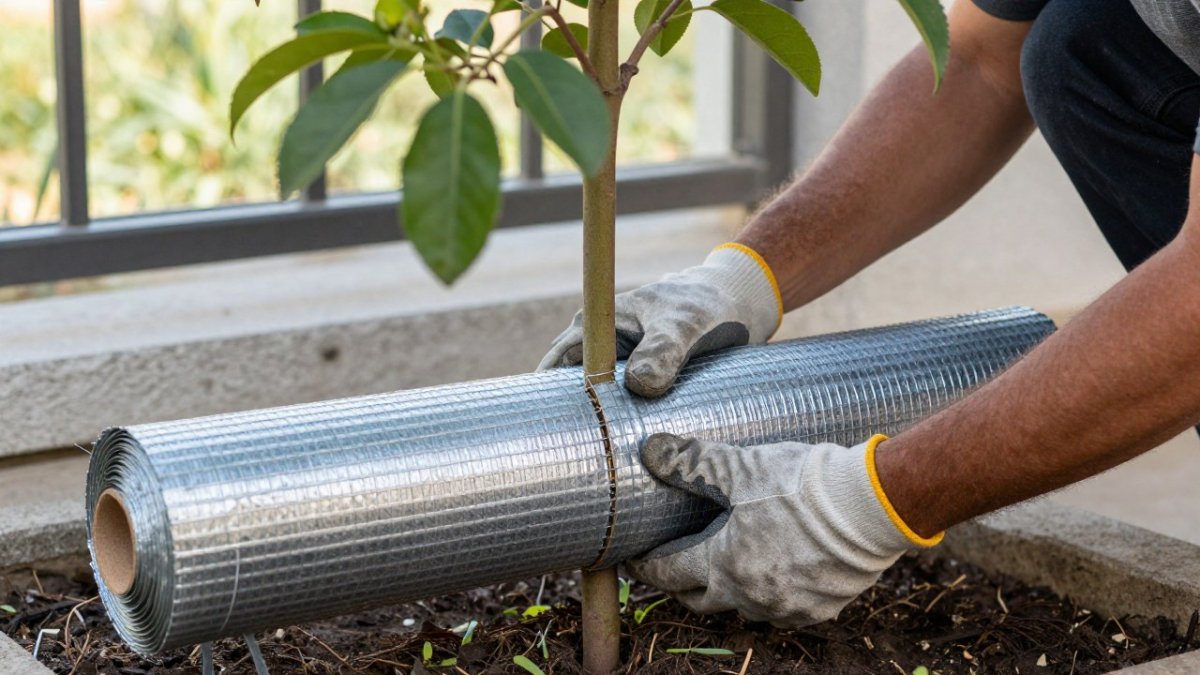
Materials list
- Galvanized hardware cloth with 1/4-inch openings (1/2-inch mesh is too large for voles)
- Heavy-duty wire ties or stainless staples
- Metal snips or tin snips
- Work gloves and eye protection
- A shovel or trowel for burying the bottom edge
- Optional: a second length of hardware cloth for a root-zone barrier
Trunk guard installation
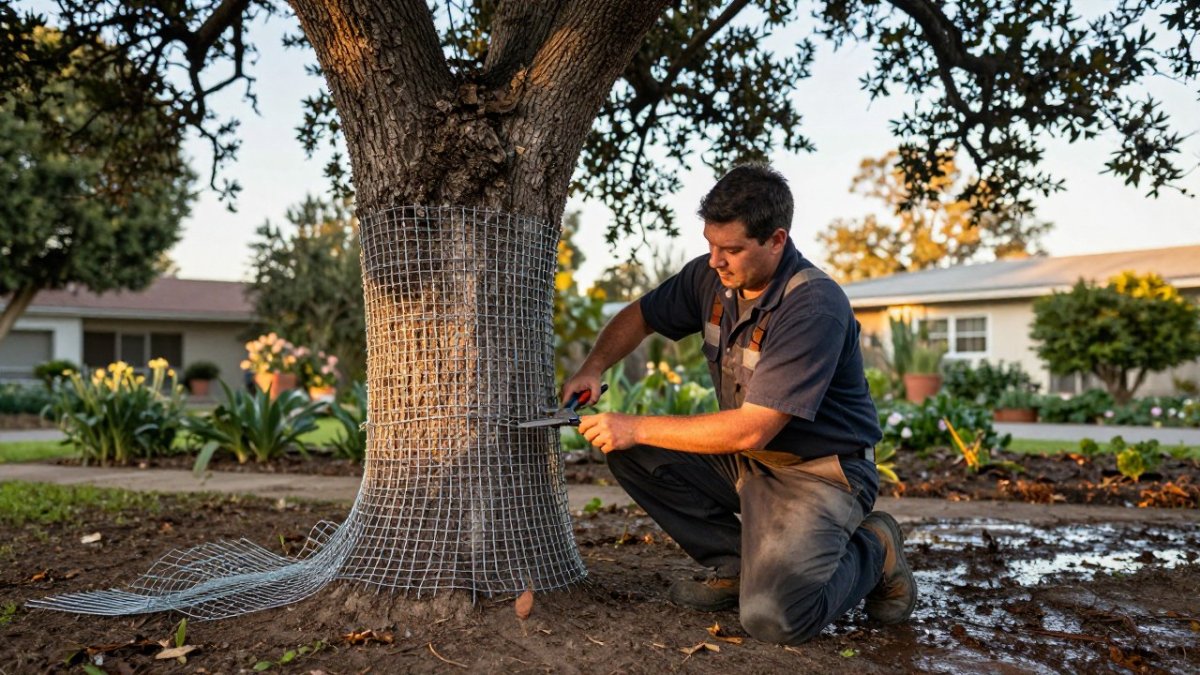
- Cut the mesh to size. Make a cylinder about 18 to 24 inches tall. For a young tree, 24 inches gives room to grow; for a mature trunk, 18 inches is usually enough to cover the root collar and flare.
- Size the diameter. Wrap the mesh around the trunk and leave about 1 inch of clearance from the bark. A guard that touches the bark can rub and hold moisture.
- Bury the bottom edge. Dig a shallow trench 2 to 3 inches deep and set the bottom of the mesh below the soil surface. This stops voles from tunneling under the guard.
- Close the seam. Overlap the ends by at least 2 inches and secure them with wire ties or staples every few inches so no gap remains.
- Set the top height. Leave the top a few inches above the expected snow line. Voles can climb over a guard that ends at snow level.
- Firm the soil. Backfill and press soil against the buried edge so there is no air pocket or gap.
Adding a root-zone barrier
For trees in sandy or loamy soil, or where runways cross the root zone, add a wider mesh barrier. Dig a ring-shaped trench around the tree, set out at the drip line or slightly beyond, and line it with hardware cloth.
Watch out: a root-zone barrier set too close to the trunk or too deep can cut roots and restrict growth. Place it beyond the spread of the roots you expect in the next few years, and check it each season for heaving or gaps.
Protecting newly planted trees
Install the guard at planting time, before the first winter. Keep mulch pulled back several inches from the trunk so voles have less cover, and check the buried edge after the first heavy rain. A guard installed now protects the root collar and shallow roots through the years when the tree is most vulnerable.
Inspection and adjustment
Check guards monthly during winter and after storms. Look for rust, loose ties, and soil washed away from the buried edge. As the trunk grows, enlarge the guard so it never touches the bark, and remove it once the trunk is thick enough to resist girdling. Store the mesh for reuse on the next young tree.
The steps below cover what materials you need and how to install a standard trunk guard, with an optional root-zone barrier.
| Material or step | Detail | Note |
|---|---|---|
| Hardware cloth | 1/4-inch openings | 1/2-inch mesh is too large for voles |
| Guard height | 18 to 24 inches | 24 inches suits young trees |
| Clearance from bark | About 1 inch | Prevents rubbing and moisture |
| Bottom edge burial | 2 to 3 inches deep | Stops tunneling under the guard |
| Seam overlap | At least 2 inches | Secure every few inches |
| Root-zone barrier depth | Bottom 6 to 12 inches down | Set beyond expected root spread |
Protecting Tree Roots From Voles in Winter
Winter is the highest-risk season. Snow cover gives voles a protected path to feed, and bark is one of their few food sources.
Inspect guards after each snowfall. Snow can push a guard out of place or create a gap at the base. Clear snow away from the trunk so voles cannot use it as cover. If you use mulch, keep it several inches away from the bark.
Natural Methods to Protect Tree Roots From Voles
Many gardeners want to avoid chemicals, and natural methods can help. You can read about natural barrier and scent deterrents for rodents. They work best as part of a plan that includes physical barriers.
Good natural options include:
- Keeping grass and weeds mowed short around trees
- Removing piles of wood, leaves, and debris near the trunk
- Using physical barriers instead of relying on repellents alone
- Encouraging natural predators such as owls and hawks by leaving perches
Evaluating Repellents and Trapping
Repellents are generally less reliable than physical barriers. If you are weighing bait options, see vole bait choices and safe lawn placement. Treat any repellent as a supplement, not a full solution.
Trapping can reduce a local vole population when traps are placed along active runways. Check local rules before trapping, and follow label directions for any bait products.
Maintaining Your Guards and Next Steps for Your Trees
A guard protects a tree only while it stays intact. Check guards every month during winter and after storms. Look for rust, loose seams, and soil that has washed away from the buried edge.
Remove guards in spring only after the tree has a strong, thick trunk, then store the mesh for reuse. Keep the area around the base clear all year.
If vole damage is heavy, or if you are unsure whether rodents or another animal are the cause, consider a professional inspection.
Frequently Asked Questions
What do voles hate the most?
Voles are deterred most reliably by physical exclusion rather than smells or sprays. Hardware cloth with quarter-inch openings blocks their access to roots and trunks, and a barrier buried two to three inches below the soil surface stops tunneling beneath it. Keeping ground cover, mulch and debris trimmed back from the tree base also removes the cover voles prefer, which makes the area less attractive to them overall.
Will voles eat tree roots?
Yes. Voles feed on tender roots, bark and the base of stems, and they can girdle a tree by chewing the bark all the way around the trunk. Root feeding is often hidden until the tree wilts or declines, so checking the soil around the base for tunnels and gnawed roots is useful. Protecting the root zone early is much easier than repairing a damaged tree.
What kind of mesh protects trees from voles?
Galvanized hardware cloth with quarter-inch openings is the standard choice for vole-proof tree guards. Plastic mesh and chicken wire with large openings let voles through, so they are not reliable. Cut the cloth into a cylinder that extends from below the soil line to a few inches above the expected snow or mulch line, and keep a small gap around the trunk so the tree can grow without being squeezed.
How can you tell if voles have damaged a tree?
Look for shallow surface runways in grass or mulch, small holes near the base, and bark that is chewed in narrow strips at or just above the soil line. Damage from mice tends to show as gnawing higher on the trunk, while rabbits leave clean diagonal cuts above the snow line. If you see gnawed roots after digging gently around the base, voles are the most likely cause.
