Table of Contents
- How to Get Rid of Gophers Naturally: Step-by-Step
- Castor Oil for Gophers: Does It Actually Work?
- Other Natural Gopher Repellents Worth Trying
- Gopher Control Without Poison: Safe Options for Pets and Kids
- How to Create a Gopher-Proof Garden
- When to Call a Professional for Gopher Control
- Frequently Asked Questions
Last Updated: October 6, 2026
How to Get Rid of Gophers Naturally: Step-by-Step
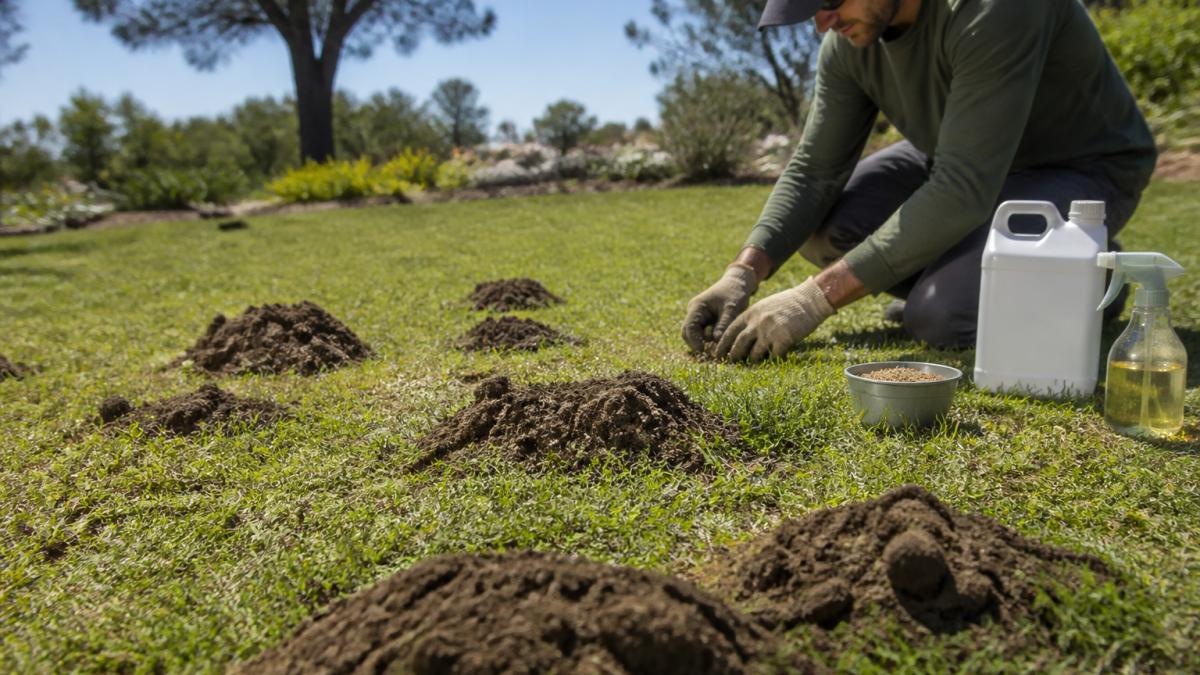
Gophers are small burrowing rodents that live almost entirely underground, feeding on plant roots and leaving fan-shaped mounds of soil on lawns and garden beds. Learning how to get rid of gophers naturally means using scent deterrents, physical barriers, and humane traps instead of poison.
Most store-bought remedies fail for one simple reason: they treat the surface, not the tunnel. A gopher never sees the surface.
Here is the sequence we follow, from cheapest and least invasive to most involved.
Step 1: Identify Active Tunnels and Mounds
Active tunnels are the only ones worth treating, and you can find them in about two minutes. Look for fresh, dark, moist soil in a fan or crescent shape. Older mounds are dry, gray, and crusted over.
To confirm a tunnel is active:
- Probe 15 to 30 centimeters away from the mound with a thin rod
- Mark the spot where the rod drops suddenly, that is the main run
- Recheck the next morning, a plugged hole means activity
- Flatten the mound and see if it returns within 48 hours
Step 2: Apply Natural Gopher Repellents
Natural gopher repellents work by making the soil smell wrong to a gopher's nose. Castor oil is the most common base. Others include garlic, cayenne pepper, used coffee grounds, and predator urine.
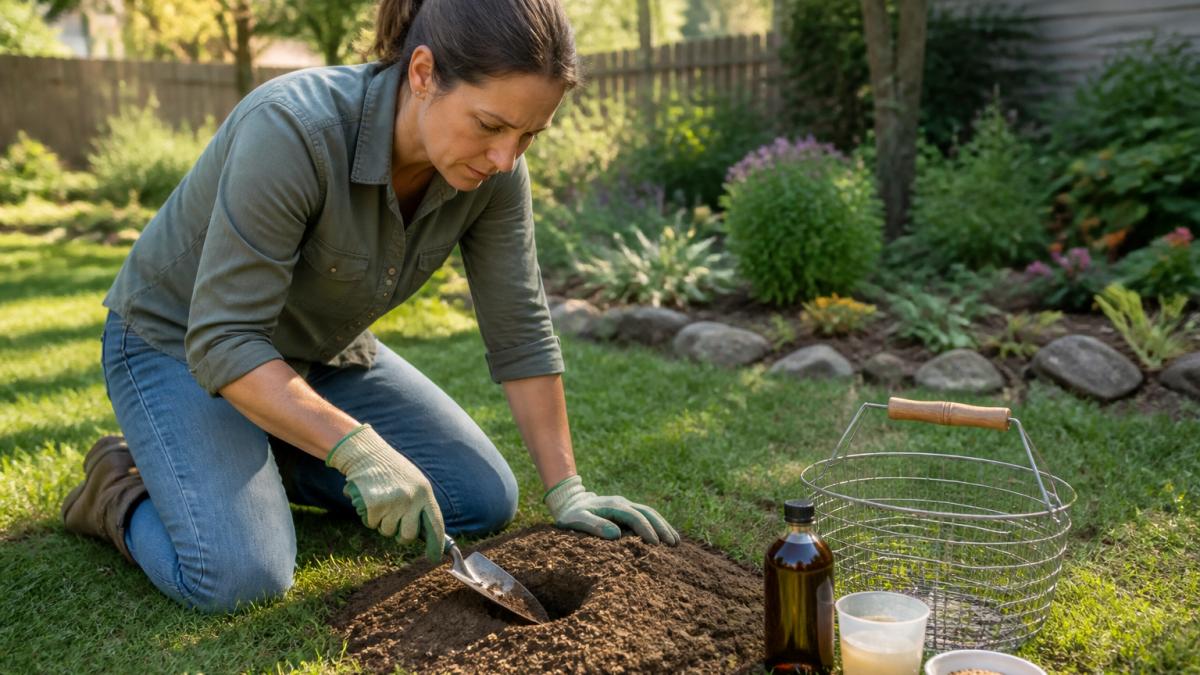
Application matters as much as the product. Wear gloves so you do not leave your own scent, and pour or spray directly into an opened tunnel, then close it back up so the gopher hits the treated soil while digging.
Step 3: Install Physical Barriers
Physical barriers are the only method that keeps working after you stop. Bury hardware cloth with quarter-inch openings at least 45 centimeters deep around beds you want to protect, and bend the top 10 centimeters outward in an L shape. Gophers dig around straight edges, but the L-shape stops them.
Step 4: Set Traps in Active Runs
Trapping is the most reliable non-toxic removal method when you place traps correctly. Set them in the main run, not a side tunnel, and cover the hole so light does not reach the trap. Check traps every morning. Relocate or dispose of animals according to your state wildlife rules.
Step 5: Protect Your Garden
Protect your garden by combining barriers with repellents and by replanting in raised beds lined with wire mesh. Gophers target roots, bulbs, and young transplants first, so guard those hardest.
Castor Oil for Gophers: Does It Actually Work?
Castor oil for gophers works as a repellent, not a killer. It coats the soil with a taste and smell gophers avoid, so they move to untreated ground. It does not remove an established population, and it fades after rain or heavy watering.
Gopher Invasion? Here's How to Get Rid of Gophers!
Get Rid of It!
To use it well:
- Mix castor oil concentrate with water and a few drops of biodegradable dish soap
- Soak the earth along the tunnel line, not just the mound
- Reapply after rain, usually every two to four weeks
- Expect the gopher to shift, not disappear
That last point matters. If your neighbor's yard is untreated, castor oil often just moves the problem next door. Pair it with a barrier if you want the result to hold.
Other Natural Gopher Repellents Worth Trying
Garlic, hot pepper, cayenne, used coffee grounds, and predator urine all fall into the same category: scent deterrents. They can discourage a gopher from a specific area, but they do not remove it. What separates a remedy that works from one that does not is usually the delivery method, not the ingredient.
Here is how the common options compare in practice, along with what the evidence actually supports.
| Repellent | How to Apply | Mechanism | Realistic Result |
|---|---|---|---|
| Castor oil | Soak tunnel soil with a diluted concentrate | Coats soil with an odor and taste gophers avoid | Gopher shifts tunnels; fades after rain |
| Garlic | Bury crushed cloves or soak a cloth in runs | Sulfur compounds irritate the nose | Short-term avoidance; gophers often dig around it |
| Cayenne or hot pepper | Dust into opened tunnels | Capsaicin irritates mucous membranes | Weak and fades fast; can harm pets and wildlife |
| Used coffee grounds | Spread near mounds or work into soil | Strong odor masks familiar scent cues | Minimal effect; mostly anecdotal |
| Predator urine | Spray entry points and mound edges | Simulates a predator's territorial scent | Brief avoidance; washes away quickly |
| Castor bean plant | Grow as a border plant | Toxic seeds and foliage | Not recommended around pets or children |
A few patterns are worth knowing before you spend money on any of these.
- Scent deterrents are temporary by design. Rain, irrigation, and soil microbial activity break down the active compounds within days to a few weeks. Most practitioners find that reapplying every two to four weeks is the minimum to hold a boundary.
- Delivery beats ingredient. Pouring a repellent on the mound does almost nothing. The product has to reach the main run, which is why opening a tunnel, treating the soil, and closing it back up matters more than which bottle you bought.
- Anecdotal remedies are not the same as tested ones. Castor oil has the most consistent track record in university extension and pest-control literature. Garlic, coffee grounds, and predator urine show up mostly in gardener forums and social posts, where results are mixed and often confounded by weather or a gopher that simply moved on its own.
- Gophers can learn. A gopher that hits a treated tunnel may seal that section off and dig a new run a few feet away. That is why a repellent alone rarely solves a yard-wide problem.
If you want the strongest natural result, combine a repellent with a physical barrier. The repellent buys you time; the barrier is what keeps the gopher from coming back through the same ground.
Gopher Control Without Poison: Safe Options for Pets and Kids
Gopher control without poison comes down to three tools: barriers, traps, and repellents. None of them leave toxic residue in your yard, which matters if children or pets use the space.
Traps. Traps are the most direct option and the fastest at removing an animal. They are also the option most likely to injure a pet or a child who finds one before you do. Set traps in active runs, cover the hole, and check them every morning.
Barriers. Barriers are the most durable and the safest around kids and pets once installed. The main risk is buried wire mesh, which can snag paws or fingers if it is exposed at the surface. Bury the top edge in an L shape and cover it with soil so nothing sharp is reachable.
Repellents. Repellents are the least invasive but also the least final, and they carry the most overlooked safety issues:
- Cayenne and hot pepper contain capsaicin, which irritates eyes, noses, and airways. Dust drifting onto a dog's paws or a child's hands can cause real discomfort. Avoid using it in beds where kids dig or pets root.
- Castor oil is generally low-risk in diluted form, but the concentrated product and the castor bean plant itself are toxic if swallowed. Keep the concentrate locked away and never plant castor beans where pets or children can reach the seeds.
- Predator urine is a concentrated animal waste product. It can carry bacteria, and it should not be sprayed on or near edible plants. Wear gloves, avoid breathing the mist, and wash your hands after applying.
- Garlic and coffee grounds are low-risk for pets but can be harmful to some wildlife and are not effective enough to justify heavy use.
A few rules apply no matter which method you choose:
- Never use bait stations or poison near edible plants, pets, or children
- Wash garden produce thoroughly before eating it
- Keep pets away from opened tunnels during treatment
- Store all concentrates and traps out of reach
- Check with your state wildlife agency before relocating any animal
For a yard with kids and a dog, we usually start with traps in active runs, then add barriers around the vegetable garden. Repellents are a supporting tool, not the foundation.
How to Create a Gopher-Proof Garden
A gopher-proof garden is built, not sprayed. The goal is to make your soil hard to reach and less appealing than the ground around it.
- Line raised beds with quarter-inch wire mesh before filling them
- Bury mesh 45 centimeters deep along in-ground bed edges
- Bend the top edge outward into an L shape
- Protect young transplants with wire baskets
- Keep a gravel or packed-soil border around the bed
- Recheck mesh after winter for rust or shifting
- Remove weeds that give gophers cover near the bed
If you have a large yard or a commercial property, this is where a professional assessment saves time. Ekoterra Gopher Pest and Wildlife Control delivers professional, eco-friendly pest and wildlife management solutions for residential and commercial properties, including turf and landscaping where burrowing damage is costly.
When to Call a Professional for Gopher Control
Call a professional when the same runs keep reopening, when damage spreads across a large property, or when the site has structures you cannot risk. Historic homes, HOAs, golf courses, and food service properties all fall into that group.
Signs it is time to escalate:
- New mounds appear within days of treatment
- Tunnels run under a foundation, driveway, or pool deck
- You manage multiple units or a large turf area
- Health code compliance depends on a pest-free property
- You have tried repellents and barriers without results
At that point, the cost of guessing usually exceeds the cost of a service call. Ekoterra Gopher Pest and Wildlife Control works across Ventura, Los Angeles, and Santa Barbara Counties with eco-friendly methods and guaranteed results, so property managers get one reliable plan instead of a shelf of half-used products.
Gophers are persistent, and a single untreated run can undo weeks of work. If you have tried castor oil, traps, and mesh and the mounds keep coming back, the problem is usually the tunnel system, not the method.
Frequently Asked Questions
Do castor oil repellents work on gophers?
Castor oil can discourage gophers by making the soil and plant roots less appealing, but it rarely eliminates an entire population. It works best as part of a broader strategy that includes physical barriers and trapping. For persistent problems, combining castor oil with wire mesh exclusion and monitoring active tunnels gives better results. If gophers keep returning, a professional assessment can identify why your current approach isn't enough.
How can I keep gophers out of a garden naturally?
Start by lining the bottom and sides of raised beds with half-inch wire mesh, burying it at least 12 inches deep. Add a 6-inch above-ground lip bent outward to stop gophers from digging under. As a scent deterrent, you can consider planting garlic around the perimeter, and set traps in active runs. Watering deeply after applying castor oil repellent helps it soak into the soil where gophers tunnel.
What do gophers hate the most?
Gophers avoid strong scents like castor oil, garlic, hot pepper, and predator urine. They also dislike vibration and noise. However, these deterrents work best when combined with physical exclusion. A single scent rarely solves the problem because gophers can simply tunnel around it. For lasting control, focus on barriers and removing active gophers first.
When should I call a professional for gopher control?
Call a professional if you've tried natural repellents and barriers for several weeks without success, if gophers keep returning, or if your property has extensive damage. Large properties, historic homes, HOAs, and commercial landscapes often need a tailored plan. A professional can identify active tunnels, apply safe treatments, and install durable exclusion systems that protect pets, children, and edible gardens.