Quick Summary
Effective pest control for shared outdoor amenities starts with regular inspections, clear sighting reports, and an integrated approach that targets the causes of infestations. Pools, patios, and landscaped areas give pests food, water, and shelter, so early action keeps problems and costs low.
- Check trash enclosures, standing water, and lawn edges during a weekly walkthrough.
- Run a monthly deep inspection of building perimeters, irrigation, and areas under pool decking.
- Report every sighting the same day and log the date, time, and exact location.
- Assign follow-up inspections with deadlines and verify fixes with a second check before closing reports.
- Call a professional the same day for rodents, large wasp nests, or pests near food or guest seating.
Table of Contents
Why Shared Outdoor Amenities Attract Pests
Shared outdoor amenities such as pools, patios, playgrounds, BBQ areas, and landscaped courtyards give pests food, water, and shelter in one place. Residents and guests leave crumbs and standing water behind, and landscaping adds cover. Pests such as rodents, gophers, ants, wasps, and mosquitoes use these conditions to settle in.
Property managers and HOA boards often find that problems start small and spread. A single sighting near a trash enclosure can turn into a colony within a few weeks. Early action keeps costs and resident complaints low.
Outdoor Pest Inspection Checklist for Shared Spaces
A regular inspection is the simplest way to catch pests before they spread. Use the checklists below as a starting point, and adjust them for your property's layout.
Weekly Walkthrough Items
- Check trash and recycling enclosures for open lids, spilled food, and odors
- Look for standing water in planters, drains, fountain basins, and pool equipment areas
- Scan lawn edges and garden beds for fresh gopher mounds or burrow holes
- Inspect BBQ grills and picnic tables for food residue
- Note any wasp nests or ant trails near seating areas
Monthly Deep Inspection Items
- Inspect the perimeter of buildings, fences, and gates for gaps or damage
- Check irrigation heads and drainage for leaks that create moisture
- Look under pool decking, patio pavers, and play structures for signs of burrowing
- Trim vegetation that touches buildings or rests against fences
- Review the sighting log for repeat locations or new patterns
Step-by-Step Outdoor Pest Sighting Reporting Procedures
Clear reporting keeps small sightings from becoming big problems. Follow these steps every time someone spots a pest.
- Take immediate action. Keep people and pets away from the area if the pest poses a risk.
- Notify the responsible manager or supervisor the same day.
- Record the date, time, and exact location of the sighting.
- Take a photo of the pest or signs of activity if it is safe to do so.
- Identify the pest type, or note that it is unknown.
- Log the report in a shared sighting record.
- Assign a follow-up inspection and set a deadline.
- Verify the fix and close the report only after a second check.
Many properties skip the logging step. Without a record, managers cannot spot repeat problems or judge whether a treatment worked.
Escalation Rules by Pest, Location, and Severity
Not every sighting needs the same response. Set clear rules so staff know when to call a pest management professional.
- Low severity: A few ants or a single wasp near a non-food area. Monitor and log.
- Medium severity: Repeated sightings in one spot, or pests near play areas or pools. Schedule an inspection within a week.
- High severity: Rodents, active gopher damage to turf, large wasp nests, or any pest near food areas or guest seating. Contact a professional the same day.
Write these rules into your property policy so residents and staff apply them consistently.
Pest Control Around Pools and Patios
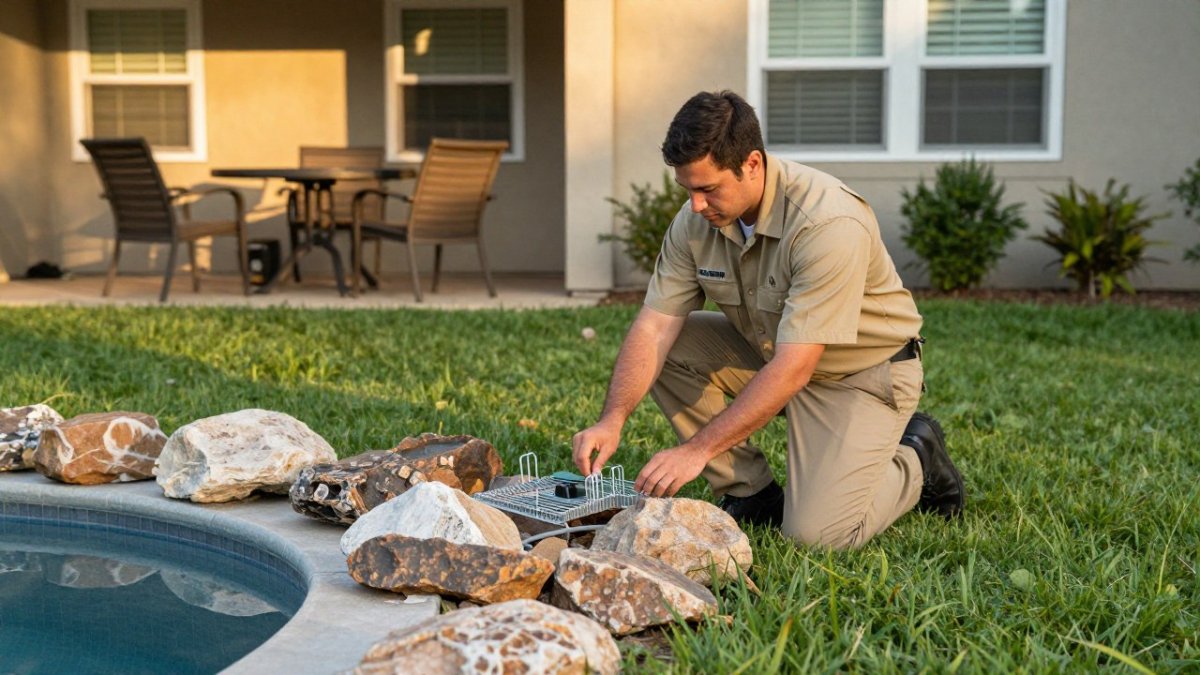
Pools and patios need special attention. Standing water draws mosquitoes, and the gaps between pavers give ants and rodents places to hide. Check pool deck edges, drains, and landscape beds beside patios each week. Keep chemical treatments away from the water, and follow label directions closely.
!Property manager inspecting a pool deck
Integrated Pest Management for Commercial Properties
Integrated pest management (IPM) combines inspection, sanitation, exclusion, and targeted treatment. Rather than spraying on a schedule, IPM focuses on the cause of the problem. Our integrated pest management for condominiums guide explains who handles what under HOA bylaws, how inspections run, and how reported infestations are worked through. For commercial properties, this approach lowers chemical use and keeps service records clear. Ekoterra Gopher Pest and Wildlife Control can help plan an IPM program for shared grounds, including inspection routines and follow-up visits.
Booking Your Shared Amenity Pest Management Plan with Ekoterra
Ekoterra Gopher Pest and Wildlife Control offers eco-friendly pest and wildlife management for residential and commercial properties. Review our commercial services to see what a shared amenity plan includes, or request a free inspection of your pool, patio, and landscaped areas. Our property team also works with HOA boards and managers on the scope of pest control for communities.
For current pricing, visit our website or request a quote. Costs depend on property size, the pests involved, and how often service is needed.
Frequently Asked Questions
How often should shared outdoor amenities be inspected for pests?
Shared outdoor amenities such as pools, patios, playgrounds, and dining areas should get a quick visual walkthrough at least weekly, with a more thorough inspection monthly. Weekly checks focus on food debris, standing water, trash enclosure condition, and any new burrows or droppings. Monthly inspections cover harborage points under decking, irrigation heads, landscape edges, and entry gaps around gates. Document each inspection with the date, location, findings, and who completed it so trends become visible over time.

What should a property manager do after a pest sighting?
Start by recording the date, time, exact location, and a photo of the pest or its activity. Notify the responsible supervisor or manager immediately, and restrict access to the affected area if there is a safety or contamination risk. Then assign someone to investigate the likely source and nearby risk areas, schedule the appropriate control response, and verify closure with a follow-up inspection within a set timeframe, typically within one to two weeks.
Are pest control treatments safe around outdoor dining and play areas?
Safety depends on the method used and the reentry instructions that come with it. Ask any provider for product labels and safety data sheets before treatment. Ask any provider for product labels and safety data sheets before treatment, and confirm reentry times for children, pets, and food service areas.
When should a property manager hire a professional pest control service?
Consider professional help when sightings recur after sanitation changes, when burrowing pests damage turf or landscaping, when a health inspection is approaching, or when the property has multiple buildings that require consistent documentation. For current pricing, contact Ekoterra directly, since costs depend on property size, pest type, and service frequency.
