Last Updated: November 20, 2026
Quick Summary
Diatomaceous earth can dry out bed bugs over time, but only if it stays dry and undisturbed, and it works slowly. Use food-grade or pest control diatomaceous earth in a thin layer on the bed frame and floor, and wear a fitted N95 and eye protection during application.
- Diatomaceous earth kills bed bugs slowly, through abrasion and moisture loss, often taking days rather than hours.
- Wet or damp powder stops working, so replace it if it gets moist.
- Choose food-grade or pest control labeled product, never pool filter grade.
- Apply only a light dusting to the bed frame and floor, never on the mattress or bedding.
- Clear children and pets from the room, and damp-wipe before vacuuming with a HEPA-filter vacuum.
Table of Contents
- Does Diatomaceous Earth Actually Kill Bed Bugs?
- Can I Put Diatomaceous Earth on My Bed?
- How to Use Diatomaceous Earth for Bed Bugs Safely, Step by Step
- Safety Precautions: Children, Pets, Dust, and Inhalation
- How Long Diatomaceous Earth Takes to Kill Bed Bugs
- How Often to Reapply Diatomaceous Earth for Bed Bugs
- Booking a Professional Bed Bug Inspection With Ekoterra
- Frequently Asked Questions
Does Diatomaceous Earth Actually Kill Bed Bugs?
Diatomaceous earth, often shortened to DE, is a powder made from the fossilized remains of tiny algae called diatoms. It is a natural product, and it can dry out bed bugs over time.
That slow action is the key thing to understand. A bed bug that walks through a fine layer of DE may survive for days. The powder has to stay dry and undisturbed to do its job.
Watch out: Wet or damp DE stops working. If the powder gets moist from cleaning or humidity, replace it.
How Diatomaceous Earth Works Through Abrasion and Moisture Loss
DE works in two ways. First, its sharp microscopic edges scratch the waxy outer layer of a bed bug's body. Second, that damage lets the insect lose water faster than normal. Over several days, a bug that loses too much moisture dies of dehydration.
Because the process is physical rather than chemical, bed bugs cannot easily build resistance to it. The tradeoff is time. Expect days, not hours, before you see results.
Food-Grade Versus Pool-Grade: Choosing the Right Product
DE is sold in several grades, and the label matters. Food-grade DE is processed for use around people and animals. Pool-grade DE is treated with heat and chemicals to act as a filter media. It is far more dangerous to breathe in.
Choose a product labeled for pest control or marked as food-grade, and read the full label before you buy.
- Look for: "food-grade" or a pest control label on the package
- Avoid: pool filter grade, or any product with no clear use instructions
- Check: the manufacturer's safety data sheet for handling details
Can I Put Diatomaceous Earth on My Bed?
You can apply a light dusting of DE to the bed frame, legs, and the floor around the bed. Do not pour it onto the mattress or bedding. A heavy layer on sleeping surfaces can irritate skin and airways, and it does not add much benefit.
Most people do best by treating the frame and the floor, then sealing the mattress with a protective cover. That approach keeps the powder where bugs travel without putting it where you sleep.
How to Use Diatomaceous Earth for Bed Bugs Safely, Step by Step
Follow these steps in order. Work slowly, and keep the room ventilated.
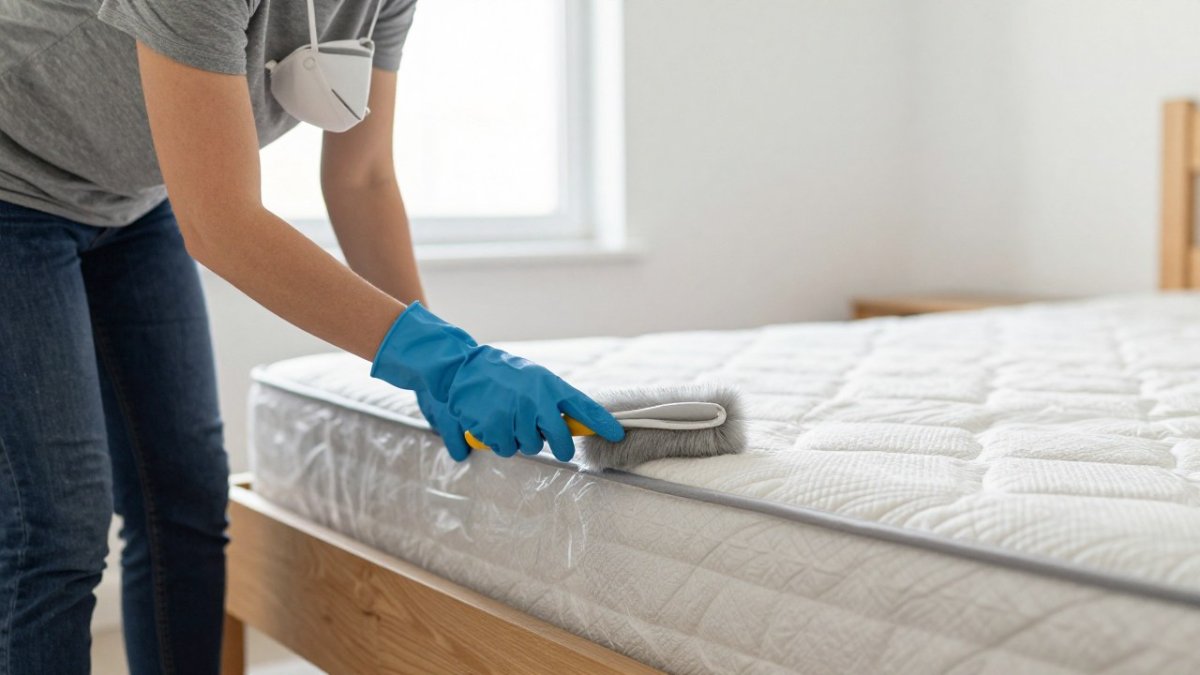
- Remove clutter and vacuum the floor, bed frame, and nearby furniture.
- Put on a fitted dust mask and gloves before opening the container.
- Wipe down the bed frame and remove any loose bedding.
- Apply DE to the frame, legs, and floor using a hand duster.
- Create a thin, visible layer. You should barely see the powder.
- Leave the treated area undisturbed for at least several days.
- Vacuum the dust up carefully once treatment is complete.
Where to Apply Powder Around Beds and Furniture
Focus on the places bed bugs hide and travel. Good targets include the bed frame joints, the underside of the frame, cracks in the baseboards, behind headboards, and the edges of nearby furniture. Bed bugs also move along walls, so a narrow strip along the floor helps.
Do not coat large open areas of carpet. Keep the powder in the spots where bugs walk.
Applying a Thin, Targeted Layer
A thin layer works better than a thick one. Thick piles of DE can make bugs avoid the area, and they can become a breathing hazard. Use a hand duster or a small brush to spread a light film into cracks and crevices.
Safety Precautions: Children, Pets, Dust, and Inhalation
DE is low in toxicity for people and pets when it is food-grade, but fine dust can irritate the lungs and eyes. The risk is highest during application, when dust is in the air, and again during cleanup if you vacuum or sweep aggressively. Treat the powder as a dust hazard first and a pesticide second.
Before You Apply
- Clear the room. Remove children, pets, and anyone with asthma or other breathing conditions before you open the container. Keep them out until the dust has settled and surfaces are wiped.
- Protect your airway and eyes. Wear a fitted N95 respirator and sealed eye protection. A loose surgical mask does not seal well enough for fine dust (the CDC).
- Cover or remove items you cannot clean. Bedding, pillows, pet bowls, and food-contact surfaces should come out of the room or be covered.
- Ventilate. Open a window and use a fan to move air out of the room, not around it, while you work.
During Application
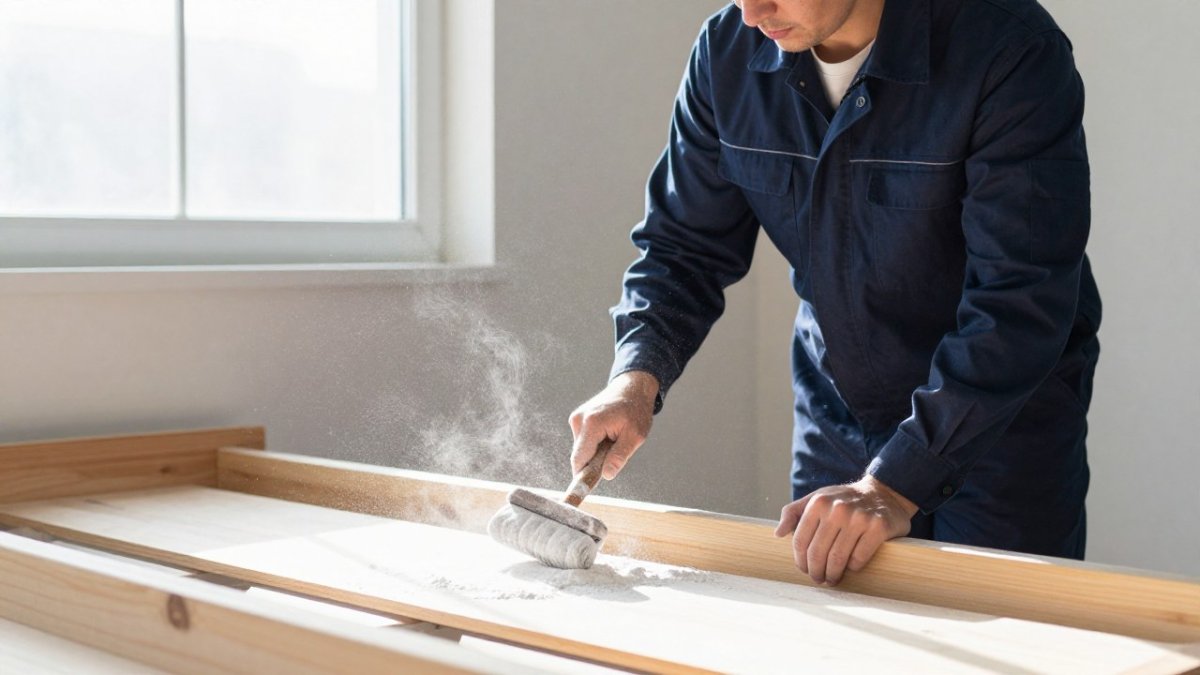
Apply the powder low and slow. Hold the duster close to the crack or crevice so the powder drops into place instead of billowing into the air. Do not shake or toss powder onto open surfaces. If you can see a cloud of dust, you are applying too fast or too much.
Watch out: Sweeping or dry-vacuuming a heavy layer of DE can send a visible dust plume into the air. Damp-wipe surfaces first, and use a vacuum with a HEPA filter if you must vacuum, then empty it outdoors.
After Application and Re-Entry
Let the dust settle before anyone returns. Wipe down nearby surfaces that people touch, nightstands, lamp switches, door handles, with a damp cloth. Wash your hands and face before eating or drinking. Keep the treated room off-limits to children and pets until the powder is in place and any visible dust on open surfaces has been cleaned up.
If Someone Is Exposed
- Inhalation: Move the person to fresh air. If coughing, wheezing, or shortness of breath continues, call Poison Control at 1-800-222-1222 or seek medical advice.
- Eye contact: Rinse the eyes with clean, lukewarm water for several minutes, holding the eyelids open. Remove contact lenses if present and easy to do. Seek medical advice if irritation persists.
- Skin contact: Wash with soap and water. DE is drying, so rinse thoroughly rather than scrubbing.
- Swallowing: Rinse the mouth and drink water. Call Poison Control for guidance, and have the product label available.
Cleanup and Disposal
When treatment is complete, clean up carefully. Damp-wipe hard surfaces, then vacuum with a HEPA-filter vacuum and empty the canister outdoors. Seal used dust and empty containers in a bag before placing them in the trash, and follow the label's disposal instructions. Store the remaining product in its original labeled container, out of reach of children and pets, and away from moisture.
A Note on Pets and Children
Food-grade DE is sometimes used around pets, but that does not make it safe to breathe. Keep pets out of treated rooms, cover or remove their bedding and food bowls, and wash your hands after handling the product. For children, the main risk is dust in the air and powder on surfaces they touch and put in their mouths. Wipe surfaces and keep the treated area off-limits until cleanup is finished.
Dust risk is highest during application and cleanup, so the article's key precautions are summarised below.
| Stage | Key precaution | Why it matters |
|---|---|---|
| Before applying | Clear the room of children and pets | Keeps them away from airborne dust |
| Before applying | Wear a fitted N95 and sealed eye protection | A loose surgical mask does not seal well |
| During application | Apply low and slow, no shaking or tossing | Avoids a visible dust cloud |
| Cleanup | Damp-wipe, then HEPA vacuum and empty outdoors | Sweeping or dry vacuuming sends dust into the air |
| Re-entry | Let dust settle and wash hands before eating | Limits exposure to residue on surfaces |
How Long Diatomaceous Earth Takes to Kill Bed Bugs
Most bed bugs exposed to a properly applied layer die within several days to a few weeks. The exact time depends on humidity, the size of the infestation, and how well the powder stays dry.
Some bugs may not walk through the treated zone right away. Patience matters here.
How Often to Reapply Diatomaceous Earth for Bed Bugs
Check the treated area every few days. Reapply a thin layer when the powder looks wet, dirty, or disturbed. Many people reapply once a week until they see no new activity for several weeks.
Keep a simple log of when you treated and what you observed. It helps you decide when to stop.
Diatomaceous earth can help, but it rarely solves a serious infestation alone. Ekoterra Gopher Pest and Wildlife Control offers professional inspections for homes across Ventura, Los Angeles, and Santa Barbara Counties. A trained technician can find the source, combine safe treatments, and give you a clear plan.
Booking a Professional Bed Bug Inspection With Ekoterra
If bites keep showing up or you see live bugs after a few weeks of DE, a professional inspection is the next step. Ekoterra Gopher Pest and Wildlife Control's inspectors can confirm what you have and recommend a treatment plan. Pricing depends on property size and the level of infestation, so contact the team for a current quote.
For more on keeping children and pets safe during pest control, read Safe Pest Control for Pets and Kids: A 2026 Guide. If you want to compare other bed bug treatments with DE, see How to Get Rid of Bed Bugs with Green Pest Control. Homeowners weighing costs can also review Eco Friendly Pest Control Cost: What You'll Pay in 2026.
Frequently Asked Questions
Is it safe to sleep on a bed with diatomaceous earth?
Sleeping on a bed where diatomaceous earth has been applied is not recommended. Fine powder can irritate the eyes, nose, and airways, and it can settle on skin and bedding. Product labels for pool-grade and pesticide-grade products generally direct users to apply it to cracks, crevices, and bed frame areas rather than the mattress surface. Food-grade material is less hazardous but is still a fine dust. Vacuum up residue, launder bedding, and wait for the area to be cleaned before sleeping there again.
Can I put diatomaceous earth directly on my mattress?
Most product labels do not recommend spreading diatomaceous earth across the mattress surface. A thin, targeted dusting in seams, tufts, and the box spring cracks is the more typical approach, and the label for your specific product governs what is allowed. Keep applications light, because a heavy layer creates dust and adds little benefit. Encasements and steam treatment of the mattress are often more practical for the top surface.
How long does diatomaceous earth take to kill bed bugs?
Diatomaceous earth works by damaging the waxy outer layer of bed bugs, which causes them to dehydrate over time. Results are slow and are not immediate. Many treated insects may take several days to die after contact, and some may survive longer if they avoid the powder. Full control typically depends on combining the powder with vacuuming, laundering, and encasements, and it often takes several weeks to confirm the infestation is gone. Reach out to a licensed professional if activity continues beyond that window.
How often should you apply diatomaceous earth for bed bugs?
Apply a light, targeted layer when you first treat the area, then reapply after vacuuming or when the powder becomes disturbed, damp, or covered with debris. Many people check treated areas every few days and refresh the powder as needed. Avoid applying more than the label allows, and avoid repeatedly stacking heavy layers. If bed bug signs remain after several weeks of consistent treatment, an inspection can help identify hidden harborages that need a different approach.
