Quick Summary
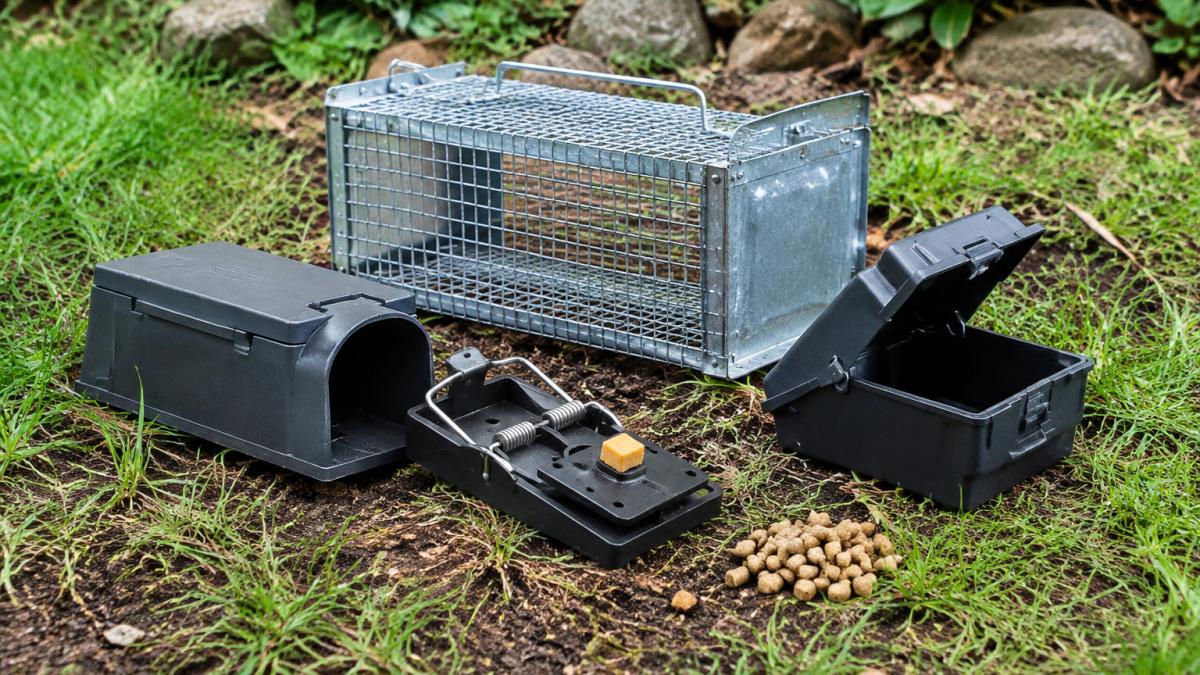
Snap traps, live traps, and cage traps are the three main types of vole traps for a yard, and each suits a different situation. Snap traps work best for quick removal of small populations, live traps suit people who prefer not to kill, and cage traps fit larger yards with heavier populations.
- Set vole traps only where voles are active, along runways and near fresh entry holes.
- Snap traps fit under a cover board more easily than bulkier cage traps in garden beds.
- Use a pea-sized dab of peanut butter on the trigger, since it stays better than softer fruit.
- Check snap traps at least once a day and live traps at least once, preferably twice, a day.
- Confirm state and local rules before relocating a live-trapped vole, since many states restrict it.
Table of Contents
- Why Vole Traps Work Better Than Repellents in Most Yards
- How to Identify Active Vole Tunnels and Holes Before You Set Anything
- Side-by-Side: Snap Traps, Live Traps, and Cage Traps Compared
- Best Bait for Vole Traps and How to Set It
- Placement, Setting, and Coverage for a DIY Vole Trapping Plan
- Which Vole Traps Actually Work: Checking, Resetting, and Troubleshooting
- Safety for Kids, Pets, and Non-Target Wildlife, Plus What to Do After a Catch
- Booking Help for a Vole Problem That Won't Clear
- Frequently Asked Questions
Why Vole Traps Work Better Than Repellents in Most Yards
Repellents rarely deliver the results homeowners expect. Vole traps, used correctly, remove the animals actually causing damage. A yard treated with a granular or spray repellent can keep looking damaged while the vole population stays in place.
The trade-off is simple. A repellent asks voles to leave on their own; a trap removes the animal from the system.
Repellents still have a place for protecting a single bed or a few young trees.
How to Identify Active Vole Tunnels and Holes Before You Set Anything
Set traps only where voles are active. Vole activity usually shows up as shallow surface runways about an inch or two wide, often running through turf or along the base of plants, along with small entry holes roughly the size of a quarter.
Check for these signs:
- Clipped or chewed grass and plant stems near the runways
- Fresh soil plugs in the holes, which suggest recent use
- Gnawed bark at the base of shrubs or young trees
- Droppings along the runways
If the holes are packed with soil and the runways look dry and dead, the animals may have moved on. Traps placed there will sit empty. Confirm activity first, then place traps on or beside the active paths.
Side-by-Side: Snap Traps, Live Traps, and Cage Traps Compared
Three trap styles dominate the yard market. Each suits a different situation, depending on the damage, expected catch volume, and your comfort handling animals. The table compares them on the criteria that matter most.
| Trap Type | Catch Method | Best For | Main Drawback |
|---|---|---|---|
| Snap trap | Spring bar kills on contact | Quick removal, small populations | Requires careful handling of the trap |
| Live trap | Captures animal unharmed | Homeowners who prefer not to kill | Must check often; relocation may be restricted |
| Cage trap | Larger enclosure, often live capture | Larger yards, heavier populations | Bulkier, costs more, harder to hide |
Snap traps are a common choice for lawns. Live traps suit people who want to avoid killing the animal, but check local rules before relocating wildlife.
Selection Criteria That Actually Matter
When comparing specific products, look past the marketing and check these five attributes. They separate a trap that works for a season from one that sits in the shed.
- Trigger sensitivity. Voles are light animals, so a trap with a hair-trigger release is more likely to fire on a vole than on a heavy clod of soil. Look for snap traps advertised as sensitive or precision-triggered; many standard mouse traps are too stiff for reliable vole catches.
- Durability and reuse. Snap traps are often treated as disposable, but a well-made one with a metal trigger and sturdy base can be reset many times. Live and cage traps are designed for repeated use, so check hinge quality and door-latch strength.
- Weather resistance. Traps left in a yard face rain, sprinklers, and temperature swings. Galvanized or stainless components resist rust better than plain steel, and a trap that warps or rusts shut will stop firing reliably.
- Ease of setting and releasing. A trap you can set with one hand and a firm grip is safer and faster to reset. Avoid models with sharp edges near the trigger or a spring that requires excessive force.
Pros and Cons of Each Trap Style
Snap traps
- Pro: Low cost, fast results, easy to place along runways
- Pro: Widely available in hardware and garden stores
- Pro: Compact enough to fit under a cover board in a garden bed
- Con: Can injure the person setting them if handled carelessly
- Con: Some homeowners find the kill method unpleasant
Live traps
- Pro: No animal is killed when you catch one
- Pro: Lets you monitor captures without contact
- Pro: Useful when children or pets share the yard, since the animal stays enclosed
- Con: Requires daily checks, since a trapped animal left too long may die of stress or exposure
- Con: Released voles often return to the area or move to a neighbor's yard
Cage traps
- Pro: Holds up to repeated use and suits larger areas
- Pro: Good for heavier infestations
- Pro: Sturdy construction resists weather and repeated handling
- Con: Heavier to position and more expensive than basic snap traps
- Con: Less practical in tight garden beds
Choosing a Trap by Yard Size and Damage Type
For a small lawn with light tunneling, a few snap traps placed along the most active runways is usually enough. For a larger yard with root damage spread across several beds, a combination of snap traps and a few live or cage traps gives broader coverage.
Start with the damage pattern. If you prefer not to kill and the yard is small enough to check daily, a live trap set in a runway works, but plan for what you will do with the animal before you set it. Compare top-rated wildlife removal companies if the problem persists despite consistent trapping.
Best Bait for Vole Traps and How to Set It
Voles eat plant material, so bait choice matters. Fruit and nut-based baits work well; apple slices, carrot pieces, and peanut butter are commonly used. Peanut butter stays on the trigger better than softer fruit, making it practical for snap traps.
Use a small amount, a pea-sized dab on the trigger is enough. Too much bait can make the trap easy to disarm without triggering. Refresh bait every few days, especially in warm or wet weather.
Placement, Setting, and Coverage for a DIY Vole Trapping Plan
Place traps directly in active runways, with the trigger facing the direction of travel. Voles follow the same paths, so a trap set across the tunnel is more likely to trigger.
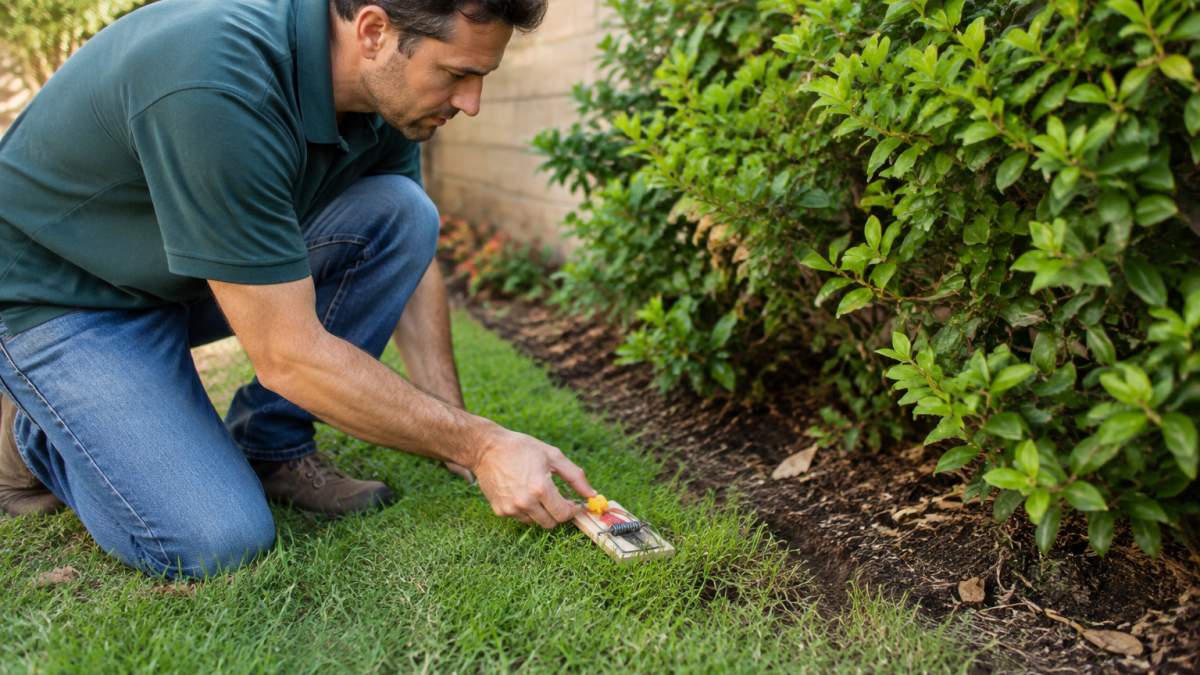
Set traps so the trigger sits flush with the runway floor.
Coverage matters more than trap count alone. Spread traps across the full length of each active runway and near each entry hole. Treat each separate tunnel system as its own area.
Which Vole Traps Actually Work: Checking, Resetting, and Troubleshooting
Check traps at least once a day.
Reset traps after each catch. Clean the trigger, replace the bait, and confirm the mechanism releases properly.
If traps sit empty for a week, reconsider placement. Move them to fresh runways, confirm you are not in a dead tunnel, and check the bait is attractive.
Watch out: Snap traps can snap onto fingers during setting.
Safety for Kids, Pets, and Non-Target Wildlife, Plus What to Do After a Catch
Trapping in a yard with children or pets requires extra care. Treat every set trap as a hazard until checked and removed: if you would not leave a rake lying tines-up in the same spot, do not leave an exposed snap trap there either. Find safe pest control steps for pets and kids that cover ingredient checks and re-entry times.
Placement and Enclosure for Household Safety
- Set traps along fence lines, under dense shrubs, or behind garden beds rather than in open lawn where kids and pets run.
- Cover snap traps with a small cardboard box, a plastic container, or a purpose-made trap cover. The cover keeps rain off, hides the trap from pets, and still lets the trap fire.
- Keep live and cage traps secured so they cannot be tipped or dragged. A trap that moves can injure the animal inside or release it.
- Store unused traps and bait out of reach, and wash your hands after handling any trap or bait.
- Teach children that the covered boxes in the yard are not toys, and keep dogs on leash or out of treated beds until trapping is finished.
Non-Target Wildlife
Non-target animals can occasionally trigger traps. Live traps reduce this risk for species such as birds and lizards, while snap traps can injure small animals that are not voles. Check traps often and remove any unintended catch promptly. If you regularly catch birds or pets, move the trap to a more enclosed location or switch to a live trap. Some species are protected, so if you catch something unusual, release it carefully and contact your state wildlife agency for guidance rather than handling it further.
What to Do After a Catch
Plan the after-catch step before you set the first trap, because what you do next depends on trap type and on state and local rules.
- Check frequency. Check snap traps at least once a day and live traps at least once, preferably twice, a day. A live-trapped animal left too long may die of stress or exposure, and a dead animal left in a trap attracts scavengers.
- Handling. Wear gloves when handling traps and animals. Carry snap traps by the base, away from the trigger, and never reach into a live or cage trap with your bare hand.
- Disposal. For snap traps, dispose of the animal promptly per local guidance, typically in a sealed bag in household trash if rules allow. Wash your hands and gloves afterward.
- Release. If you use a live trap and plan to release, check state and local rules first. Many states restrict relocating wildlife, and releasing a vole near your yard often just moves the problem. Release at the capture site or follow your state wildlife agency's guidance.
- Clean and reset. Clean the trigger, replace the bait, and inspect the mechanism before resetting. A trap that has caught once may be sprung by dirt or debris.
Booking Help for a Vole Problem That Won't Clear
If your yard still shows active tunnels after several weeks of consistent trapping, the population may be larger than a DIY plan can handle. Ekoterra Gopher Pest and Wildlife Control provides professional pest and wildlife management for residential and commercial properties across Ventura, Los Angeles, and Santa Barbara Counties. For current pricing or to schedule an assessment, contact us through our website.
Frequently Asked Questions
What is the most effective trap for getting rid of voles?
For most yards, a properly placed snap trap or a live trap set in active runways gives the best results. Snap traps kill quickly and cost little, while live traps let you release captured voles away from the property. Check your trap line every day and reset as needed.
What is the best bait for vole traps?
Apple slices and peanut butter are the most commonly used baits for vole traps, and both work well. Apple pieces give voles moisture and are useful in dry conditions, while peanut butter stays on the trigger and is effective for snap traps. Use a small amount, pressed onto the trigger plate. Refresh the bait every few days, since moisture and insects will spoil it, and remove competing food sources such as spilled birdseed or fallen fruit so voles are drawn to your traps.
Are snap traps or live traps better for voles?
Live traps suit people who prefer not to kill animals, but they must be checked at least daily, because a trapped vole left in a cage can die of stress or exposure. Live traps also require a release location far enough away that voles do not return. Both types can work well when placed carefully in active runways.
How can you tell whether a trap caught a vole?
A snap trap that has caught a vole will be sprung, and the animal is usually visible or the trigger is clearly fired with no bait left behind. A live trap will show a captured vole inside the cage. Fresh digging or movement around the trap and bait being taken without a catch can signal a missed or sprung trap. Empty traps with fresh bait removed and no visible animal usually mean the trap was triggered without a catch, so reset and recheck placement.
