Table of Contents
- Are Natural Pest Sprays Effective? The Short Answer
- Natural Pest Control Methods and How They Compare to Conventional Pesticides
- Natural Insecticides: The Main Ingredients and What Each One Targets
- How to Make a DIY Natural Pest Spray That Actually Works
- Pet-Safe Pest Control: What to Keep Away From Dogs, Cats, and Kids
- How Fast Natural Sprays Work and How Often to Reapply
- When Natural Sprays Fail: Troubleshooting and When to Call a Professional
- Conclusion
- Frequently Asked Questions
Last Updated: October 19, 2026
Are Natural Pest Sprays Effective? The Short Answer
Natural pest sprays work, but not the way most people expect. They are contact treatments with short residual life, so they knock down what they hit and fade fast. The short answer is that natural pest sprays are effective when you match the right ingredient to the right pest, apply it correctly, and repeat on schedule. They fail when used as a one-time fix against a pest that lives underground or breeds faster than you spray. Below, we break down which sprays work, which pests they handle, and where they fall short.
Natural Pest Control Methods and How They Compare to Conventional Pesticides
Natural pest control methods fall into three groups: sprays, barriers, and biological controls. Sprays are the fastest to use and the shortest lasting. Barriers like row cover and caulk last longer but do nothing once pests are already inside. Biological controls, such as beneficial insects, work slowly and need the right conditions. Many people now combine both approaches through integrated pest management guidance from the EPA, which prioritizes the least risky tool that solves the problem.
| Method | Speed | How Long It Lasts | Best For |
|---|---|---|---|
| Natural sprays | Fast knockdown | Hours to a few days | Soft-bodied insects on contact |
| Barriers | Immediate | Weeks to months | Keeping pests out |
| Beneficial insects | Slow | Ongoing | Long-term balance |
| Conventional pesticides | Fast | Weeks | Heavy infestations |
The trade-off is real. Natural sprays are less harmful to beneficial insects and wildlife, but they demand more repeat visits.
Natural Insecticides: The Main Ingredients and What Each One Targets
Natural insecticides are products made from oils, soaps, or plant extracts that kill or repel pests on contact. Each ingredient has a narrow target range and a distinct mechanism, so choosing well matters more than spraying often. The table below separates what is well demonstrated in practice from what is mostly anecdotal, because that distinction is where most buying decisions go wrong.
| Ingredient | How It Works | Pests With Demonstrated Control | Pests Where Evidence Is Mostly Anecdotal |
|---|---|---|---|
| Neem oil (azadirachtin) | Disrupts feeding and molting; anti-feedant and growth regulator | Aphids, whiteflies, mealybugs, thrips, leafminers | Caterpillars, beetles (variable) |
| Horticultural oil | Smothers eggs, scale, and mites by coating and blocking spiracles | Scale, spider mites, aphid eggs, whitefly eggs | Chewing caterpillars, slugs |
| Insecticidal soap (potassium salts of fatty acids) | Dissolves cell membranes of soft-bodied insects on contact | Aphids, whiteflies, soft-bodied mites, psyllids | Hard-shelled beetles, caterpillars |
| Garlic and pepper sprays | Repellent volatiles; minimal contact kill | Deterrence of aphids and some beetles | Most claimed kills |
| Essential oils (eucalyptus, peppermint, clove) | Short-lived repellency and contact irritation | Repelling mosquitoes and some flying insects | Soil pests, borers |
| Diatomaceous earth (not a spray, but often grouped) | Abrasive silica damages insect cuticle | Crawling insects in dry conditions | Wet or humid environments |
Oils, Soaps, and Plant-Derived Extracts
- Neem oil: The active compound, azadirachtin, interferes with insect hormones so larvae fail to molt and adults stop feeding. It is slow, expect three to seven days before populations visibly drop, and it breaks down in sunlight within about a week. Mix according to the label, typically around 1 to 2 tablespoons per gallon of water with a surfactant.
- Horticultural oil: Works by physical smothering rather than chemistry, which is why resistance is rare. Apply when temperatures are between roughly 40°F and 85°F; above that range, oil can burn foliage. It is the strongest natural option against scale and overwintering mite eggs.
- Insecticidal soap: Effective only while wet, so full coverage of leaf undersides and stem joints is the whole job. It has no residual activity once dry. Hard water reduces efficacy, use distilled or rainwater if your tap water is mineral-heavy.
- Garlic and pepper sprays: These repel more than they kill. They are useful as a deterrent around thresholds and doorways, but do not expect them to collapse an active infestation.
- Essential oils such as eucalyptus and peppermint: Repellency lasts hours, not days. Reapply often, and never assume a pleasant-smelling spray is safe around pets, some essential oils are toxic to cats and dogs.
A common mistake is spraying oil in hot sun. That burns leaves. Apply in early morning or evening, and always test a small patch first. The National Pesticide Information Center maintains plain-language fact sheets on these active ingredients if you want to verify a specific product claim.
How to Make a DIY Natural Pest Spray That Actually Works
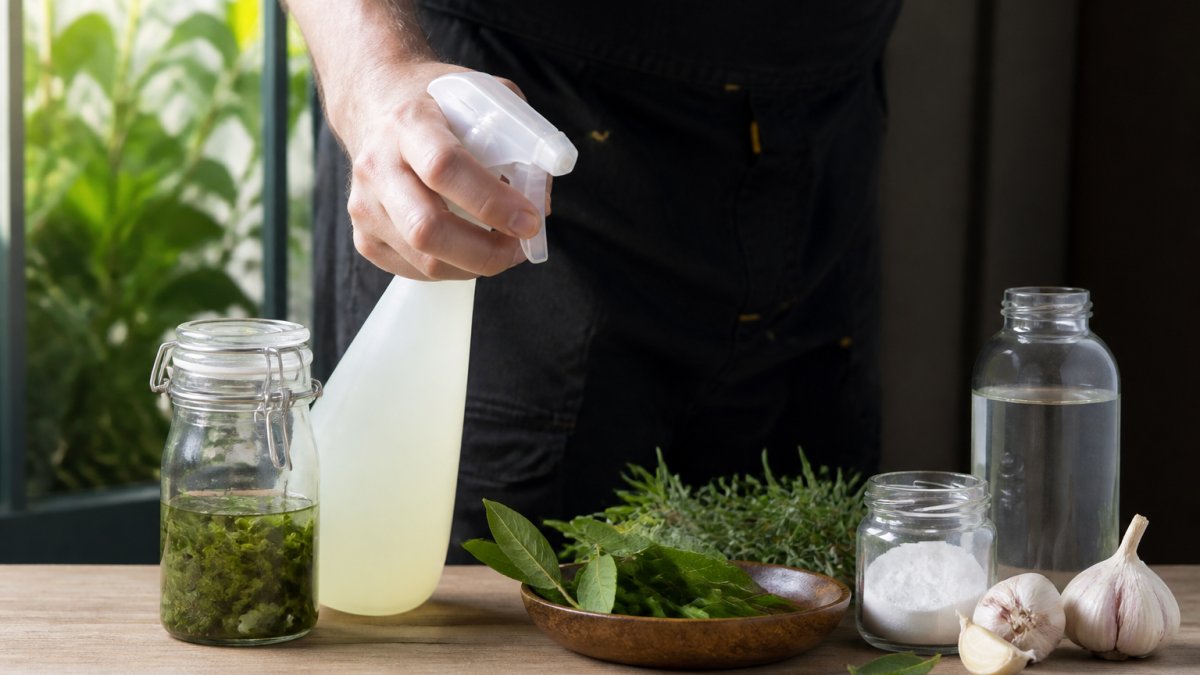
A DIY natural pest spray works when you keep it simple, measure instead of eyeballing, mix it fresh, and apply it at the right time of day. Most failures come from mixing too strong a batch, spraying in direct heat, or skipping the patch test.

Measured Recipes You Can Mix at Home
- Insecticidal soap spray: 1 tablespoon of pure liquid castile soap per quart of water (about 2 tablespoons per gallon). Do not use dish detergent with degreasers or bleach, it strips the waxy leaf cuticle.
- Neem oil spray: 1 teaspoon of neem oil plus 1/4 teaspoon of mild soap per quart of warm water. Shake constantly; oil and water separate within minutes.
- Horticultural oil spray: Follow the label ratio, usually 1 to 2 tablespoons per gallon for summer use and a heavier dormant-season rate. Never exceed the label rate.
- Garlic deterrent: Blend 2 cloves of garlic in 1 quart of water, strain through cheesecloth, and use within 24 hours. This is a repellent, not a knockdown.
- Pepper spray: 1 teaspoon of cayenne powder per quart of water with a drop of soap. Strain before filling the sprayer to avoid clogging.
Mixing, Diluting, and Applying Without Burning Plants
- Pick one ingredient: soap, neem oil, or garlic. Do not combine everything at once, you cannot tell which one burned the leaf if the mix fails.
- Measure the dilution. Stronger is not better; soap above roughly 2 percent concentration and oil above label rate both cause phytotoxicity.
- Add a drop of mild soap as a surfactant so the spray coats leaves evenly instead of beading.
- Mix in a clean spray bottle and use within a day. Neem oil loses potency quickly once mixed.
- Run a patch test on one leaf or a small section. Wait 24 to 48 hours and check for yellowing, curling, or brown edges before treating the whole plant.
- Spray in early morning or evening, covering leaf undersides and stem joints where pests hide. Avoid spraying when temperatures are above 85°F or when rain is forecast within six hours.
- Reapply every three to seven days until the pest population drops, and again after any rain.
Why Most DIY Sprays Fail
The three most common failure modes are concentration (too strong burns leaves, too weak does nothing), coverage (missing the undersides where aphids and whiteflies live), and timing (spraying in heat or before rain). A fourth, less obvious failure is using the wrong ingredient for the pest's life stage, soap kills soft-bodied nymphs but does nothing to eggs or hard-shelled adults, so a spray that looks like it failed may simply have been applied between generations. If a batch does not work after two properly timed applications, change the ingredient rather than increasing the dose.
Pet-Safe Pest Control: What to Keep Away From Dogs, Cats, and Kids
Pet-safe pest control starts with reading the label, not the marketing. Even natural sprays can irritate pets and children if they contact wet surfaces or chew treated plants. Keep pets and kids off treated areas until the spray dries. Store bottles out of reach. Never use a spray meant for outdoor gardens inside the home. For indoor pests, use traps and sealing first. When you do spray, ventilate the room and wipe down food surfaces after. The ASPCA Animal Poison Control Center lists common garden products that cause problems.
How Fast Natural Sprays Work and How Often to Reapply
Natural sprays act fast on contact, usually within minutes to hours, but their residual effect is short. Sun, rain, and heat break them down quickly. Expect to reapply every three to seven days, and again after any rain. Oils and soaps offer no lasting protection once dry. Garlic and pepper repellents fade even faster. Plan on a spray schedule, not a single treatment. If you miss a week, pest populations rebound fast, especially aphids and mites. Treat natural sprays as a routine, not an event.
When Natural Sprays Fail: Troubleshooting and When to Call a Professional
Natural sprays fail for four common reasons: wrong ingredient, poor coverage, hot-weather burn, or a pest that lives out of reach. If your spray is not working, check these first:
- Wrong ingredient: soap does little against caterpillars; oil does little against burrowers.
- Poor coverage: leaf undersides and stem joints get missed most often.
- Timing: midday spraying wastes product and burns leaves.
- Out-of-reach pests: gophers, moles, and ground squirrels live underground, where sprays never reach.
That last point is where most homeowners get stuck. Burrowing wildlife needs trapping and exclusion, not spraying. This is where Ekoterra Gopher Pest and Wildlife Control helps. We use eco-friendly methods with guaranteed results for residential and commercial properties across Ventura, Los Angeles, and Santa Barbara counties. Our approach protects your family and pets while removing the animals sprays cannot touch.
Conclusion
The honest challenge with natural pest sprays is that they demand patience and repetition. They work well for soft-bodied insects on contact, but they cannot solve burrowing wildlife or heavy infestations on their own. If you are tired of spraying and seeing the same damage return, Ekoterra Gopher Pest and Wildlife Control offers eco-friendly pest and wildlife management with guaranteed results. Our services protect your health, your family, and the environment. Get started with Ekoterra Gopher Pest and Wildlife Control and put a stop to the pests sprays cannot reach.
Frequently Asked Questions
Do natural pest sprays actually work?
They work, but not the same way conventional pesticides do. Natural pest sprays such as insecticidal soap, horticultural oil, and neem oil kill or repel the insects they contact, and they need direct coverage on the pest or the leaf surface. They break down faster in sunlight, so results depend on timing and repeat applications. Expect slower action and a narrower target range than synthetic products, and match the spray to the specific pest before you buy.
Are natural pest sprays safe for pets and children?
Most natural insecticides are lower risk than conventional pesticides, but lower risk is not the same as no risk. Essential oils, including eucalyptus and citrus, can be toxic to cats, and concentrated soap or oil solutions can irritate skin and eyes. Keep pets and kids off treated areas until the spray dries, store concentrates out of reach, and read the label for species-specific warnings. For pet-safe pest control, confirm the ingredient list before applying anything indoors.
How long do natural pest sprays take to work?
Insecticidal soap and oils typically show results within hours to a day for soft-bodied insects like aphids and whiteflies, because they work on contact by disrupting cell membranes and smothering pests. Neem oil is slower, often taking several days to a week, since it disrupts feeding and insect development rather than killing instantly. Garlic and pepper sprays mostly repel rather than kill. Plan on rechecking plants every few days and reapplying after rain.
Why might a natural pest spray not be working?
The most common reasons are the wrong product for the pest, poor coverage on the undersides of leaves, and applying in direct sun or heat, which degrades the spray before it works. Hard-shelled insects and pests that live underground or inside plant tissue are largely immune to contact sprays. If a burrowing animal like a gopher is damaging your yard, sprays will not solve it because the animal never contacts the treated surface. That situation calls for trapping or professional wildlife control.