Quick Summary
A safe bed bug treatment for sensitive households starts with confirming the infestation, then uses non-chemical methods like vacuuming, laundering, encasements, and targeted heat or cold. Chemical options come last, using the lowest-exposure product, with a licensed professional applying any pesticide.
- Confirm bed bugs first by checking mattress seams, shed skins, and live insects.
- Vacuum seams and cracks, then empty the canister into a sealed bag right away.
- Wash infested bedding in hot water and dry it on high heat for at least 30 minutes.
- Freezers rarely hold the steady deep cold needed, so a few hours is not treatment.
- Avoid mothballs and concentrated essential oils near children, pregnant occupants, or people with asthma.
Table of Contents
- Why Sensitive Households Need a Different Bed Bug Plan
- Confirming a Bed Bug Infestation Before You Treat
- Non-Chemical Bed Bug Management: Vacuuming, Laundering and Clutter Control
- Bed Bug Heat Treatment and Cold Treatment: What Works and What Doesn't
- Bed Bug Treatment Home Remedies and Their Limits
- Bed Bug Encasements and Interceptors for Ongoing Protection
- Booking Your Sensitive-Household Bed Bug Plan With Ekoterra
- Frequently Asked Questions
A bed bug treatment is one of the hardest jobs to get right when children, pregnant family members, pets, or people with asthma or chemical sensitivities live in the home. This safety-first plan can help you treat an infestation without exposing the people and animals you care about to more chemicals than necessary. Start with the methods that carry the least risk, confirm the problem before you act, and bring in a licensed professional when the infestation calls for it.
Why Sensitive Households Need a Different Bed Bug Plan
A standard treatment approach often relies on residual insecticides sprayed into beds, furniture, and wall voids. That can work, but it also means more chemicals sitting in rooms where people sleep. For a household with infants, a pregnant occupant, or someone with asthma, that trade-off deserves careful thought.
A sensitive-household plan changes the order of operations. Begin with inspection, physical removal, and heat or cold methods. Add chemical options only when needed, choosing the lowest-exposure product that will do the job. Every step should consider who is in the home, which rooms they use, and how long they will be away.
- Map who sleeps where, including pets and anyone with a medical condition
- Plan a clear route for family members during treatment days
- Ask any service provider for a written list of products and safety data sheets
Confirming a Bed Bug Infestation Before You Treat
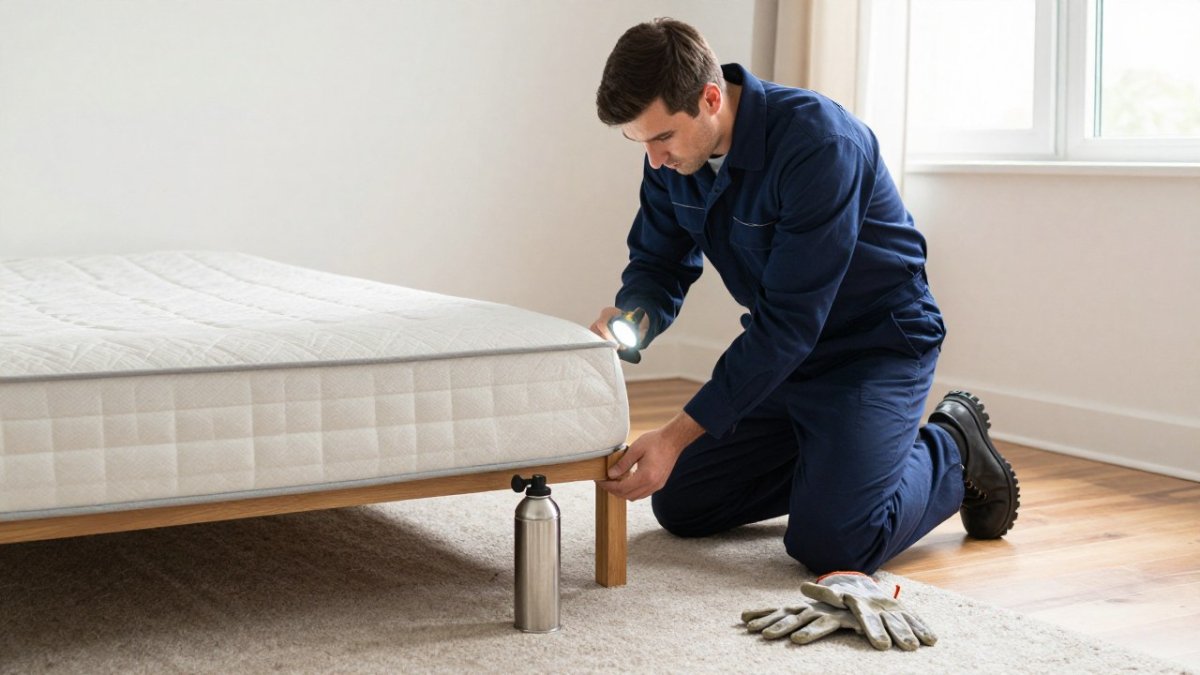
Before buying anything or booking a bed bug treatment, confirm that you actually have bed bugs. Many people mistake carpet beetles, fleas, or bat bugs for bed bugs, and treating the wrong pest wastes money and exposes your home to unnecessary chemicals.
Look for these signs during a careful inspection:
- Rusty or dark spots on mattress seams and bedding
- Shed skins and small white eggs in cracks and crevices
- Live insects, which are flat, oval, and reddish-brown
- Itchy bite marks in lines or clusters on exposed skin
Use a flashlight and check the mattress piping, box spring, bed frame joints, headboard, and nearby furniture. If you find signs, keep a sample in a sealed container and photograph it for a professional to review.
Non-Chemical Bed Bug Management: Vacuuming, Laundering and Clutter Control
Non-chemical management forms the foundation of any sensitive-household bed bug treatment plan. Integrated pest management (IPM) focuses on prevention and physical control first, adding other tools only when needed (the EPA).
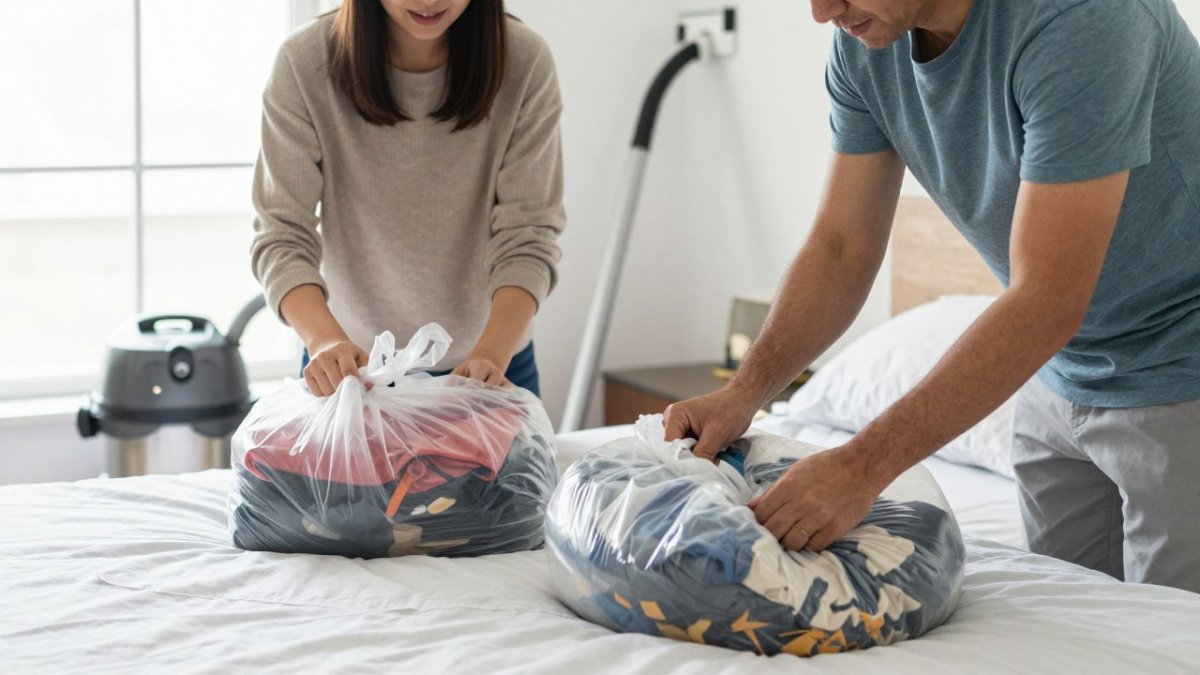
Start with the room itself. Remove clutter from the floor and under the bed so bugs have fewer hiding places and inspectors can reach them. Then work through these steps:
- Vacuum thoroughly. Use a crevice tool on seams, cracks, and baseboards. Empty the canister into a sealed bag and throw it out right away.
- Launder infested bedding. Wash items in hot water and dry them on high heat for at least 30 minutes.
- Seal and contain. Store clean items in sealed plastic bags until the room is fully treated.
- Encase the mattress. A tight encasement traps bugs inside and starves them over time.
Plan on repeating these steps during the full treatment cycle, since eggs can survive a single pass.
Bed Bug Heat Treatment and Cold Treatment: What Works and What Doesn't
Heat and cold are two chemical-free methods often considered for sensitive households, but they are not interchangeable and neither is foolproof. Success usually depends on temperature, duration, and whether the heat or cold actually reached the bugs' hiding places.
Heat treatment. Bed bugs die when their body temperature is held high enough for long enough.
For smaller items, professional heat chambers are one practical route. Ask any provider how they confirm a chamber reached temperature throughout the load, not just at the sensor.
Steam is a targeted form of heat. Applied slowly and directly, it can reach mattress seams, box-spring edges, bed-frame joints, and upholstered furniture folds, while a quick pass over a seam can leave survivors.
Cold treatment. Freezing can work, but only under conditions most household freezers cannot meet. Extension guidance generally points to very low temperatures held for several days, with the time growing with the size and insulation of the item.
Sensitive-household considerations. Heat treatment is often considered for households with asthma or chemical sensitivities because it leaves no pesticide residue, but heat is not risk-free.
When comparing providers, be wary of anyone who quotes heat treatment without explaining how they monitor temperature in cold spots, or who promises a one-visit cure.
Bed Bug Treatment Home Remedies and Their Limits
Search for bed bug fixes and you will find essential oils, vinegar, rubbing alcohol, diatomaceous earth, baking soda, dryer sheets, and a long list of pantry mixtures, most labeled natural, non-toxic, or eco-friendly. To see what eco-friendly bed bug treatment looks like in practice, compare those home fixes against a professional plan. Products that claim to kill or repel pests are generally regulated as pesticides, and the product label carries the legal instructions for use (the EPA).
Here is what the common remedies actually do, and where they go wrong in a sensitive home:
- Essential oils (tea tree, lavender, peppermint, eucalyptus). These can repel some bugs at close range and may kill on direct contact, but they do not reliably kill eggs or reach hidden populations. Concentrated oils are also a known irritant to skin and airways; in a home with asthma, allergies, or an infant, diffusing or spraying oils in a bedroom adds respiratory exposure with no proven treatment benefit.
- Rubbing alcohol. It kills bugs on contact and is flammable, a serious concern near bedding, curtains, and anything with a pilot light or open flame. It also strips finishes from furniture and can damage mattress fabrics, and it evaporates fast, so it never reaches bugs inside seams.
- Diatomaceous earth. This powder can dry out insects that walk through a sufficient deposit, but it is slow, easily disturbed, and ineffective once damp. Breathing any dust is a concern for people with asthma or lung conditions, so it should be kept away from areas where children or pets crawl or sleep.
- Vinegar, baking soda, and soap sprays. These are cleaning aids at best. They may kill a bug directly soaked, but they leave no residual action and do nothing for eggs or hidden harborages. Soapy water is the safest of the group for sensitive households, but it is a contact killer, not a treatment.
- Dryer sheets and mothballs. Dryer sheets have no demonstrated treatment effect. Mothballs contain pesticide ingredients that can be a respiratory and neurological concern, especially for children and pregnant occupants, and they are not an appropriate treatment for bed bugs.
Why the label matters more than the marketing. Pesticide labels describe the approved use sites, protective equipment and re-entry times for a product. For a sensitive household, read the label before anything else and treat any "safe" or "non-toxic" claim as marketing until the label says otherwise.
What actually helps. The remedies above are at best supplements to physical removal, vacuuming, laundering, steaming, encasements, and interceptors, and none replaces those steps. If you use a registered product, ventilate the room, keep children and pets out until surfaces are dry, follow the re-entry time on the label, and store it out of reach.
Watch out: a remedy that is safe for one household can be a real exposure risk in another, a diffused oil that an adult tolerates may trigger an asthma episode in a child, and a dust applied under a crib is a respiratory exposure no label on a "natural" product will warn you about.
The common home remedies differ sharply in how well they work and how much risk they carry for a sensitive household.
| Remedy | Main limit | Sensitive-household concern |
|---|---|---|
| Essential oils | Does not reliably kill eggs | Airway and skin irritation |
| Rubbing alcohol | Evaporates; misses seams | Flammable near bedding |
| Diatomaceous earth | Ineffective once damp | Dust inhalation risk |
| Vinegar, baking soda, soap | Contact only; no residual | Soapy water is the safest option |
| Mothballs | Not an appropriate treatment | Pesticide exposure for children and pregnancy |
Bed Bug Encasements and Interceptors for Ongoing Protection
Once your bed bug treatment has reduced the population, protective barriers help prevent a return. Mattress encasements rated for bed bugs enclose the mattress and box spring and trap any remaining bugs inside. Keep them on for as long as activity could return.
Interceptors are small cups placed under each bed leg. They trap bugs trying to climb up and give early warning if activity returns. Check them weekly and replace them when they fill with debris. Together, encasements and interceptors make ongoing monitoring simple and low-risk for a sensitive household.
Booking Your Sensitive-Household Bed Bug Plan With Ekoterra
When the infestation is large, spreads across rooms, or has not responded to home methods, a licensed professional can help build a sequenced treatment plan. Ekoterra Gopher Pest and Wildlife Control offers eco-friendly pest and wildlife management. For current information on services and how to request a quote, visit the Ekoterra website. Pricing depends on the specifics of the job, so ask for a written estimate that lists every product and its safety data. Prioritizing non-toxic alternatives remains essential for maintaining a healthy living environment, a philosophy shared by Tropic Shield Pest Services when addressing sensitive household needs.
When you speak with any provider, ask how they will protect infants, pregnant occupants, pets, and anyone with asthma or chemical sensitivities. Ask for a clear re-inspection schedule. A good plan usually includes several visits over several weeks rather than one treatment and a promise.
Last Updated: November 26, 2026
Schema note: The body copy above contains link placeholders and image markers that the publishing pipeline resolves in a later step.
Frequently Asked Questions
What bed bug treatment is safest for households with children or pets?
The safest starting point is non-chemical management: vacuuming seams and crevices, laundering bedding and fabrics on high heat, reducing clutter and sealing mattresses in encasements. Where a licensed professional uses a product, ask which active ingredients are planned, how they will be applied, and how long occupants and pets should stay out of treated rooms. Keep children and pets away from treated areas until surfaces have dried and ventilation has been completed, and follow the label and the professional's written re-entry instructions. Infants, pregnant people and anyone with asthma should be told about any treatment in advance.
How long does bed bug heat treatment take?
A whole-home heat treatment is typically completed in a single day, because the structure and contents must reach a lethal temperature and hold it long enough to kill all life stages, including eggs. Preparation, such as removing clutter and heat-sensitive items, can take extra time before the appointment. Timelines vary by property size and the provider, so confirm the schedule and re-entry instructions with your technician before the visit.
Can bed bugs be removed without using pesticides?
Yes, a combined non-chemical approach can work, though it usually takes persistence. Vacuuming with a crevice tool, washing and drying fabrics on high heat, steam on seams and furniture, reducing clutter so there are fewer hiding places, and sealing mattresses and box springs in encasements all reduce populations. Freezing small items at sustained low temperatures is another option. Because eggs are hard to reach, most non-chemical plans require repeated treatment cycles and monitoring for several weeks to confirm the infestation is gone.
When should you call a professional for a bed bug infestation?
Call a licensed pest-management professional if you find live bugs or fecal spotting across multiple rooms, if bites continue after you have started cleaning, or if the infestation has spread to neighboring units. Sensitive households benefit from a professional inspection early, because the technician can confirm the species, identify harborage and recommend a treatment plan that limits exposure. When choosing a provider, ask about their licensing, their inspection method, their follow-up visits and how they handle occupants with infants, pregnancy, asthma or chemical sensitivities.
