Last Updated: November 28, 2026
Quick Summary
Call vole control professionals when new runways appear in a new yard zone for two weeks running, damage covers three or more areas, or a young tree shows chewed bark at the soil line. Waiting usually costs more in lost plants, so a fast decision protects the yard.
- Walk the yard weekly in spring and fall, counting new runways, affected zones, and damaged plants.
- Escalate if new runways appear in a new zone for two consecutive weeks.
- Call immediately if damage covers three or more zones or a young tree shows chewed bark.
- Call promptly if pets or children use the affected area daily or runways reach the foundation.
- Run a 14-day monitoring checklist with photos before calling, to give the technician useful history.
Table of Contents
- Signs of Voles in Yard: How to Confirm the Problem
- Vole Identification: Telling Voles Apart From Moles and Mice
- DIY Vole Control: What You Can Try First, and Where It Stops Working
- When to Call Vole Control Professionals: A Decision Framework
- What Happens During a Professional Inspection and Treatment
- Pet, Child, and Wildlife Safety During Vole Treatment
- Scheduling Your Vole Control Consultation With Ekoterra
- Frequently Asked Questions
Voles can do serious damage to a yard in a single season, and the trouble often starts small.
Voles are small rodents that tunnel under turf and feed on roots, bark, and bulbs.
Here is the pattern most people see:
- A few dead grass patches appear in early spring
- Surface paths show up over the following weeks
- Shrubs or young trees begin to wilt without a clear cause
A common mistake is treating each symptom as a separate problem. The tunnels, the wilting plants, and the chewed roots usually share one cause.
Signs of Voles in Yard: How to Confirm the Problem
Voles leave clear signs that most homeowners can learn to spot. Walking the yard once a week during spring and fall makes these signs easier to catch early.
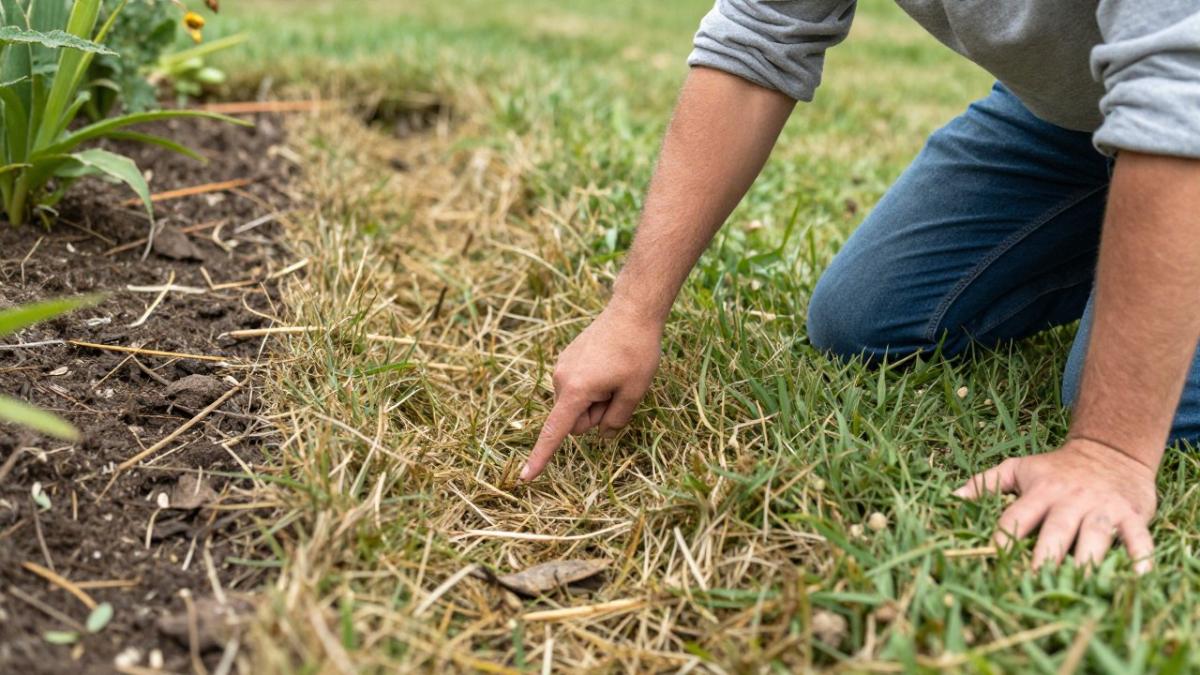
Runways, surface trails, and burrow entrances
Voles travel along narrow paths through the grass. These runways look like flattened, dead strips about one to two inches wide. Small burrow holes, often about the size of a quarter, may sit at the ends of the paths.
Check these areas first:
- Dead grass paths that run straight across the lawn
- Small holes near garden beds or the base of trees
- Loose soil or raised ridges just under the turf
Gnawed roots, bark, and wilting plants
Voles chew on plant roots and the bark of young trees and shrubs. Damage often shows up above ground before the cause is clear. Look for shredded roots when you pull up a weak plant, or bark stripped away near the soil line.
Watch for these warning signs:
- Plants that wilt or die for no clear reason
- Gnaw marks on the lower trunk of young trees
- Bulbs or seedlings that vanish overnight
Vole Identification: Telling Voles Apart From Moles and Mice
Many yard pests leave similar damage, so identification matters. Moles and voles both disturb lawns, but they behave differently. Moles push up raised ridges of soil and feed on insects, while voles eat plants.
If the surface paths are narrow, the grass is eaten, and the damage is near plant roots, voles are the more likely cause. Once the inspection confirms voles are responsible, professional vole removal services can address the damage with the right treatment.
DIY Vole Control: What You Can Try First, and Where It Stops Working
Many homeowners start with do-it-yourself steps. Removing tall grass, mowing often, and clearing mulch near the house can make a yard less inviting to voles. These steps help most when the problem is small.
Once the damage spreads across several areas, DIY steps rarely keep up.
Choosing and placing vole traps safely
Snap traps and live traps are the two common choices. Place them directly along active runways, and check them daily. Wear gloves when handling traps, and keep them away from pets and children (the EPA). Place traps only where pets and children cannot reach them.
When to Call Vole Control Professionals: A Decision Framework
Most homeowners wait too long because vole damage is easy to explain away, a dry patch here, a wilted shrub there. A more reliable approach is to stop judging by how bad the yard looks today and start tracking three things: how fast the damage is spreading, how long it has persisted, and how many distinct areas are affected.
Track three numbers, not impressions
Walk the yard once a week during spring and fall, when vole activity typically peaks. Bring a notebook or use a phone note and record:
- New runways: Count fresh flattened trails you did not see on the previous walk. A runway that reappears after you rake it flat is active.
- Affected zones: Divide the yard into rough zones, front lawn, back lawn, garden beds, tree line, foundation perimeter, and note which ones show damage. One zone is a local problem; three or more suggests a spreading population.
- Damaged plants: Count young trees, shrubs, and perennials with chewed bark, wilted tops, or missing bulbs. Losing one plant is normal wear; losing several in a month is a pattern.
A simple rule of thumb many practitioners use: if new runways appear in a new zone within two weeks of the first sighting, the population is expanding faster than surface damage alone would suggest.
The call-or-wait thresholds
Use these thresholds to decide:
- Wait and monitor if you see a single small patch, no new runways on the next weekly walk, and no damage to trees or shrubs. Keep mowing, clear tall grass and heavy mulch near the foundation, and recheck in seven days.
- Escalate to professional help if any of the following is true: new runways appear in a new zone for two consecutive weeks; damage covers three or more zones; a young tree or established shrub shows chewed bark at the soil line; or you have trapped for two to three weeks without reducing new sign.
- Call promptly if pets or children use the affected area daily, if the damage reaches a vegetable garden or fruit trees, or if you see runways within a few feet of the foundation, where voles can eventually gnaw at exterior insulation and wiring.
Watch out: raking runways flat and then forgetting to recheck them is the most common tracking mistake, a flattened runway that reappears within days is stronger evidence of active voles than any single dead patch.
Why "wait and see" usually costs more
Voles breed quickly, and a small colony can expand into adjacent beds and tree lines within a single season. The practical cost of waiting is not just more traps; it is replacing plants. A young tree girdled at the base rarely recovers, and replanting plus establishment time usually costs more than an early professional visit.
A 14-day monitoring checklist
If you are on the fence, run this two-week test before calling:
- Day 1: Rake all visible runways flat and photograph the yard.
- Day 3: Note any runways that have reappeared and in which zones.
- Day 7: Count new runways, damaged plants, and any new burrow holes the size of a quarter.
- Day 10: Check tree and shrub bases for fresh gnaw marks.
- Day 14: Compare photos. If new runways appear in a zone that was clean on Day 1, or if any tree or shrub has new damage, call a professional rather than starting another DIY round.
This checklist also gives a technician useful history, dates, zones, and photos, which shortens the inspection and makes any quote more accurate.
The article's thresholds for deciding whether to wait or call a professional can be summarised as follows.
| Situation | Action | Timing |
|---|---|---|
| Single small patch, no new runways, no tree damage | Wait and monitor | Recheck in 7 days |
| New runways in a new zone for two consecutive weeks | Escalate to professional help | Two weeks |
| Damage covers three or more zones | Escalate to professional help | Immediate |
| Chewed bark at soil line on young tree or shrub | Escalate to professional help | Immediate |
| Trapping for 2-3 weeks without reducing new sign | Escalate to professional help | 2-3 weeks |
| Pets or children use affected area daily | Call promptly | Immediate |
| Runways within a few feet of foundation | Call promptly | Immediate |
What Happens During a Professional Inspection and Treatment
A professional vole visit is less about spraying something and more about diagnosis, placement, and verification. Knowing the sequence in advance helps you ask better questions and judge whether a provider is doing a thorough job.
Step 1: The inspection
A technician typically walks the property with you or alone, depending on the company, and maps activity rather than just spotting it. Expect them to:
- Trace runways and note which are active versus old, often by looking for fresh clippings, droppings, or flattened grass that has not yet yellowed
- Locate burrow entrances, which are usually about the size of a quarter and often sit at the end of runways or near plant bases
- Check the soil line on young trees and shrubs for fresh gnaw marks
A thorough inspection usually takes 20 to 45 minutes on a typical residential lot, longer on larger or heavily planted properties.
Step 2: Treatment selection
There is no single universal vole treatment; the plan depends on the yard, the season, and whether pets or children use the space. Common professional approaches include:
- Trapping along active runways and burrow entrances, which is targeted and allows removal of the animals causing damage
- Baiting in tamper-resistant stations placed where non-target animals cannot reach them, typically used when activity is widespread
- Habitat modification, reducing mulch depth, clearing brush, and trimming ground cover, to make the yard less inviting after the initial knockdown
Ask which methods the provider plans to use, where each will be placed, and why that combination fits your yard. A provider who cannot explain the reasoning is worth a second opinion.
Step 3: Safety precautions
Before any product or trap goes down, confirm the provider's approach to non-target animals. Ask specifically:
- Whether bait, if used, goes in tamper-resistant stations and how those stations are secured
- How traps are placed to keep them away from pets, children, and wildlife such as birds and beneficial insects
- What re-entry precautions apply to treated areas and for how long
For general pesticide safety information, check guidance from the U.S. Environmental Protection Agency pesticide safety resources.
Step 4: Monitoring and follow-up
Treatment is not finished when the technician leaves. A common professional pattern is a follow-up visit roughly one to three weeks later to check whether activity has stopped and whether new runways are forming.
Ask in advance:
- How many follow-up visits are included, and what triggers an additional visit
- What signs you should watch for between visits
- Whether the provider offers a warranty or re-treatment guarantee, and what voids it
Watch out: a plan that includes no follow-up and no written warranty is a red flag, recurring vole activity after treatment is common enough that reputable providers usually build a return visit into the service.
Step 5: What affects the estimate
Pricing varies by property, so a site-specific quote is the only reliable number. Factors that commonly move an estimate up or down include:
- Lot size and how much of it is landscaped
- Number of affected zones and severity of activity
- Whether trees, gardens, or high-value plantings need protection
Ask for the quote in writing, with the number of visits, methods, and warranty terms spelled out, so you can compare providers on the same basis.
Pet, Child, and Wildlife Safety During Vole Treatment
Safety should guide every step of vole control. Ask any provider which methods they use and where those methods will be placed. Eco-friendly vole control helps protect families, pets, and the environment.
Keep these precautions in mind:
- Keep children and pets away from traps and treated areas
- Ask for written details on every product and where it goes
- Confirm that other wildlife, such as birds and beneficial insects, is protected
For information on pesticide safety and wildlife protection, check guidance from the U.S. Environmental Protection Agency pesticide safety resources.
Scheduling Your Vole Control Consultation With Ekoterra
If you have seen new runways, dying plants, or damage that keeps spreading, it is time to talk with a professional. Ekoterra Gopher Pest and Wildlife Control offers eco-friendly, guaranteed pest and wildlife control for residential and commercial properties across Ventura, Los Angeles, and Santa Barbara Counties. Request a free inspection to schedule your consultation.
Request a consultation to find out what is causing the damage and what your yard needs next. Visit the [button label] page to get started.
Frequently Asked Questions
Can professional exterminators get rid of voles?
Yes. Licensed pest and wildlife professionals can inspect the yard, map active runways and burrow entrances, and apply control methods suited to the site. Results depend on how extensive the colony is and whether the surrounding landscape is changed to discourage reinfestation. Ekoterra's approach focuses on eco-friendly methods. Pricing depends on property size, the extent of damage, and the treatment plan, so contact Ekoterra directly for a quote.
What time of day are voles most active?
Voles are most active during the early morning and late afternoon, though they can move at any time, especially under snow cover or dense vegetation. Because they stay mostly underground and under cover, you are more likely to see evidence such as fresh runways, clipped grass, or new burrow openings than the animals themselves. Checking these signs in the early morning, before foot traffic disturbs them, gives you the clearest picture of ongoing activity.
Will voles eventually go away on their own?
Usually not. Voles breed quickly, and a small population can grow into a colony within a single season, particularly where there is dense ground cover and a steady food supply. Some activity may appear to slow in extreme heat or cold, but the population typically persists and reappears in spring. If you see new runways or fresh gnaw marks on roots and bark, the problem is likely active and will keep spreading unless you act.
Are vole control methods safe for pets and children?
It depends on the method. Snap traps and exclusion barriers are generally low-risk when placed out of reach, while some poisons pose serious risks to dogs, cats, and children. Ekoterra prioritizes eco-friendly, pet-conscious methods and explains exactly what will be used at your property before treatment begins. Keep traps out of reach, keep pets and children away from treated areas until the technician confirms it is safe, and ask your provider for a written safety summary.
