Last Updated: November 5, 2026
Quick Summary
Mosquito control for HOA communities means reducing mosquito populations by first removing standing water in common areas like drains, gutters, and low turf spots, then adding treatments only when inspections justify them. Responsibility is split between the HOA for common areas and owners for their own lots, so the governing documents should set the boundaries before any spending begins.
- Standing water in drains, gutters, and planters is the most common source of mosquito problems.
- Source reduction is the cheapest and most durable step, so fix water before considering treatment.
- Use the integrated pest management sequence: source reduction, larvicide, then adulticide only when thresholds justify it.
- Require a written service report after each visit that lists findings, products applied, and repeat problem sites.
- Compare contract bids on identical scope, since the lowest per-visit price often means spray-only service.
Table of Contents
- Why Mosquito Control Matters for HOA Common Areas
- Who Is Responsible for Mosquito Control in an HOA
- Building an HOA Mosquito Control Plan
- Removing Standing Water and Inspecting Breeding Sites
- Setting a Community Mosquito Treatment Schedule
- Vetting a Mosquito Control Contract for HOAs
- Handling Resident Mosquito Complaints Step by Step
- Your Next Step: Scheduling a Community Assessment
- Frequently Asked Questions
Mosquitoes in a community pool area or along a shared trail are more than a nuisance. For HOA boards, they are a liability question, a resident-satisfaction problem and a cost line all at once. This guide from Ekoterra Gopher Pest and Wildlife Control lays out a practical plan for mosquito control for HOA communities, covering who is responsible, what to do first, and how to keep it working through the season.
Why Mosquito Control Matters for HOA Common Areas
Mosquito control is the practice of reducing mosquito populations and the breeding sites that feed them (the EPA). In an HOA, the target is shared ground: pools, drains, landscaped beds, playgrounds and trails. Residents notice bites in these spaces fast, and complaints tend to land on the board.
Most mosquito problems start with standing water. Even a small amount of stagnant water can support larvae. Common sources include:
- Clogged gutters and downspouts
- Low spots in turf that hold rain
- Drain basins and catch basins
Plan on checking these spots before you assume the issue is the nearby marsh or lake. Many community problems begin in the yard.
Who Is Responsible for Mosquito Control in an HOA
Responsibility is usually split. The HOA controls common areas, while individual owners control their own lots. Your governing documents, including the declaration and bylaws, set the exact boundaries, so read them before you commit funds.
Clarify three things early:
- Which areas the association maintains
- Which tasks fall to owners, such as emptying containers
- Who has authority to enter or treat private property, if anyone
Boards that skip this step often end up paying for work that owners should have handled, or stuck in disputes over a single backyard.
Building an HOA Mosquito Control Plan
A workable plan does not need to be complicated. Start with a short written document the board can approve and revisit each season.
Your plan should cover:
- A map of common areas and known breeding sites
- Monthly inspection dates and who performs them
- Treatment methods and who applies them
Treat the plan as a living document. Update it after each inspection cycle and after each season.
Removing Standing Water and Inspecting Breeding Sites
Source reduction is the cheapest and most durable step. If larvae have nowhere to develop, you need fewer treatments later.
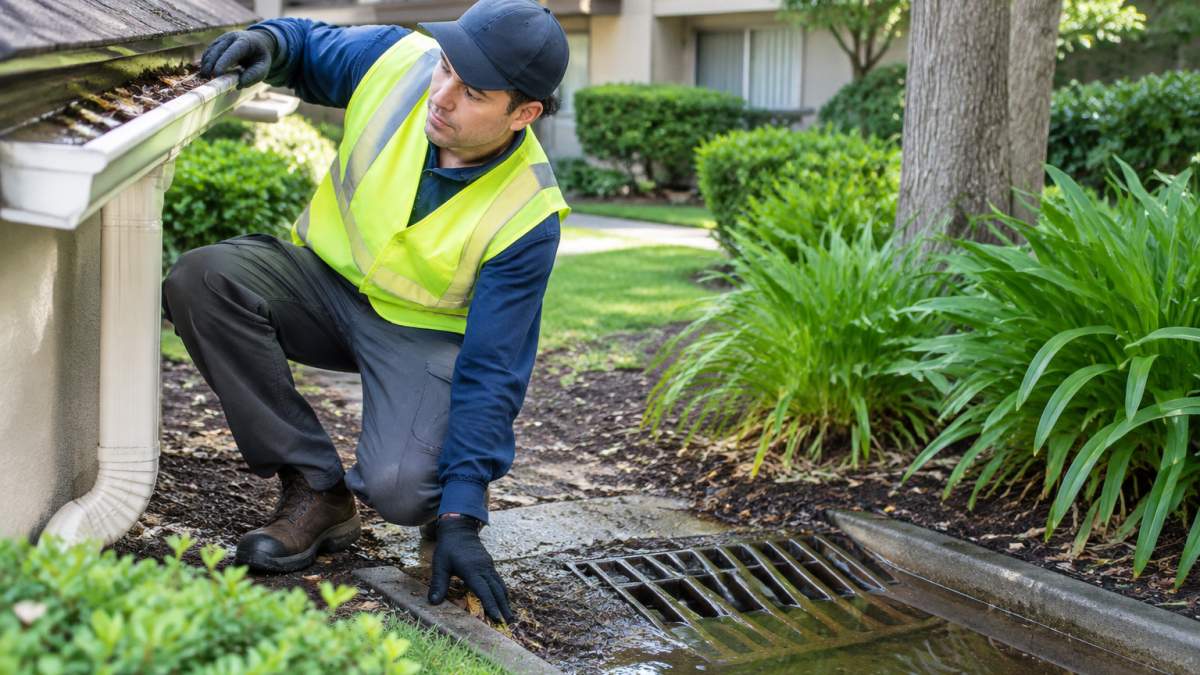
Work through the property on a fixed schedule:
- Walk the common areas after rain and note any water that lasts more than a few days.
- Clear gutters, drains and debris that block drainage.
- Empty or flip containers that hold water.
- Correct low spots in turf where practical.
- Record each finding and the fix applied.
A common mistake is treating the symptom and ignoring the source. Spraying adult mosquitoes does little good if the drain behind the clubhouse keeps refilling. Fix the water, then decide whether any treatment is still needed.
Setting a Community Mosquito Treatment Schedule
A treatment schedule is not just a calendar of spray dates. For an HOA, it is the document that ties source reduction to when, and whether, larvicides or adulticides are justified, and it is the record that shows the board acted responsibly if a resident raises a safety or efficacy concern.
The IPM sequence most practitioners recommend runs in this order:
- Source reduction first. Inspect and correct standing water before any product is considered. If a catch basin or planter is refilling weekly, no spray schedule will fix it.
- Larval control where water cannot be drained. For water-holding structures that cannot be emptied, certain drain basins, ornamental ponds, or irremovable containers, larvicides may be appropriate.
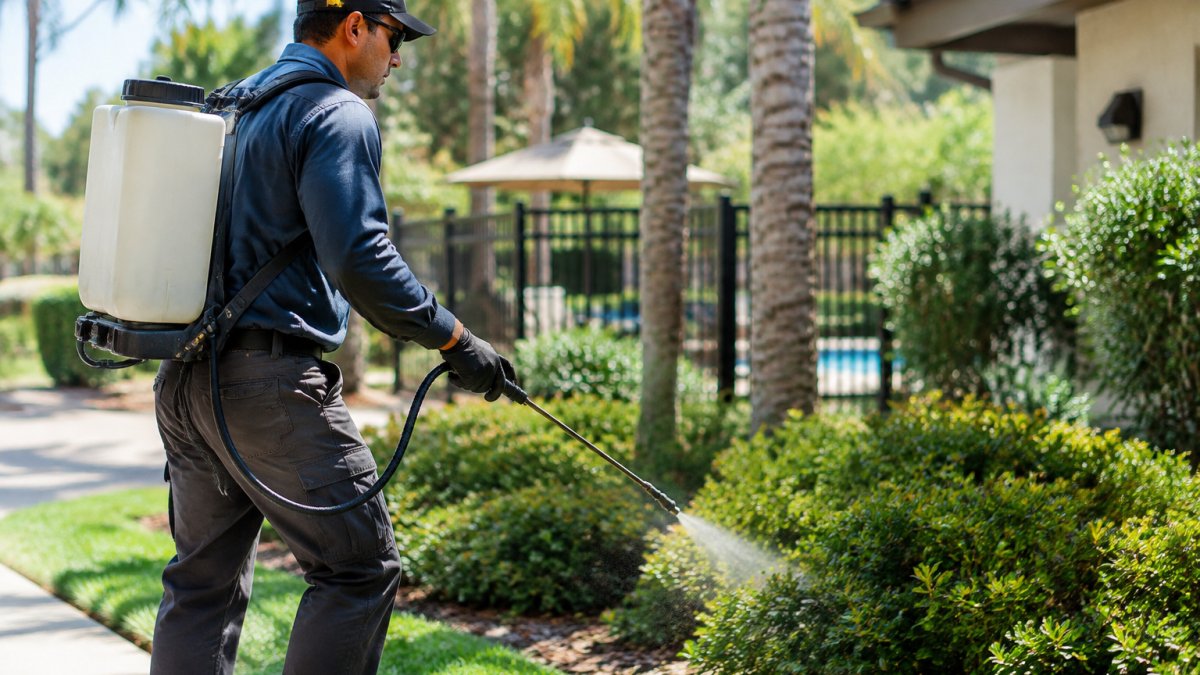
- Adulticides only when thresholds justify them. Adulticiding (fogging or residual barrier treatments) is a response to high adult populations or a documented disease-risk signal, not a default monthly service (Pesticides and Public Health). Ask the vendor what threshold triggers an adulticide application and who makes that call.
- Re-inspect after treatment. The schedule should include a follow-up inspection to confirm the source was corrected and to log results.
Watch out: Applying adulticides on a fixed calendar regardless of inspection findings is the most common way HOAs overspend and over-apply; it also increases the chance of drift onto pollinator habitat and pet areas.
Label compliance and safety conditions
Every product applied in a community must be used according to its EPA-registered label. The label is the legal document that governs where, how much, and under what conditions a product may be applied, including re-entry intervals and restrictions near water. The board should require the vendor to provide the label and safety data sheet (SDS) for each product used and to confirm in writing that applications will follow label directions.
Practical safety conditions to write into the schedule:
- Pollinators: Avoid adulticide applications on blooming plants and during daylight hours when bees are foraging. Many labels restrict application to early morning or evening for this reason.
- Pets and children: Observe label re-entry intervals for treated turf and play areas; post notice at playgrounds and pool gates.
- Water: Do not apply adulticides over open water; use larvicides labeled for aquatic use instead.
Resident notification mechanics
Notice should be specific, not a generic "mosquito treatment this week" email. A workable notice includes the date and time window, the areas treated, the product category (larvicide or adulticide), the re-entry interval, and a contact for questions. Post the same notice at community bulletin boards and on the HOA portal, and keep a copy in the board file. Some states and localities have notification requirements for community-wide pesticide applications; confirm any local rule with the vendor or counsel before the first application.
Building the calendar
A defensible seasonal calendar typically looks like this:
- Pre-season (late winter/early spring): Walk the property, map breeding sites, clear drains and gutters, and set the budget line.
- Active season: Inspection-driven treatments on a rhythm the board approves, often every three to four weeks during peak season, adjusted to inspection findings and weather.
- Post-rain checks: A standing inspection after significant rain events, since that is when new breeding sites appear.
Keep the schedule flexible enough that the board or its designated manager can shift a treatment window for weather or a community event without a full board vote, but require that any change be logged.
The article lays out the integrated pest management sequence the schedule should follow, in order.
| Step | What to do | Timing |
|---|---|---|
| Source reduction | Inspect and correct standing water first | Before any product is considered |
| Larval control | Use larvicides where water cannot be drained | For water that cannot be emptied |
| Adulticide | Apply only when thresholds justify it | Triggered by high adults or disease-risk signal |
| Re-inspection | Confirm source corrected and log results | After each treatment |
Vetting a Mosquito Control Contract for HOAs
A mosquito control contract is a governance document as much as a service agreement. The board is spending association funds and authorizing work on common property, so the contract should establish licensing, insurance, method disclosure, reporting, and remedies, not just a price per visit. Compare proposals on identical terms so the board is comparing scope, not sales presentations.
Licensing and insurance
Before evaluating price, confirm the basics:
- State licensing. Ask for the applicator's state pesticide license number and confirm it is current. Most states require commercial applicators to be licensed and to carry the license on site.
- Insurance. Request a certificate of insurance showing general liability and, where required, workers' compensation coverage. Confirm the HOA is named as an additional insured if your counsel recommends it.
- Certifications. Ask whether the applicator holds any relevant industry certification and whether the technicians assigned to your property are trained in the products they will use.
Scope and method disclosure
The contract should state, in writing:
- What is included in each visit (inspection, source reduction, larvicide, adulticide, reporting) and what is billed separately.
- Which product categories may be used and the conditions under which each is chosen.
- Whether the vendor will provide labels and safety data sheets for every product.
Reporting and accountability
This is where many HOA contracts are thinnest. Require a written service report after each visit that includes:
- Areas inspected and findings (including any standing water not corrected).
- Products applied, amounts, and application method.
- Any source-reduction work performed or recommended.
- A running log of repeat problem sites.
Ask how the vendor will measure effectiveness. Reasonable indicators include inspection findings, resident reports, trap counts if traps are used, service completion rates, and the number of repeat breeding sites, not a promise of a mosquito-free community, which no vendor can honestly make.
Weather, guarantees, and cancellation
Clarify the weather policy: are rained-out visits rescheduled, credited, or forfeited? Clarify what the guarantee covers, re-treatment of the same area within a set window is common; refunds for weather or reintroduction are not. Confirm the cancellation and notice period and whether the contract auto-renews.
Questions to put in the RFP
A short request for proposal with these questions will surface the differences between bidders faster than a phone call:
- What is your state license number and insurance coverage?
- What is included in each visit, and what is extra?
- How do you decide between larvicide and adulticide, and who makes that call?
- Will you provide labels and SDS for every product?
- What does your service report contain?
- How do you measure and report effectiveness?
- What is your weather and guarantee policy?
- Can you provide references from associations of similar size and landscape?
Watch out: The lowest bid often reflects a spray-only scope with no inspection or reporting; compare total seasonal cost and accountability terms, not the per-visit price alone.
Handling Resident Mosquito Complaints Step by Step
A clear complaint process keeps small issues from becoming board-level fights. Use a simple sequence:
- Log the complaint with the date, location and resident contact.
- Inspect the reported spot within a set number of days.
- Fix any source you find and note it in the log.
- Reply to the resident with what was found and what was done.
- Track repeat complaints from the same area.
Respond promptly even when the cause is outside the common area. A short, friendly reply often resolves the issue faster than a formal notice.
Your Next Step: Scheduling a Community Assessment
A written plan works best when someone checks the property in person. A professional assessment can map your breeding sites, flag problem areas and help you set a schedule that fits your community. Ekoterra Gopher Pest and Wildlife Control offers book a mosquito control assessment for HOA communities, so you can see what the service covers before you commit.
Frequently Asked Questions
Who is responsible for mosquito control in an HOA community?
Responsibility usually splits between the HOA and individual owners. The association typically manages common areas such as pools, retention ponds, landscaping, drains and shared trails, while owners handle standing water on their own lots, including planters, pet bowls, pool covers and clogged gutters. Your CC&Rs and governing documents define the exact boundaries, so review them before the board approves a plan. Clear written responsibilities prevent disputes and make enforcement easier when a resident does not act.
How often should an HOA schedule mosquito control treatments?
Most communities set treatments on a monthly or biweekly schedule during the warm months when mosquito activity peaks, then reduce frequency in cooler periods. The right interval depends on local conditions, the species present, rainfall, and the findings from your inspections. Ask any provider to document the treatment dates, product used and areas covered, and review those records each quarter to confirm the schedule still matches what you see on the ground.
What should an HOA look for in a mosquito control company?
Look for a provider that inspects before treating, uses integrated pest management with source reduction as the first priority, and explains its product choices and safety practices in writing. Ask for proof of insurance and request references from other HOAs of similar size. Compare contract terms, including response times for resident complaints and what reporting you will receive.
