Quick Summary
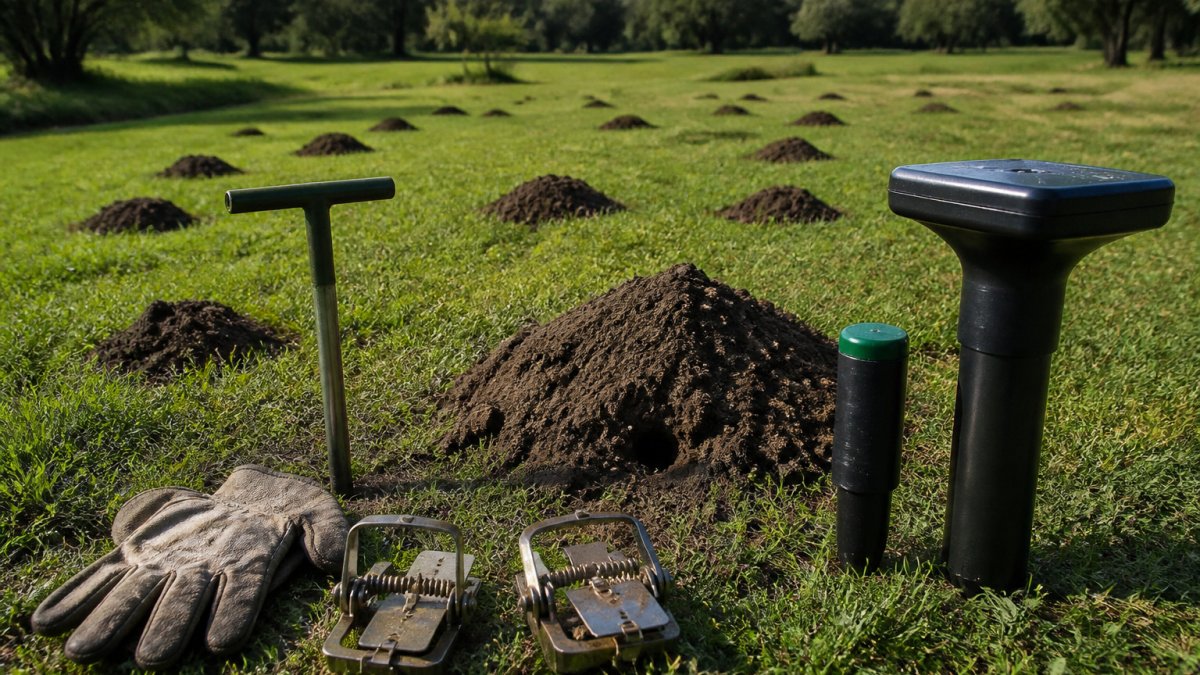
Mole control on a large property works best when you map active tunnels first, then trap zone by zone. Focus traps on main runways, placed in pairs about 10 to 20 feet apart, and check them daily for two to three weeks.
- Map fresh mounds and flag them before setting any traps.
- Place traps on deep, straight main runways, not shallow surface runways.
- Set trap pairs about 10 to 20 feet apart along active runways.
- Deploy only as many traps per zone as you can check in about 15 minutes.
- Track fresh mounds weekly to catch moles that move into untreated zones.
Table of Contents
- Why Mole Control Gets Harder as Property Size Grows
- How to Find Active Mole Tunnels Across a Large Yard
- Choosing Mole Traps for Large Properties and Spacing Them Correctly
- Baits, Repellents, and Natural Remedies: What Works and What Doesn't
- Mole Control Cost for a Yard: DIY Versus Professional Service
- How Long Does Mole Control Take and How to Measure Results
- Booking a Mole Control Plan for Your Property
- Frequently Asked Questions
How to Control Moles on a Large Property Step by Step
Last Updated: November 1, 2026
Why Mole Control Gets Harder as Property Size Grows
Mole control for large properties is a different job than treating a backyard. A small lawn lets you find the problem quickly and fix it with a few traps.
Moles are solitary animals. Each one can dig a large territory, and the tunnels often connect.
Here is what changes as the property grows:
- More tunnels to track. Activity spreads across lawns, garden beds, and tree lines.
- More places moles can hide. Edges, slopes, and irrigated areas attract them.
- More labor per day. Setting, checking, and resetting traps takes real time.
Scale is the reason a plan matters more than a single fix. Think of the property as a set of zones, and treat each zone on purpose.
How to Find Active Mole Tunnels Across a Large Yard
Before you buy any traps, you need to know where the moles are working. Finding active tunnels is the step most people skip, and it is the step that saves the most money later.
Reading Mounds, Molehills, and Surface Runways
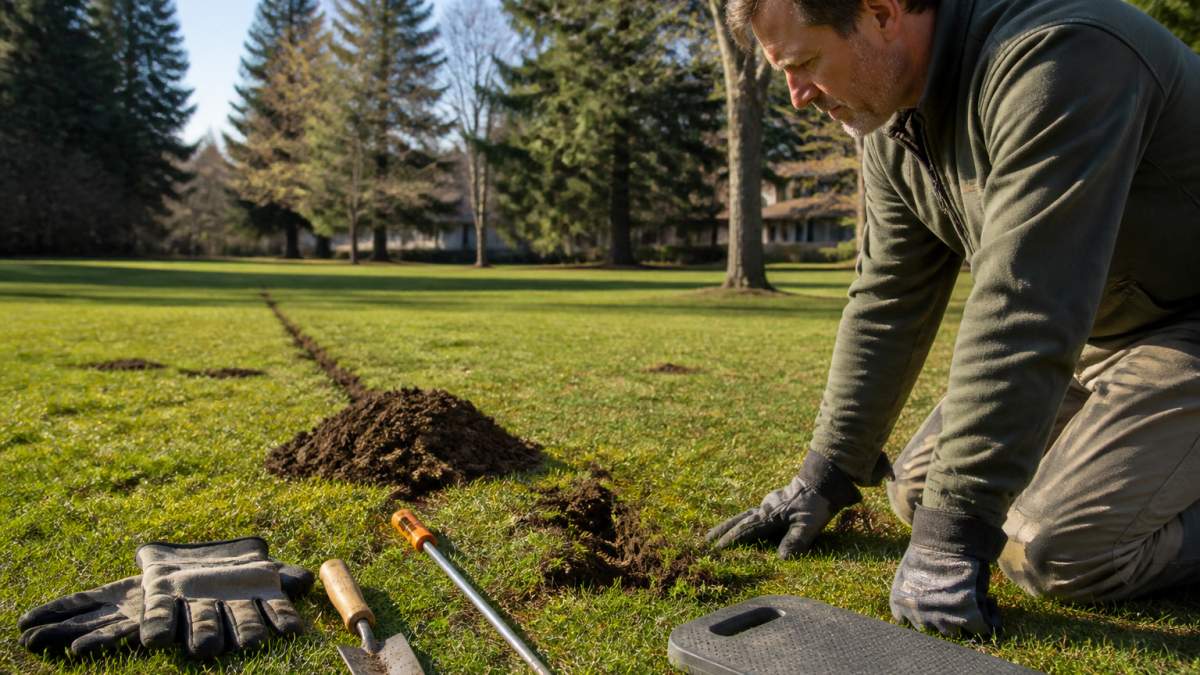
Look for the signs moles leave above ground:
- Mounds (molehills). Round piles of loose soil, usually fresh and crumbly.
- Surface runways. Raised ridges that look like a ridge of soil under the grass.
- Sunken tunnels. Soft spots where the ground gives under your foot.
Fresh mounds are the best clue that a mole is active right now. Flatten a few mounds with your boot and check them the next day. If the mounds come back, the tunnel is in use.
Mapping Tunnels and Prioritizing High-Activity Zones
On a large property, a simple map keeps you from working in circles. Walk the yard once and mark each fresh mound with a flag or a small stake. Note the date. After a few days, you will see clusters where new activity is heavy.
Focus your first efforts on those clusters. A few high-activity zones often account for most of the damage. Treat them first, then move outward.
Choosing Mole Traps for Large Properties and Spacing Them Correctly
Traps remain the most reliable method for mole control when they are used correctly ("Holey Moley"). On a large property, the trap type matters less than three things: how many traps you deploy, where you put them, and how often you can inspect them. Get those wrong and a big trap inventory becomes a big time sink.
The BEST Way to Get Rid of a Mole in Your Yard: 3 EASY Steps
Suburban Acreage
Pick Traps That Match Your Soil and Tunnels
Two common trap styles are:
- Scissor or plunger traps. These pinch the mole in the tunnel and work well in loamy soil with clean, deep runways. They are fast to set once you learn the trigger.
- Choker-loop or wire traps. These set around the tunnel and suit firmer or rockier ground where a scissor trap will not seat cleanly.
Match the trap to the tunnel, not the other way around. If a trap will not sit flush in the runway, the mole will push dirt around it instead of through it. Carry both styles on a large site so you are not walking back to the truck every time the soil changes.
Set a Trap Density Budget, Not a Guess
A common pattern on acreage is to think in zones rather than in total traps. Treat each high-activity cluster as its own unit and budget traps per zone:
- Identify the main runways. These are the straight, deep tunnels that connect mounds. Traps go here, not in the shallow surface runways that moles use once and abandon.
- Place traps in pairs. Set two traps per runway, one facing each direction, so a mole traveling either way meets one.
- Space pairs roughly 10 to 20 feet apart along an active runway, and put one pair at each end of the runway where it meets a mound.
- Cap each zone at what you can check daily. A workable rule of thumb is to deploy no more traps in a zone than you can inspect in about 15 minutes.
That last rule is the one most owners ignore. A property with five active zones and four trap pairs per zone is 20 pairs, 40 traps. Checking 40 traps daily is a real commitment. If you cannot keep that pace, work fewer zones at once rather than spreading traps thin across all of them.
Plan the Labor Before You Buy the Traps
Trapping is a daily job for the first two to three weeks. Build a simple schedule:
- Day 1: Map active zones and flag fresh mounds.
- Days 2-14: Check every set trap daily. Reset disturbed traps and re-set any that were sprung without a catch.
- Weekly: Re-walk the property and flag new mounds so you catch moles that moved into untreated zones.
If daily checks are not realistic, fewer well-tended traps beat a large set left unchecked. A trap that sits for three days without inspection is not controlling anything, it is just a marker in the lawn.
When Trapping Alone Is Not Enough
On a property of several acres, trapping works best as the front line with habitat management behind it. Reducing the grub and earthworm food base in lawns, and keeping irrigated beds from staying soggy, makes each zone less attractive after you clear it. That combination, traps first, habitat second, is what keeps a large property from re-filling with moles every few weeks.
The trap spacing and budgeting steps in this section can be summarised as follows.
| Step | What to do | Time or frequency |
|---|---|---|
| Identify main runways | Place traps on deep, straight tunnels, not shallow surface runways | Before setting traps |
| Place traps in pairs | Set one trap facing each direction on a runway | Per runway |
| Space pairs | Keep pairs roughly 10 to 20 feet apart | Along active runways |
| Cap each zone | Deploy only as many traps as you can inspect in about 15 minutes | Per zone |
| Check traps | Inspect every set trap and reset disturbed ones | Daily for 2 to 3 weeks |
| Re-walk property | Flag new mounds to catch moles that moved into untreated zones | Weekly |
Baits, Repellents, and Natural Remedies: What Works and What Doesn't
Many owners try baits, repellents, and home remedies before they call for help. Some of these methods have a role, but none of them is a complete solution on a large property.
- Toxic baits. These are often used for grubs and soil insects that moles feed on. Removing the food source can reduce mole activity over time, but it does not stop moles that are already in the tunnels.
- Repellents. Products such as castor oil, garlic, and hot pepper are common. Results vary, and most repellents need frequent reapplication.
- Wind-activated repellents. These spin in the breeze to vibrate the ground. Their effect is inconsistent across large, open lawns.
A common mistake is relying only on repellents. Moles that are pushed out of one area often move to another part of the same property. Use repellents as a support tool, not the main plan.
Mole Control Cost for a Yard: DIY Versus Professional Service
Cost is where large-property owners most often guess wrong. The sticker price of a trap is small; the real cost is the hours you spend finding tunnels, setting traps, and checking them every day. Frame the decision around total cost per acre, not per trap.
What DIY Actually Costs
A DIY setup for a large property usually includes:
- Traps. Scissor and choker-loop traps are commonly sold individually or in multi-packs. Budget for enough pairs to cover your active zones, plus a few spares for damaged or lost traps.
- Marking supplies. Flags or stakes to mark fresh mounds and trap locations. Cheap, but essential on acreage.
- Bait or repellent (optional). Only worth buying if you plan to use it as a support tool, not a primary method.
A useful way to compare: estimate the number of hours you will spend checking traps over the treatment window, then decide what that time is worth to you.
What Professional Service Buys You
You are paying for the labor and the mapping discipline, not just the traps. That is why professional pricing scales with acreage and zone count rather than with a flat per-trap rate.
How to Compare the Two on a Large Property
Ask these questions before you choose:
- How many acres and how many active zones? More zones mean more daily labor either way.
- Can you commit to daily checks for two to three weeks? If not, DIY will underperform regardless of equipment quality.
- What is lawn and garden repair likely to cost if moles are missed? On large properties, repair and replanting can exceed the cost of a service season.
- Do you want a written record of progress? A service that reports mound counts and catches gives you a measurable result; DIY gives you whatever you log yourself.
For current pricing, contact Ekoterra Gopher Pest and Wildlife Control for a quote tailored to your property.
How Long Does Mole Control Take and How to Measure Results
Expect mole control on a large property to take several weeks, not a few days. Most of that time goes into finding activity, placing traps, and watching the zones after the first captures.
To measure progress, track three things:
- Fresh mounds per week. A steady drop means the plan is working.
- Traps triggered per zone. Shifting catches show you where moles are moving.
- Lawn damage over time. Fewer new ridges and soft spots mean fewer active tunnels.
Keep a simple log. Write down the date, the zone, and the count for each measure. After four weeks, the numbers will show whether to keep going, add traps, or change your approach.
Booking a Mole Control Plan for Your Property
If you want the work done without managing it yourself, a written plan is the right starting point. A good plan maps your tunnels, sets trap density for each zone, schedules checks, and defines how success will be measured.
Ask any provider these questions before you book:
- Will you map active zones before you set any traps?
- How often will traps be checked, and who does the checking?
- How will you report progress across the whole property?
Contact Ekoterra Gopher Pest and Wildlife Control to discuss your property.
Frequently Asked Questions
What will kill moles in my yard?
Moles are usually removed with trapping rather than poison, because most mole baits are not labeled for moles and rodenticides are not a reliable option. Harpoon or scissor-jaw traps set in active tunnels are the most common approach. Castor oil and other repellents may reduce activity briefly but rarely eliminate a colony on their own. For a large property, a plan that combines locating active tunnels, placing traps at the right spacing, and checking them daily tends to produce the most consistent results. Pricing for any service depends on property size and access, so request a quote for your specific site.
Can moles grow back after removal?
Yes. Moles can recolonize an area from neighboring properties, especially on large properties where the surrounding land supports a healthy population. Removing the animals in one section does not stop new moles from moving in if the soil, earthworms, and grubs that attract them remain. Monitoring the property for fresh molehills and new surface runways after treatment helps catch reinvasion early. Reducing grub populations and addressing the food source is often part of a longer-term plan.
How often should mole traps be checked on a large property?
Check traps at least once daily, ideally in the morning, because moles that are caught in a trap can die quickly and leaving them in place can attract scavengers or create odor. On a large property with many sets, checking can take a full morning, so labor planning matters. Reset or relocate traps that have not produced captures after several days, since moles may have shifted to a different tunnel. Record which sets produced captures so you can focus your effort on the most active zones.
When should I hire a professional for mole control?
Consider professional help when the damage covers a large area, when you have already tried trapping or repellents without lasting results, or when the property has many interconnected tunnel systems that are hard to map. Professionals can usually identify active tunnels faster, set and monitor a larger number of traps, and track results over time. Ask any provider how they will measure success, what their approach is for reinfestation, and whether pricing depends on acreage and access. For current service details, visit the Ekoterra Gopher Pest and Wildlife Control website.
