Last Updated: November 15, 2026
Quick Summary
Never sweep or vacuum rodent droppings, because dry waste can release particles that carry hantavirus and other germs into the air. Ventilate the space, wear gloves and a mask, spray the droppings with disinfectant, then pick them up with paper towels and seal them in a plastic bag.
- Ventilate the area and wait 15 to 20 minutes before re-entering
- Wear gloves, an N95 mask or fine-particle mask, and eye protection
- Spray droppings thoroughly with disinfectant before touching them
- Let disinfectant sit for the contact time on the label, often about 5 minutes
- Keep children, older adults, and pets out until surfaces are fully disinfected
Table of Contents
Rodent droppings are more than an eyesore. They can carry viruses and bacteria that make people sick, and that is why careful cleanup matters. Many homeowners want to clean up mouse poop fast, and the urge is understandable. But the way you clean matters as much as the cleanup itself. Here is the short answer: dry droppings and disturbed nests can release tiny particles into the air, and those particles can carry disease.
The biggest concern in the United States is hantavirus. The Centers for Disease Control and Prevention hantavirus guidance explains that people can get infected by breathing in virus particles from rodent urine, droppings, and nesting materials. Sweeping or vacuuming dry waste is the fastest way to stir those particles into the air.
Mice and rats can also spread salmonella and other germs through contaminated surfaces. Touching droppings and then touching your face or food can transfer those germs. For that reason, treat every dropping as a possible source of infection.
People with weaker immune systems, young children, older adults, and pets face higher risk. Those household members should stay out of the area until cleanup is finished.
Watch out: Never sweep, dry brush, or vacuum droppings. This is the most common mistake, and it releases the particles you are trying to avoid.
Key points:
- Hantavirus spreads through airborne particles from droppings, urine, and nests
- Dry sweeping or vacuuming stirs particles into the air
- Salmonella can spread through contaminated surfaces
- Children, older adults, and pets face higher risk
Gear Up Before You Start: Safety Equipment Checklist
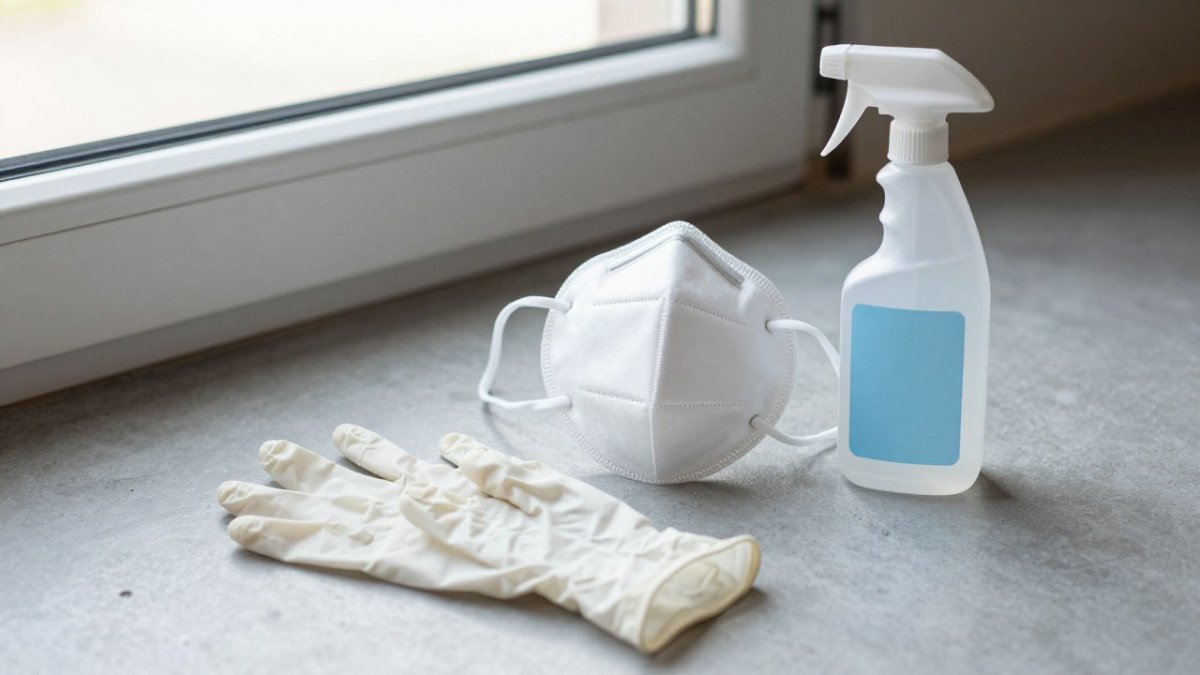
Before you touch anything, gather the right protection. Good gear keeps the virus out of your lungs and germs off your skin. You do not need expensive equipment, but you do need the right basics.
Use this checklist before you begin:
- Disposable or heavy rubber gloves
- N95 respirator mask, or a well-fitted mask rated for fine particles
- Eye protection such as goggles
- Disposable coveralls or old clothes you can wash right away
- Paper towels and a sturdy plastic bag for disposal
- Spray bottle filled with disinfectant or bleach solution
- Soap and water for handwashing afterward
Keep the gloves on for the entire job. Remove them carefully by turning them inside out, then throw them away. Wash your hands with soap and water even if you wore gloves.
Step-by-Step: How to Clean Up Mouse Poop Safely
Follow these steps in order. Rushing skips the parts that protect you most.
- Ventilate the space. Open windows and doors, and run a fan that pushes air outside. Leave the area for about 15 to 20 minutes so any airborne particles can settle.
- Put on your protective gear. Use the checklist above before you re-enter the space.
- Spray the droppings with disinfectant. Wet every dropping and the surface beneath it thoroughly. Wetting keeps particles from rising when you handle them.
- Wait for contact time. Let the disinfectant sit on the droppings for the time listed on the label, often about 5 minutes, so it can kill germs.
- Pick up the waste. Use paper towels to lift the droppings and place them in a plastic bag. Never use a dry broom or vacuum.
- Disinfect the surface. Spray the area again and wipe it clean. Repeat if the surface looks soiled.
- Seal and dispose of the waste. Close the bag tightly and place it in a sealed outdoor trash container.
- Wash up. Remove gloves, wash your hands with soap and water, and launder any clothes you wore.
Here is how the steps fit together:
| Step | Purpose | Key Rule |
|---|---|---|
| Ventilate | Clear airborne particles | Wait 15-20 minutes |
| Gear up | Protect lungs and skin | Use gloves and N95 |
| Wet droppings | Keep particles from rising | Spray thoroughly |
| Pick up waste | Remove contamination | Never dry sweep |
| Disinfect | Kill remaining germs | Follow label contact time |
Cleaning Carpet and Upholstery
Carpet and upholstery trap droppings and urine deep in the fibers, so they need extra care. Soak the area fully with disinfectant, then blot. Do not scrub hard, because scrubbing can push particles deeper. Many people rent a steam cleaner for carpet, but check the label first, because heat can change how some disinfectants work. Porous items such as cushions and insulation may be impossible to clean fully and often need replacing.
Choosing an EPA-Registered Disinfectant for Mouse Droppings
Look for a product with an EPA registration number on the label. The U.S. Environmental Protection Agency registers disinfectants that are tested to kill certain germs (the EPA). A bleach solution of about 1 part bleach to 10 parts water is a common choice for hard surfaces. Always read the contact-time instructions, because a disinfectant that wipes off too early will not do its job. Never mix bleach with ammonia or other cleaners.
What to Do If You Accidentally Vacuumed Mouse Droppings
Accidents happen. If you vacuumed droppings, turn the vacuum off and leave the room for at least 15 to 20 minutes. Do not empty the canister or bag by hand. Wear gloves and a mask, then seal the bag or canister contents in plastic and throw them out. Wipe the vacuum with disinfectant, and wash your hands and clothes. If you have symptoms such as fever or muscle aches in the weeks after exposure, contact a doctor and mention possible rodent exposure.
Protecting Children, Pets, and Higher-Risk Household Members
Keep children, pets, and anyone with a weakened immune system out of the area during cleanup and until surfaces are fully disinfected and dry. Ventilate the room well before anyone re-enters. Wash toys and bedding that may have been exposed. Ask your vet about pet safety if your dog or cat was in the space.
When to Call Professionals for Rodent Droppings Cleanup
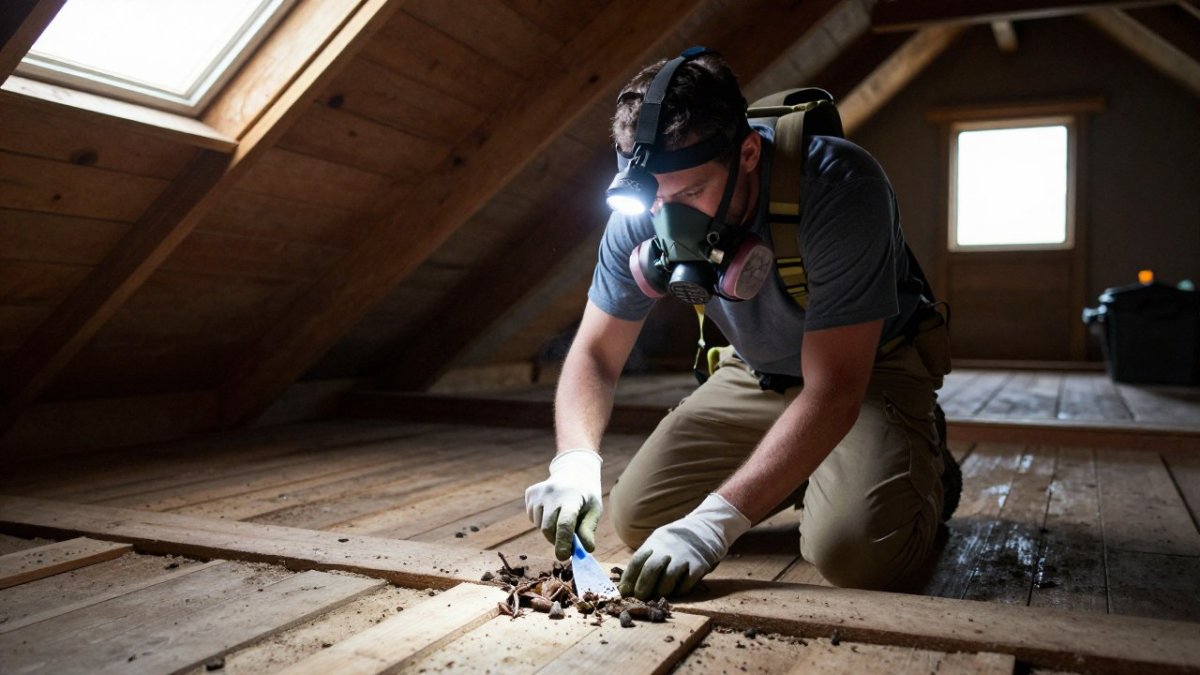
Call a professional if the infestation is heavy, if droppings are in enclosed spaces such as wall cavities, attics, or ducts, or if insulation or upholstery is heavily soiled. Professionals have respirators, proper disinfectants, and the tools to remove contaminated material safely. Ekoterra Gopher Pest and Wildlife Control can help you assess the situation and determine the right approach, and you can book a rodent cleanup and prevention visit to get started.
Booking Your Rodent Cleanup and Prevention Visit
Cleaning up is only half the job. Sealing entry points and removing food sources keeps rodents from coming back. Our team can inspect your property, identify entry points, and recommend next steps. You can learn more about rodent cleanup and prevention services at any time.
Ready to stop rodents for good? Ekoterra Gopher Pest and Wildlife Control offers guaranteed pest and wildlife control with eco-friendly methods that protect your family, pets, and the environment.
Frequently Asked Questions
How long do mouse droppings stay infectious?
Mouse droppings can remain infectious for a considerable time, especially in dry, dusty, enclosed spaces such as attics, crawl spaces, and garages. The hantavirus associated with deer mice and rodent excrement can persist in dried material, which is why droppings should never be swept or vacuumed dry. Treat all droppings as potentially contaminated regardless of how old they look, and wet them thoroughly with an EPA-registered disinfectant or a bleach solution before removal.
Is it safe to clean up old mouse droppings?
Yes, old droppings can be cleaned safely if you follow the same precautions used for fresh ones. Ventilate the area, wear disposable or rubber gloves and an N95 respirator, and soak the droppings with disinfectant for at least 5 minutes before wiping them up with paper towels. Dispose of waste in a sealed plastic bag. If the contamination covers a large area or sits in insulation or ductwork, consider a professional cleanup.
What should I do if I accidentally vacuumed mouse droppings?
Stop vacuuming immediately and turn off the machine. Ventilate the room by opening windows and leaving it for at least 30 minutes if possible. Put on gloves and a respirator, then wet down the area with disinfectant and wipe it up. Empty the vacuum canister or bag into a sealed plastic bag outside, and wipe the vacuum surfaces with disinfectant. Wash your hands with soap and water afterward. Contact a health provider if you develop fever, muscle aches, or breathing difficulty.
When should I hire a professional to clean up rodent droppings?
Hire a professional when the infestation is heavy, when droppings are inside wall voids, attics, insulation, upholstery, or ductwork, or when you cannot ventilate the space properly. Professionals also make sense if anyone in the home is elderly, pregnant, immunocompromised, or has respiratory conditions. For guidance on your situation, contact Ekoterra Gopher Pest and Wildlife Control through the company website.
